A 2026 review concludes that short peptides derived from the calcium-binding protein CPNE7 can reproduce selected regenerative functions of the full-length protein and may serve as modular signals for engineered tissue. The analysis, published in Frontiers in Bioengineering and Biotechnology on 21 October 2026, describes how the peptides Cpne7-DP and CDP4 influence odontoblast differentiation, osteogenic lineage commitment, mineralization, chondrocyte matrix deposition and angiogenesis when used in collagen gels or chitosan hydrogels. The evidence is predominantly preclinical and comes from cell, animal and biomaterial studies, so the findings do not establish clinical efficacy or authorize clinical use.
Copines are evolutionarily conserved intracellular proteins that link fluctuations in calcium ions to membrane organization and downstream signaling. Nine mammalian paralogs, CPNE1 through CPNE9, have been characterized. Each protein contains two N-terminal C2 domains, C2A and C2B, followed by a C-terminal domain structurally related to the von Willebrand factor type A domain, or vWA domain. The C2 domains detect calcium and bind negatively charged phospholipids, enabling copines to move from the cytosol to the plasma membrane and intracellular membranes when cytosolic calcium rises. The intracellular vWA domain recruits effectors including ubiquitin, 14-3-3γ, actin-binding proteins and transcription factors, helping assemble calcium-regulated signaling complexes.
This architecture makes copines adaptable membrane adapters rather than universal masters of development. Their effects depend on tissue context, available binding partners and local signals. In neurons, for example, CPNE6 responds to calcium influx through NMDA receptors and moves into dendritic spines, where it supports actin stabilization through the Rac1-PAK-LIMK1-cofilin pathway. Studies in CPNE6-deficient mice found impaired long-term potentiation and deficits in hippocampus-dependent memory tasks. CPNE1 also influences neural stem-cell proliferation and differentiation through AKT-mTOR signaling, while CPNE3 participates in beta-cell glucose uptake and insulin secretion. The review nevertheless stresses that these paralogs tune neuronal physiology rather than acting as universal regulators of neurodevelopment.
CPNE7 provides a more clearly defined model for mammalian tissue formation. During odontogenesis, secreted CPNE7 from preameloblasts binds cell-surface nucleolin on dental pulp cells and enters them through caveolae-mediated endocytosis. After reaching the nucleus, it regulates the primary-cilia components Kif3a and Ift88. Enhanced ciliogenesis is associated with increased expression of dentin sialophosphoprotein, or Dspp, and dentin matrix protein 1, or Dmp1, supporting odontoblast differentiation and physiological dentin-tubule formation. This pathway is presented as a context-specific example in which calcium-responsive membrane association is coupled to transcriptional regulation during epithelial-mesenchymal signaling.
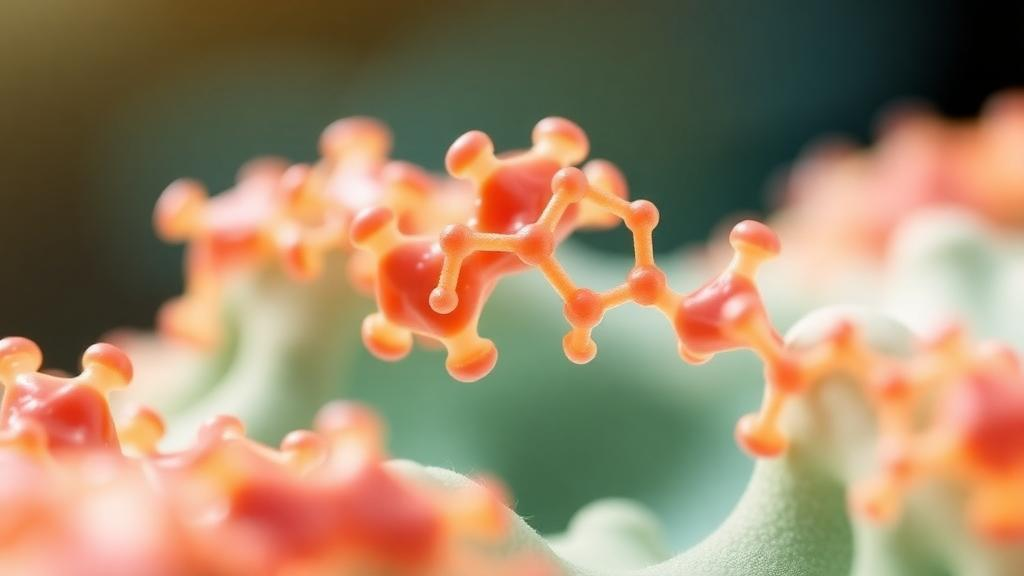
The translational focus of the review is the CPNE7 sequence at the junction between its C2B and vWA domains. Cpne7-DP, a ten-residue peptide with the sequence KYKQKRRSYK, and CDP4, a ten-residue peptide with the sequence VNPKYKQKRR, occupy a conserved, positively charged region involved in calcium-regulated membrane association and protein recruitment. Their direct binding partners have not been fully mapped, but the abundance of lysine and arginine provides a structural rationale for membrane interaction and cell penetration. Unlike full-length CPNE7, which requires nucleolin-mediated uptake, these short peptides can enter cells directly. Cpne7-DP has increased expression of Dmp1, Dspp and Nestin in vitro and restored dentin structure while inhibiting demineralization in rodent models, although the evidence is limited to small animals and short follow-up periods.
CDP4 has a molecular weight of approximately 1,315 daltons and a net charge of plus five, contributed by three lysines and two arginines. Its basic C-terminal cluster, KQKRR, is the principal driver of cellular uptake, apparently through electrostatic docking with anionic phospholipids at the cell surface. Truncating this cluster or replacing basic residues with neutral alanine sharply reduces internalization and downstream biological activity. Biophysical analyses describe CDP4 as predominantly disordered in water, with a proline-induced kink and linear amphipathic organization rather than a stable helical face. The N-terminal VNPKY motif is described as a core pharmacophore involved in receptor interactions and intracellular signaling. In osteoprogenitor cells, the peptide has been associated with MAPK signaling and increased Runx2 and alkaline phosphatase expression, with reported potency matching recombinant BMP-2 in experimental comparisons.
Native CDP4 remains vulnerable to enzymatic degradation because its flexible backbone is exposed to proteases. It contains five potential cleavage sites for trypsin, and the review reports a serum half-life below 30 minutes. Thrombin can cleave its terminal KRR motif at a moderate rate, whereas matrix metalloproteinases have lower affinity for the sequence because it lacks their preferred hydrophobic cleavage patterns. Stability also changes with pH: acidic conditions accelerate pepsin-mediated breakdown, while alkaline conditions promote deprotonation of lysines and chemical hydrolysis. These limitations complicate translation because maintaining an active concentration may require relatively high doses in vitro. Proposed stabilization strategies include terminal D-amino-acid substitution, cyclization, intramolecular disulfide engineering and PEGylation, each of which must be balanced against the possibility of blocking membrane docking or cellular uptake.
Biomaterials can protect the peptides and shape the tissue response. About half of unmodified CDP4 was released from a 4% collagen gel during the first two days, with up to 60% released over the following two weeks, allowing activity during early repair and later remodeling. Collagen-based functionalization with a PEN-FFG-flanked version called UG27 increased osteogenesis by approximately 30% relative to an untreated control. The proposed mechanism involved mitophagy, macroautophagy and crystalline apatite deposition, while circular dichroism and molecular-dynamics analyses indicated that the extension did not disrupt the CDP4 core. Chitosan produced a different outcome. Because it is polycationic, it can retain endogenous glycosaminoglycans and stabilize cellular aggregates. Covalent attachment of CDP4 to chitosan improved mesenchymal stem-cell survival, focal-adhesion formation, collagen synthesis and glycosaminoglycan deposition during early chondrogenic differentiation.
The chitosan system was designed as a stimulus-responsive combination product. The peptide known as CPLG-UG28 included a terminal cysteine for chemoselective conjugation to maleimide-functionalized chitosan and an MMP-7-sensitive PLG-LEA linker. When MMP-7 rises during cartilaginous remodeling, the linker can be hydrolyzed to release the active LEA-VNPKYKQKRR product. Functional assays indicated that the residual LEA overhang did not prevent membrane translocation or downstream signaling, while the low-stiffness, low-permeability hydrogel helped preserve a chondrogenic phenotype. Together, the collagen and chitosan results illustrate how the same peptide can support different differentiation outcomes when its biochemical effects are coupled to different matrix mechanics, release kinetics and extracellular environments.
Translation remains constrained by safety, manufacturing and evidentiary gaps. Nucleolin is expressed on activated endothelial cells, many tumor vessels and multiple malignant tumors, creating theoretical risks for any strategy that preserves CPNE7’s nucleolin-binding behavior. Direct-entry peptides may reduce receptor-specific exposure, but CPNE1, CPNE3 and CPNE8 have documented oncogenic roles, and copine-derived sequences must be screened for proliferative, angiogenic and pro-survival effects in non-target cells. The review also calls for GMP-grade synthesis, endotoxin control, validated sterilization, storage testing, long-term safety studies and evaluation of the peptide and scaffold as a combined product. Comparisons with established biologics such as BMP-2, followed by long-term non-human-primate studies in bone, cartilage and dentin defects, would be needed before the approach could be considered clinically ready.
Subject of Research: CPNE7-derived peptides and biomaterial scaffolds for tissue regeneration
Article Title: Copine proteins and derived bioactive peptides in tissue development and regeneration: from molecular mechanisms to biomaterial functionalization
Article References: Tymińska, A., Kowalska, A., Rogińska, M., & Pikuła, M. (2026). Copine proteins and derived bioactive peptides in tissue development and regeneration: from molecular mechanisms to biomaterial functionalization. Frontiers in Bioengineering and Biotechnology, 14, Article 1889849. https://doi.org/10.3389/fbioe.2026.1889849
Image Credits: AI Generated
DOI: 10.3389/fbioe.2026.1889849
Keywords: copine proteins, CPNE7, CDP4 peptide, Cpne7-DP, calcium signaling, biomaterials, tissue regeneration, osteogenesis, chondrogenesis, dentine repair, Copine, proteins
News Source: Matthew Wilson. (October 21, 2026). Copine-derived peptides advance tissue repair through programmable biomaterials. Scienmag.