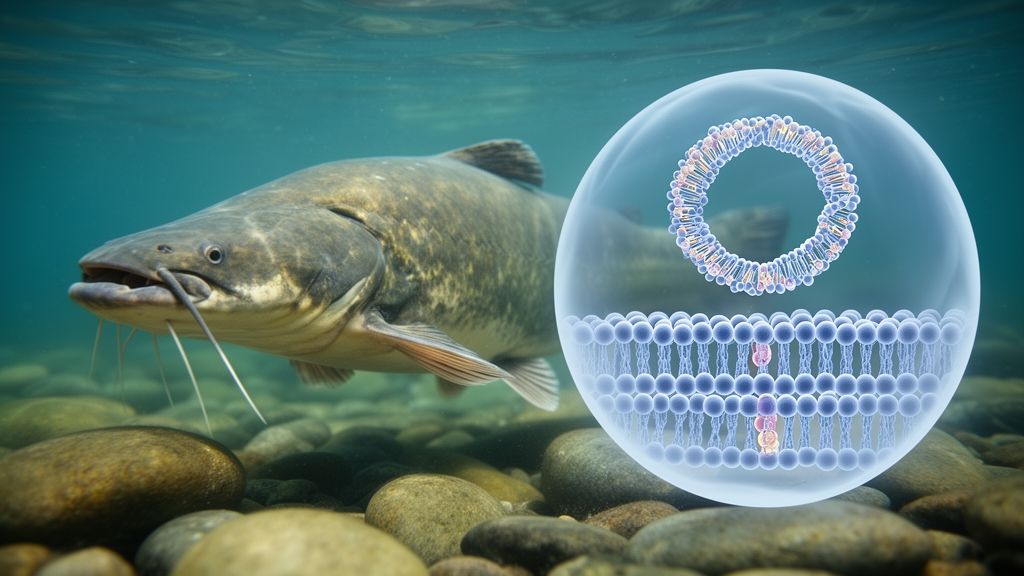
Researchers have generated the complete mitochondrial genome of the vulnerable goonch catfish, Bagarius bagarius, revealing a 16,524-base-pair circular genome and a robustly resolved relationship with Bagarius yarrelli. The study also detected candidate modified-base signals in nanopore sequencing data, but the researchers caution that their biological significance remains unconfirmed. The assembly was produced with Oxford Nanopore long-read sequencing and adaptive sampling, followed by de novo assembly and annotation.
It contains the typical vertebrate mitochondrial complement: 13 protein-coding genes, 22 transfer RNA genes, two ribosomal RNA genes and a control region. The genome is notably rich in adenine and thymine and exhibits strand-specific compositional asymmetry, meaning that the two strands differ in their overall base composition. Phylogenetic reconstruction using complete mitochondrial genomes placed B. bagarius as the sister lineage to B. yarrelli.
The finding supplies a complete mitogenomic reference for a vulnerable riverine species whose evolutionary history has been poorly understood. Their analysis found relatively little recurrent mutation among shallow relationships, indicating that mitochondrial characters can provide useful information for comparisons involving more recent divergences. Homoplasy was substantially greater across deeper sisorid divergences, showing why complete mitogenomes may be less decisive when researchers attempt to reconstruct older branching events.
Modified-base calling from the nanopore reads identified candidate adenine- and cytosine-associated signals across the mitochondrial genome. Their distribution varied by genomic region and between the two strands. These observations provide a preliminary dataset for investigating mitochondrial DNA modification in fish, but they do not by themselves demonstrate that the signals are methylation marks or that they influence mitochondrial function.
The strongest limitation is the scope of the modified-base dataset: it came from a single B. bagarius individual and was not independently validated. The researchers therefore interpreted the nanopore-derived patterns as candidate modification signals rather than definitive evidence of mitochondrial DNA methylation. Replication with additional specimens and complementary methods would be required before drawing biological conclusions from the patterns.
Overall, the study delivers a complete mitogenomic resource for B. bagarius and an exploratory record of candidate modified-base signals. The sequence provides a reference for future phylogenetic and conservation-genetic research, while the homoplasy analysis defines an important constraint on the interpretation of mitochondrial relationships. The modification data likewise point to a question for future investigation rather than establish a regulatory mechanism.
Subject of Research: Complete mitogenomic sequencing, phylogeny and candidate modified-base signals in the goonch catfish Bagarius bagarius
Article Title: Complete mitogenome of vulnerable goonch catfish Bagarius bagarius: mitochondrial DNA methylation marks and phylogenetic insights
Article References: Rout, A. K., Tyagi, A., Badoni, P., Parida, S. N., Rout, S. S., Kumar, N., Dann, L., Ingole, N. A., Srivastava, A., Tripathy, P. S., Behera, B. K., & Pandey, P. K. (2026). Complete mitogenome of vulnerable goonch catfish Bagarius bagarius: mitochondrial DNA methylation marks and phylogenetic insights. BMC Genomics. https://doi.org/10.1186/s12864-026-13489-x
Image Credits: AI Generated
DOI: 10.1186/s12864-026-13489-x
Keywords: Bagarius bagarius, goonch catfish, mitogenome, mitochondrial DNA, phylogenetics, Sisorinae, Oxford Nanopore, DNA methylation, modified bases, conservation genetics, Complete, vulnerable
News Source: Juliet Wilcox. (October 21, 2026). Goonch Catfish Mitogenome Resolves Close Phylogeny, Flags Preliminary DNA Modifications. Scienmag.