Scientists have identified a specialized population of reactive endothelial cells that emerges after ischemic stroke and appears to help injured neurons survive, according to a study published in the Journal of Translational Medicine. The cells, marked by expression of a protein called PI16, showed unusually strong activity of circadian rhythm-related genetic programs, suggesting that the brain’s internal clock machinery may participate in vascular repair after a stroke.
The research team, led by Songyun Zhao and colleagues, analyzed single-cell RNA sequencing data collected at multiple time points from a mouse model of middle cerebral artery occlusion, the standard experimental approach for mimicking ischemic stroke. By profiling gene expression in individual cells, they mapped the heterogeneity of endothelial cells lining blood vessels within the damaged brain and noticed a distinct subpopulation that became more prominent during the middle-to-late stages of the response.
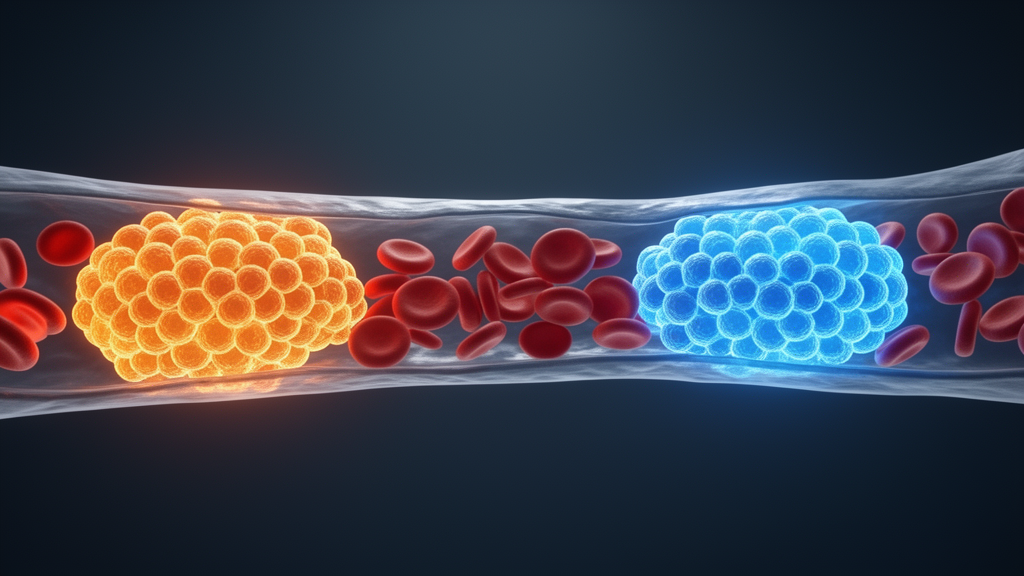
This newly described state, which the authors call the Pi16_Reactive endothelial state, was characterized by elevated levels of Pi16 together with Fabp4, Cdh13, and Hbegf. Beyond these marker genes, the cells scored relatively high on gene sets associated with circadian rhythms and displayed marked transcriptional plasticity, meaning their gene-expression profiles suggested an ability to shift between states. Pathway analysis pointed to enrichment of extracellular matrix remodeling and MAPK signaling, both of which are involved in tissue restructuring and cellular stress responses.
Trajectory analysis, a computational method that infers how cell states progress over time, suggested that these cells represent a transitional phenotype in the post-ischemic endothelial landscape. In parallel, cell-cell communication modeling identified a computationally predicted candidate interaction, Ptn-Ncl, linking these endothelial cells with neurons. Such predictions indicate plausible signaling routes but do not by themselves prove functional communication in the injured brain.
To test whether PI16 matters functionally, the researchers turned to controlled experiments. They observed that PI16 expression changed dynamically after stroke and reperfusion in mice and was upregulated in cultured bEnd.3 endothelial cells subjected to oxygen-glucose deprivation followed by reoxygenation, an in vitro model of ischemic injury. When the team manipulated Pi16 expression, either increasing or decreasing it, they saw corresponding changes in MAPK-related signaling and in circadian-related molecules including Bhlhe40, Klf9, and Nfil3, placing PI16 within a network that connects vascular stress responses with clock-associated transcription.
The most striking results came from conditioned-medium experiments, which test how signaling molecules secreted by one cell type affect another. Culture medium taken from endothelial cells overexpressing Pi16 improved the viability of HT22 neuronal cells that had been injured by oxygen-glucose deprivation and reoxygenation. In those protected neurons, the anti-apoptotic protein BCL2 increased while the pro-apoptotic protein BAX decreased, a molecular signature of reduced cell death. Knocking down Pi16 produced the opposite effects, strengthening the case that endothelial PI16 supports neuronal survival through paracrine signaling.
The team then moved into living animals. Using an AAV9 viral vector to deliver Pi16 into mice, they overexpressed the gene before inducing stroke and reperfusion. Treated animals preserved more NeuN-positive neurons, a standard marker of mature neuronal survival, showed reduced cerebral infarction and less histopathological damage, and scored better on measures of neurological function after the injury.
The authors are careful about what these findings do and do not establish. Although AAV9-mediated Pi16 overexpression alleviated ischemic brain injury and neurological dysfunction in mice, the specific cell types mediating this protective effect remain unresolved. The circadian connection is likewise based on relative gene-set enrichment scores and altered expression of clock-related transcription factors, not on direct demonstrations that time-of-day mechanisms drive the endothelial response. All results come from mouse models and cell culture, and the study is an early-access, peer-reviewed accepted version subject to further editorial processing.
Even with those limitations, the work adds a notable piece to the picture of how the neurovascular unit remodels after stroke. Endothelial cells have long been known to support neuronal survival through paracrine signaling, but the heterogeneity of their post-ischemic states has been poorly understood. By tying a specific reactive endothelial state to circadian-related transcriptional programs and to a protective, transplantable signal, the study opens a concrete avenue for exploring vascular-targeted therapies aimed at limiting brain damage after ischemic injury.
Subject of Research: A circadian-related reactive endothelial cell state marked by PI16 that supports neuronal survival after ischemic stroke in mice
Article Title: PI16 regulates circadian-related transcriptional remodeling of reactive endothelial cells and attenuates cerebral ischemia/reperfusion injury
Article References: Zhao, S., Xu, H., Wu, Q., Wu, J., Zhao, N., Liu, Y., Lu, Z., Chen, L., Cheng, C., He, Y., & Ding, S. (2026). PI16 regulates circadian-related transcriptional remodeling of reactive endothelial cells and attenuates cerebral ischemia/reperfusion injury. Journal of Translational Medicine. https://doi.org/10.1186/s12967-026-09113-x
Image Credits: AI Generated
DOI: 10.1186/s12967-026-09113-x
Keywords: ischemic stroke, endothelial cells, PI16, circadian rhythm, single-cell RNA sequencing, neurovascular unit, MAPK signaling, paracrine signaling, AAV9, cerebral reperfusion injury, neuronal survival, transcriptional remodeling
News Source: Cassandra Pierce. (October 23, 2026). Circadian-Linked Endothelial State Offers New Clue to Stroke Recovery. Scienmag.