Scientists have wrapped a selenium nanoparticle formulation of velvet bean seed extract in the natural polymer chitosan and shown that the resulting nanocomposite outperformed both the plain plant extract and uncoated selenium nanoparticles in a rat model of Parkinson-like disease. The chitosan-coated particles, called CSMNPs, reversed reserpine-induced motor impairment, raised brain antioxidant enzyme levels, and reduced markers of oxidative and nitrosative stress, with the strongest effects seen at a dose of 50 milligrams per kilogram of body weight. The work, published in Discover Nano, was led by researchers at Siksha ‘O’ Anusandhan University in Bhubaneswar, India, together with collaborators at other Indian institutions.
The formulation builds on a long-standing challenge in Parkinson’s disease therapy. Levodopa, the gold-standard drug, is a precursor of dopamine, the neurotransmitter that becomes depleted when dopaminergic neurons in the substantia nigra degenerate. But levodopa is largely broken down in the periphery before it can cross the blood-brain barrier, and long-term use brings complications such as dyskinesia, motor fluctuations, and waning efficacy. Seeds of Mucuna pruriens, the tropical legume known as velvet bean, are among the richest natural sources of levodopa, typically containing 4 to 6 percent of the compound, and have traditionally been used to manage Parkinson’s symptoms. Their clinical application, however, has been limited by poor stability, low bioavailability, and limited permeation through the blood-brain barrier, and there are no standardised procedures to guarantee the purity and potency of the extracts.
To overcome these barriers, the team combined three components into a single nanocomposite: selenium, an essential trace element that forms part of antioxidant selenoproteins such as glutathione peroxidases; chitosan, a biocompatible, biodegradable natural polysaccharide whose positive charge helps nanoparticles interact with cell membranes and reduces burst drug release; and an aqueous extract of Mucuna pruriens seeds. The researchers first extracted the seed powder using a microwave-assisted method and quantified its levodopa content by ultraviolet-visible spectrophotometry against a standard calibration curve. The extract measured 27.5 percent levodopa by weight, a figure the authors note is far higher than the 5 to 7 percent reported for traditional extraction methods, which allowed them to use half the dose of the reference levodopa treatment in their animal experiments.
The selenium nanoparticles themselves were made by a green synthesis route that avoided harmful chemical reagents. Sodium selenite served as the metal precursor, and the seed extract acted as both reductant and stabiliser, turning the solution from grey to orange within 30 minutes as the nanoparticles formed. Chitosan was then dissolved in dilute acetic acid and added to the selenium nanoparticles with stirring until the colour shifted from orange to light pink, signalling formation of the coated composite. Surface plasmon resonance bands confirmed each step: the plain extract absorbed at 281 nanometres, the selenium nanoparticles at 263 nanometres, and the chitosan-coated particles at 294 nanometres. Fourier transform infrared spectroscopy showed the functional groups involved in reduction and stabilisation, while X-ray diffraction and selected area electron diffraction revealed that the coated particles were amorphous, in contrast to the polycrystalline uncoated particles.
Characterisation revealed a trade-off between the two formulations. The uncoated selenium nanoparticles had a hydrodynamic diameter of 278.50 nanometres with a low polydispersity index of 0.207, indicating a uniform distribution, and a zeta potential of minus 28.68 millivolts, consistent with good colloidal stability. Coating with chitosan increased the hydrodynamic diameter to 684.6 nanometres and raised the polydispersity index to 0.977, which the authors attribute to interparticle aggregation in aqueous dispersion, but it flipped the surface charge to a strongly positive plus 40.91 millivolts, a substantial electrostatic repulsion that may contribute to colloidal stability. Under high-resolution transmission electron microscopy, however, both formulations appeared as spherical primary particles, with the uncoated particles ranging from 9.62 to 25.76 nanometres and the coated ones from 6.71 to 13.22 nanometres. The researchers explain this discrepancy by noting that hydrodynamic measurements include the hydrated polymer layer and aggregates in suspension, whereas electron microscopy measures dried primary particles on the grid.
Drug loading also improved with the chitosan coating. The entrapment efficiency of levodopa rose from 75.46 percent in the uncoated selenium nanoparticles to 87.62 percent in the coated ones, and the loading capacity increased from 32.15 to 35.85 percent. In vitro antioxidant assays reinforced the pattern. In the DPPH free radical scavenging assay, the concentration needed to inhibit 50 percent of the radical fell from 18.94 micrograms per millilitre for the plain extract to 12.61 for the uncoated nanoparticles and 8.01 for the coated ones, approaching the 6.25 measured for ascorbic acid, the reference standard. The ABTS assay showed the same dose-dependent hierarchy, with the coated particles reaching an IC50 of 5.13 micrograms per millilitre compared with 12.85 for the extract. The authors suggest that the potential antioxidant activity of chitosan itself contributed to the enhanced scavenging performance of the composite.
The in vivo experiments used 48 adult Wistar rats of either sex, aged 8 to 10 weeks and weighing 180 to 200 grams, divided into eight groups. One group served as an untreated control, one received only reserpine at 0.2 milligrams per kilogram intraperitoneally for 42 days to induce Parkinson-like symptoms, and the remaining six received reserpine for the first 21 days and then reserpine plus a treatment from day 22 to day 42: levodopa at 100 milligrams per kilogram, plain seed extract at 50 milligrams per kilogram, uncoated selenium nanoparticles at 25 or 50 milligrams per kilogram, or chitosan-coated particles at the same two doses. Behavioural testing on day 42 used a rotarod grip strength test and a wooden block catalepsy test. Reserpine significantly reduced grip strength and raised cataleptic scores, but every treatment reversed these effects. The coated particles at 50 milligrams per kilogram produced significantly stronger grip and lower cataleptic scores than the plain extract, both doses of uncoated nanoparticles, and the lower dose of the coated formulation, while the uncoated particles at 50 milligrams per kilogram and the coated particles at 25 milligrams per kilogram performed similarly to each other.
Biochemical analysis of brain homogenates told a consistent story. Reserpine induction significantly lowered the antioxidant enzymes superoxide dismutase, catalase, and reduced glutathione, while raising malondialdehyde, a marker of lipid peroxidation, and nitrite, an indicator of nitrosative stress. All treatments shifted these measures back toward control values, but the chitosan-coated particles at 50 milligrams per kilogram again showed the greatest effect, significantly increasing SOD, catalase, and glutathione and decreasing malondialdehyde and nitrite more than the plain extract, both doses of uncoated nanoparticles, and the lower dose of the coated formulation. Histopathological examination of the hippocampus and the substantia nigra supported these findings: reserpine-treated rats showed severe neuronal necrosis, pyknosis, and shrinkage of dopaminergic neurons along with Lewy body-like inclusions, whereas the treated groups, particularly those receiving the coated nanoparticles, retained better tissue structure with prominent nuclei and dispersed Nissl granules.
The authors caution that the study has clear limits. Direct evidence of enhanced blood-brain barrier penetration and brain delivery was not established, and biodistribution, pharmacokinetic profiling, and quantitative measurement of selenium or levodopa in brain tissue remain to be done. The biochemical and histopathological assessments used only three rats per group, which may have limited statistical power, and the histopathology relied on qualitative observation without blinded scoring or neuronal counting. The reserpine model primarily reflects dopamine depletion and motor dysfunction and does not reproduce the full pathological spectrum of Parkinson’s disease, so confirmation in complementary models is needed. Nevertheless, the authors conclude that the combination of selenium, the bioactive constituents of Mucuna pruriens, and the stabilising properties of chitosan offers a promising preclinical platform, and that further work should establish the precise molecular mechanisms and the contribution of each component of the formulation.
Subject of Research: Chitosan functionalized selenium nanoconjugates of Mucuna pruriens seed extract as a nanotherapeutic approach tested in a reserpine-induced Parkinson's disease rat model
Article Title: Chitosan functionalized selenium nanoconjugates of Mucuna pruriens as a nanotherapeutic approach for Parkinson’s disease
Article References: Sahoo, S. S., Modak, S., Sahu, P. K., Behera, A., Ranch, K. M., & Swain, R. P. (2026). Chitosan functionalized selenium nanoconjugates of Mucuna pruriens as a nanotherapeutic approach for Parkinson’s disease. Discover Nano, 21(1), Article 604. https://doi.org/10.1186/s11671-026-05114-3
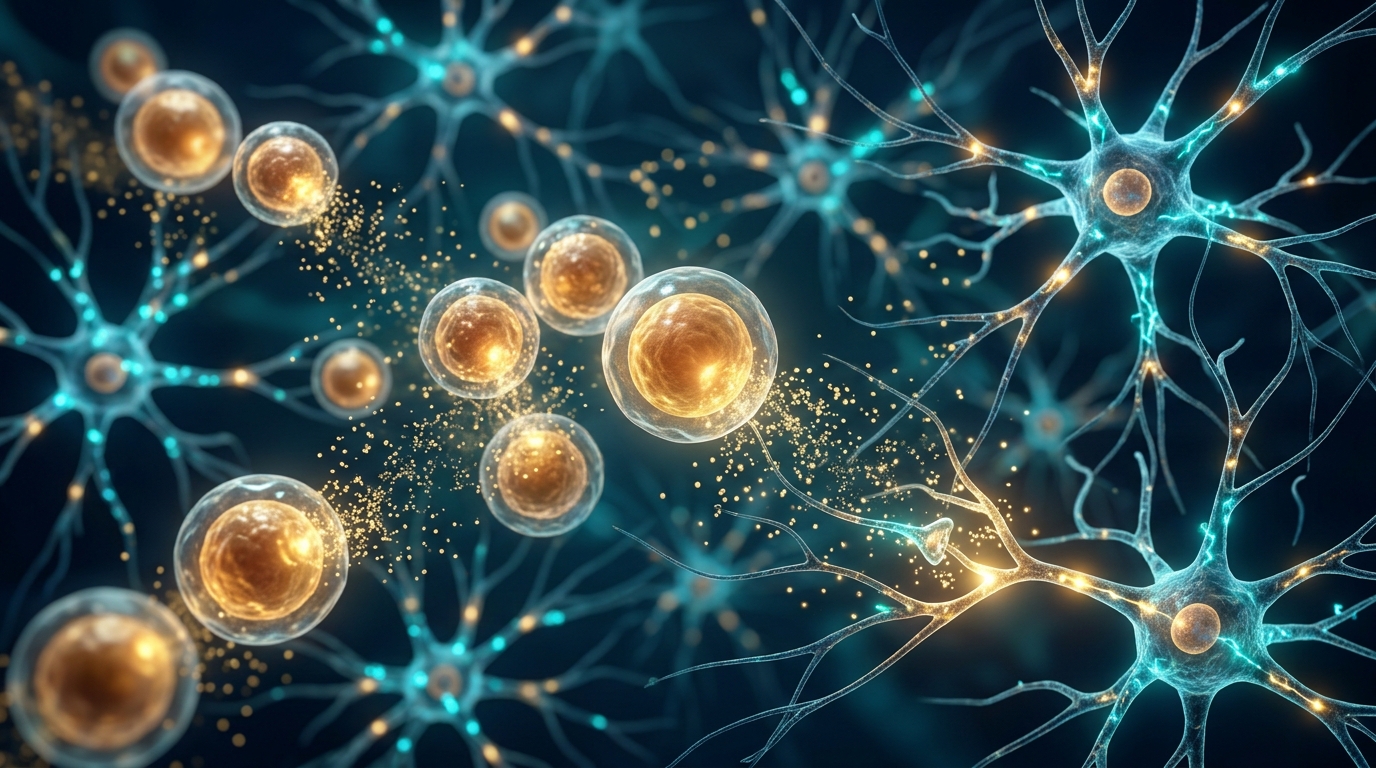
Image Credits: AI Generated
DOI: 10.1186/s11671-026-05114-3
Keywords: Parkinson's disease, Mucuna pruriens, selenium nanoparticles, chitosan, nanomedicine, reserpine rat model, L-DOPA, oxidative stress, blood-brain barrier, antioxidant enzymes, neuroprotection, preclinical study
News Source: Cassandra Pierce. (November 4, 2026). Chitosan-Coated Selenium Nanoparticles Loaded with Mucuna pruriens Extract Ease Parkinson-Like Symptoms in Rats. Scienmag.