Surgeons in Japan have shown that pancreatic tumors which once pressed into major arteries can shrink so dramatically under carbon-ion radiotherapy that most patients who reach the operating table leave it with no cancer cells left behind at the margins. In a retrospective series from Gunma University Hospital, 12 patients with borderline resectable or locally advanced pancreatic ductal adenocarcinoma underwent surgical resection after carbon-ion radiotherapy combined with chemotherapy, and 11 of them achieved an R0 resection, meaning the pathologist found no tumor cells at any cut edge of the specimen.
The histopathological response was the study’s most striking result. Using the Evans grading system, seven patients showed Grade III responses and three showed Grade IV responses, the two categories indicating the most extensive tumor destruction, for a combined rate of 83 percent. Under the College of American Pathologists tumor regression grading, seven patients had Grade 1 responses and three had Grade 0, the latter representing no residual viable tumor. The Japanese Pancreatic Society classification similarly documented deep regression in most specimens. Notably, pathological examination found no lymph node metastases in any of the 12 patients, with a median of 13 lymph nodes harvested, an unusual finding in a disease stage where nodal spread is common.
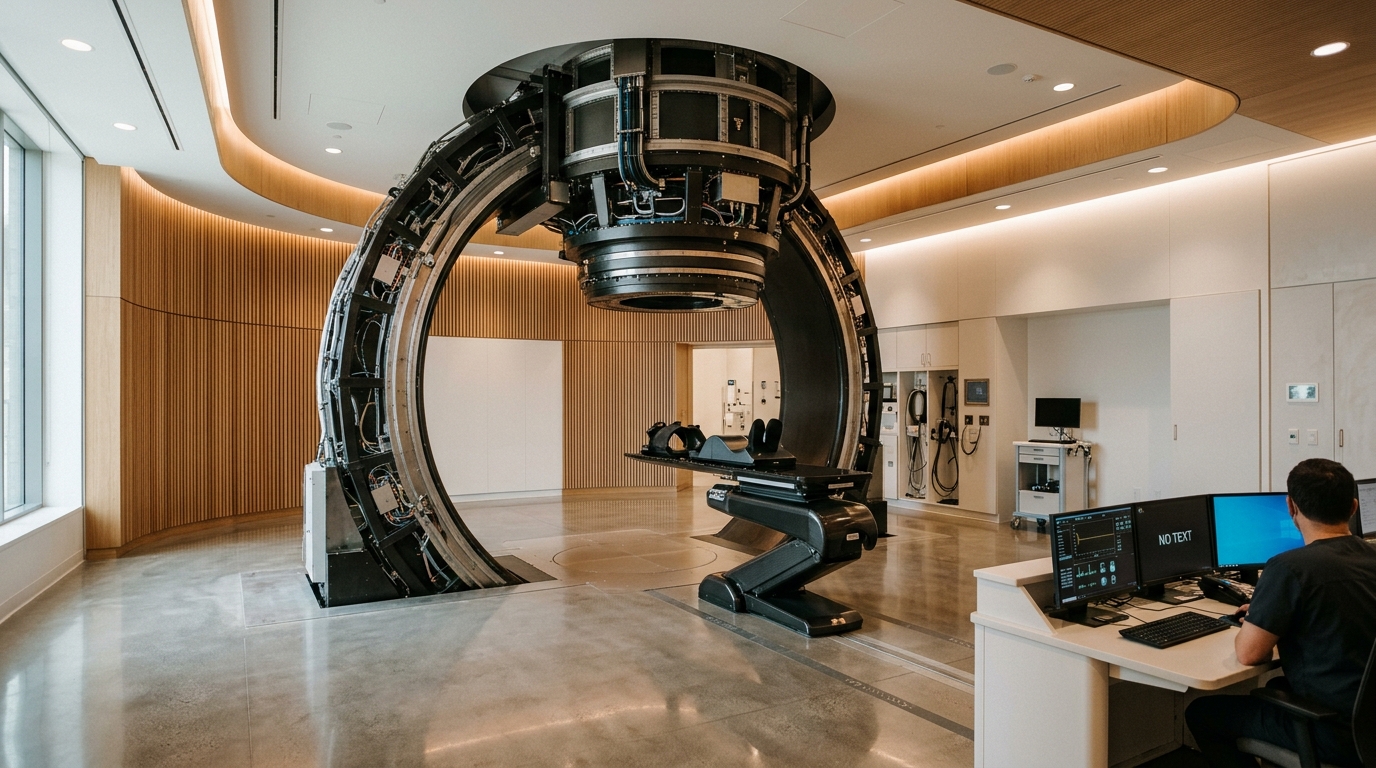
Carbon-ion radiotherapy differs from conventional X-ray radiotherapy in ways that matter for tumors sitting near the stomach, duodenum, kidneys and intestines. Carbon-ion beams deposit most of their energy at the end of their range in a narrow peak, allowing a concentrated dose inside the tumor while sparing surrounding tissue, and they carry a higher relative biological effectiveness, meaning more DNA damage per unit of physical dose. The pancreas sits among radiation-sensitive organs that typically limit the deliverable dose with standard X-ray techniques, which is one reason durable local control in locally advanced pancreatic cancer has remained poor with conventional approaches.
The treatment protocol at Gunma University Hospital delivered 55.2 Gy relative biological effectiveness in 12 fractions, once daily, four days per week, under respiratory gating with a single fixed beam port per session. All patients received concurrent oral S-1 chemotherapy during irradiation. Before each course, clinicians performed a second respiratory-gated CT scan the day before treatment to confirm the dose distribution to the tumor and at-risk organs, and they repositioned targets using fluoroscopy or in-room CT at the time of irradiation. No Grade 4 or 5 treatment-related adverse events from the radiotherapy plus S-1 were observed, though Grade 3 neutropenia occurred in two of the 12 patients. No patient became ineligible for surgery because of treatment toxicity.
The 12 patients were drawn from 241 consecutive pancreatectomies for pancreatic ductal adenocarcinoma performed at the hospital between January 2016 and June 2025. Nine had locally advanced unresectable disease and three had borderline resectable tumors with arterial involvement. Induction chemotherapy consisted of gemcitabine plus nab-paclitaxel in seven patients, modified FOLFIRINOX in three, and a sequential combination of both in two. The median interval from completion of carbon-ion chemoradiotherapy to surgery was 5.6 months, and the median duration from the start of initial treatment to resection was 7.5 months for borderline resectable disease and 15.5 months for locally advanced disease. Surgical procedures included pancreaticoduodenectomy in five patients, distal pancreatectomy in two, and distal pancreatectomy with celiac axis resection in five.
Operating on irradiated pancreatic tissue is technically demanding because radiation induces fibrosis, and the surgeons found that longer intervals between radiotherapy and surgery tended to produce harder, more fibrotic tissue. An exploratory analysis showed a moderate positive correlation between the interval from completion of carbon-ion radiotherapy and operative time, with a Spearman’s rank correlation coefficient of 0.497, though the association did not reach statistical significance with a p value of 0.101. The median operative time was 489 minutes and median blood loss was 364 milliliters. Complications were consistent with standard pancreatic surgery: one patient developed a pancreatic fistula of International Study Group grade B or higher, two developed intra-abdominal abscesses, three had chylous leakage, and three experienced major complications of Clavien-Dindo grade IIIa or higher. There were no postoperative deaths, and the median hospital stay was 16 days.
Oncological outcomes were encouraging but must be read with the study’s design in mind. Calculated from the start of initial treatment, the 3-year progression-free survival was 74.1 percent and 3-year overall survival was 79.5 percent. Measured from the date of surgery, 3-year recurrence-free survival was 47.6 percent and 3-year overall survival was 50.8 percent. Recurrence occurred in five patients, with sites including the liver, lung, distant lymph nodes and peritoneum. Critically, none of the patients developed local recurrence within the carbon-ion irradiation field, a finding the authors attribute to the strong local tumor control the particle beam provides.
For comparison, the researchers identified 80 patients with the same disease stages who received carbon-ion radiotherapy combined with chemotherapy but no subsequent surgery during the same period. In that non-resected group, 3-year progression-free survival was 12.5 percent and 3-year overall survival was 41.9 percent, both significantly worse than in the resected group. The authors emphasize, however, that this comparison is exploratory. The conversion surgery rate was 13 percent of 92 patients treated with carbon-ion radiotherapy, and only those showing favorable biological and radiological responses proceeded to surgery. The resected patients had significantly higher serum albumin levels and initial prognostic nutritional index scores, and their tumors were larger at baseline, indicating a highly selected subgroup. The non-resected cohort was heterogeneous and cannot be treated as a uniform population of patients who were eligible for surgery but simply did not receive it.
A representative case illustrates the treatment’s potential. A 76-year-old man with locally advanced unresectable pancreatic body cancer received gemcitabine plus nab-paclitaxel for five months, then carbon-ion radiotherapy at 55.2 Gy, then modified FOLFIRINOX for nine months. His tumor markers fell sharply, with CEA dropping from 9.0 to 1.7 ng/mL and CA19-9 from 984 to 5 U/mL, and metabolic activity on FDG-PET fell from a maximum standardized uptake value of 15.0 to 2.4. Twenty-two months after treatment began, surgeons performed distal pancreatectomy with celiac axis resection. Histopathology showed extensive fibrosis with only sparse residual atypical glands, corresponding to an Evans Grade III response. He remained alive without recurrence at 90.1 months after initial treatment and 67.2 months after surgery.
The study has clear limitations. It is retrospective, single-center, and includes only 12 patients selected through multidisciplinary evaluation, so the favorable outcomes may reflect both treatment effects and patient selection as well as institutional expertise. Heterogeneity in treatment sequence and timing may have influenced pathological response and surgical complexity. The authors also note that multiple histopathological grading systems coexist for pancreatic cancer, each with different criteria, and that interobserver agreement in response assessment has been reported to be suboptimal, complicating comparison across studies. Fibrotic changes in pancreatic tissue can make it difficult to distinguish residual tumor from therapy-induced scarring. To address the uncertainties, the team has launched a prospective phase I/II clinical trial on surgical resection following carbon-ion radiotherapy for borderline resectable and locally advanced pancreatic cancer. For now, the findings suggest that carbon-ion radiotherapy, by producing deep histological tumor destruction and enabling margin-negative resection without local recurrence in the treated field, may serve as a key enabling component of multidisciplinary treatment for a disease that has long resisted both drugs and conventional radiation.
Subject of Research: Histopathological response and surgical outcomes after carbon-ion radiotherapy for pancreatic cancer with arterial involvement
Article Title: Impact of Histopathological Response on Outcomes After Surgical Resection Following Carbon‐Ion Radiotherapy for Pancreatic Cancer With Arterial Involvement
Article References: Araki, K., Kubo, N., Miyasaka, Y., Ikota, H., Muranushi, R., Tsukagoshi, M., Igarashi, T., Okamoto, M., Ohno, T., & Shirabe, K. (2026). Impact of Histopathological Response on Outcomes After Surgical Resection Following Carbon‐Ion Radiotherapy for Pancreatic Cancer With Arterial Involvement. Annals of Gastroenterological Surgery, 10(6), 1788-1797. https://doi.org/10.1002/ags3.70259
Image Credits: AI Generated
DOI: 10.1002/ags3.70259
Keywords: pancreatic cancer, carbon-ion radiotherapy, conversion surgery, histopathological response, R0 resection, borderline resectable, locally advanced, Evans grade, tumor regression, particle therapy, multimodal treatment, surgical outcomes
News Source: Nathaniel Bowman. (November 4, 2026). Carbon-Ion Radiotherapy Before Surgery Yields Strong Tumor Response in Advanced Pancreatic Cancer. Scienmag.