Researchers at the University of California, Santa Cruz, have identified a novel mechanism by which the gene E2F1, frequently affected in many cancers, can induce cell division without adhering to the standard biological rules governing cell replication. Published in The EMBO Journal, the study reveals that E2F1 utilizes a shortcut pathway to activate cell cycle genes, bypassing the typical requirement for extensive unpacking of genetic material. This discovery offers new insights into the processes driving cell proliferation and may influence the development of more precise and targeted cancer treatments.
Cell division is a fundamental process essential for tissue development and recovery from injury or illness. However, strict regulation is required to ensure that replication occurs only at the appropriate times. Unregulated cell division can lead to severe consequences, including the formation of tumors and cancer. The research team, led by Associate Professor Ali Shariati of the Baskin School of Engineering and Professor Seth Rubin of Chemistry and Biochemistry, investigated how cells determine when and how to divide, focusing on the influence of genes known to be critical in cancer biology.
Under normal physiological conditions, most cells exist in a dormant state, similar to hibernation, waiting for specific biological signals to initiate division. This dormant state is not automatic; the body must continuously send signals to prevent cell division. Without these inhibitory signals, body parts could grow beyond their proper size or develop tumors. As Shariati noted, cells cannot rely on the assumption that they will stop dividing on their own. They must actively maintain a homeostatic balance, remaining ready to be activated only when there is an external requirement for growth or repair.
Traditionally, the process of awakening dormant cells involves the physical unpacking of DNA, which is tightly wrapped around proteins inside the nucleus. This chromatin remodeling is a well-documented process in biology textbooks. In laboratory settings, scientists typically recreate this process by adding nutrients and growth signals to dormant cells, which then trigger the necessary changes for division. The UC Santa Cruz team focused on E2F1, a gene central to cell division that malfunctions in many cancers. Previous studies had indicated that activating E2F1 could cause cells to divide without external growth signals, a finding the current team further confirmed.
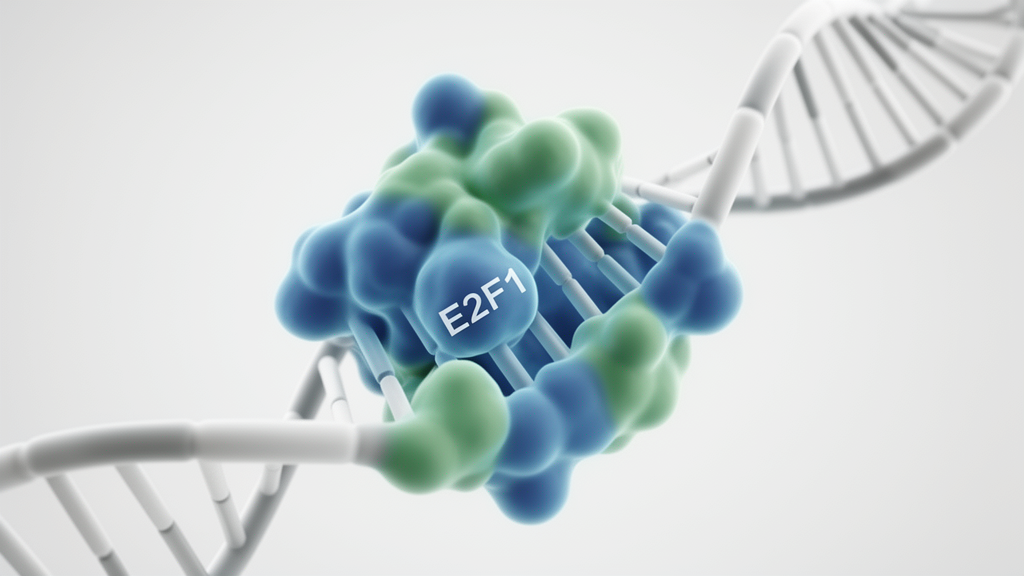
The study’s primary finding is that E2F1 employs a shortcut method to cause division. Instead of requiring the extensive physical unpacking of the genome, the E2F1 protein binds directly to a small area of DNA that remains tightly packaged. This direct binding allows E2F1 to switch on the genes related to cell division using a very limited amount of physical space in the genome. Shariati described this as a surprising discovery, as it represents a new way for transcription factors to activate genes and allow cells to completely change their fate and proceed to divide without significant chromatin accessibility changes.
This ability to activate cell division places E2F1 in a special category of genes known as pioneer factors. Pioneer factors are capable of unlocking tightly packed DNA to fundamentally reprogram cells. This status suggests that cells must maintain a precise level of E2F1 to ensure proper cell division. The researchers found that cells can sense a specific threshold of E2F1. Once the levels of E2F1 cross this threshold, dormant cells begin to divide. This threshold mechanism highlights the delicate balance required to maintain cellular homeostasis and prevent uncontrolled proliferation.
To investigate the dynamics of this shortcut method, the research team utilized live single-cell imaging techniques developed in the Shariati lab, including their in-house DeepSea software. The study revealed that while the shortcut method is effective, it has limitations. Cells can only divide at most three times without any additional growth signals.
Despite this limitation, the shortcut method used by E2F1 occurs much faster than the typical process involving nutrients and growth signals. Shariati explained that cancers may overcome the typical checks and balances that cells use to maintain a dormant state.
The implications of this discovery extend to the potential development of targeted cancer therapies. Understanding how E2F1 activates genes after binding to the genome could help in designing more precise interventions. Shariati plans to further study the specific mechanisms by which E2F1 activates genes post-binding. This research could lead to a more targeted approach for interfering with this pathway in cancer contexts. Additionally, he intends to study the eight other genes in the same family as E2F1, some of which cause cells to become dormant, and their roles in cancer.
Rubin also expressed interest in whether E2F1 can be directly targeted in cancers. Current efforts in the field have focused on targeting E2F1’s role in cell division by inhibiting upstream proteins that control E2F1 activity. Rubin and his team are exploring whether there are ways to target E2F1 itself to stop cancer cells from proliferating. The initial steps involve identifying which specific cancers would benefit from blocking E2F1 activity and finding molecules that can bind to and prevent E2F1 from activating cell cycle gene expression.
Subject of Research: Mechanism of E2F1-mediated cell division bypassing chromatin remodeling
Article Title: Cancer-linked gene uses ‘shortcut’ to trigger cell division
Article References: Cancer-linked gene uses ‘shortcut’ to trigger cell division. Original publication (Bibliographic details unavailable.)
Image Credits: AI Generated
DOI: Not provided
Keywords: E2F1, cell division, cancer research, gene expression, chromatin accessibility, pioneer factors, UC Santa Cruz, EMBO Journal, cell proliferation, transcription factors, Cancer-linked, gene
News Source: Nathaniel Bowman. (November 9, 2026). Cancer Gene E2F1 Bypasses Standard Rules to Trigger Cell Division. Scienmag.