In a theoretical paper published in Frontiers in Physiology, researchers James Z. Liu and Helen Gu of the First Institute of All Medicines have introduced Recovery Physiology as a testable systems framework designed to investigate how living systems restore function following perturbation under finite energetic, structural, regulatory, and environmental constraints. The authors formulate this conceptual architecture to address the fundamental biological challenge of preserving functional capacity through dynamic, measurable response mechanisms.
Within the proposed framework, recovery is defined narrowly as the time-dependent response that occurs after a prospectively specified perturbation measurably displaces one or more prespecified functional variables from an identified reference state.
Operating alongside this definition, Recovery Capacity is conceptualized separately as a hypothetical latent, context-dependent property that may influence the magnitude, rate, completeness, coordination, and cost of the post-perturbation response. The authors specifically caution that favorable functional outcomes cannot be treated by definition as evidence of high Recovery Capacity, underscoring that latent capacity and observed outcomes represent distinct analytical dimensions that require separate empirical evaluation.
To organize and evaluate these recovery dynamics, the framework proposes an initial structural model comprising three candidate domains: bioenergetic capacity, biological information integrity, and systems coordination. This parsimonious and revisable domain architecture is intended to capture the multi-dimensional facets of physiological restoration without introducing unnecessary model complexity.
The Recovery Physiology framework advances three separable, empirically testable claims regarding biological restoration. First, recovery phenotypes may possess reliable challenge-specific latent structures, with the potential existence of a higher-order cross-challenge factor. Second, the proposed three-domain architecture may account for recovery dynamics beyond simpler alternative models. Third, dynamic recovery trajectories may contribute incremental prognostic information beyond what is provided by baseline physiological state and established clinical constructs.
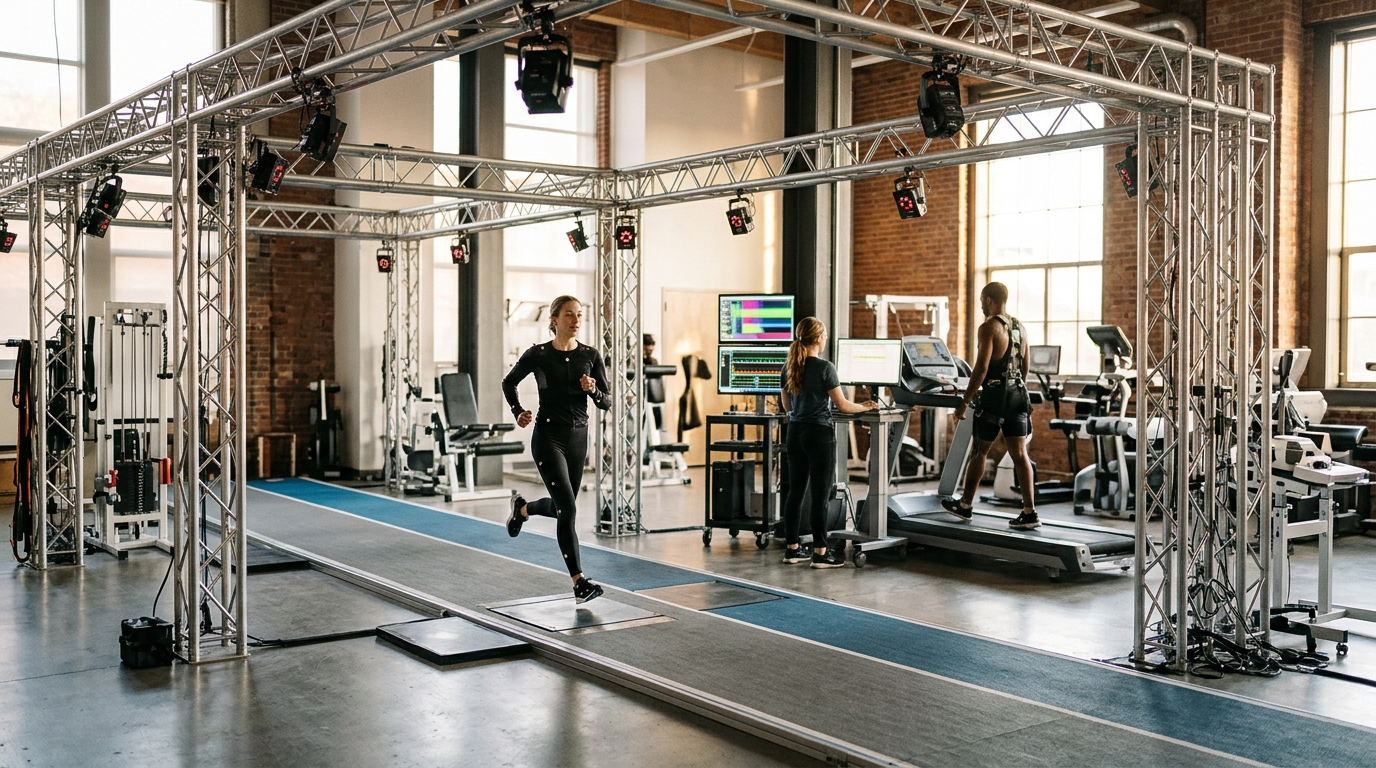
To ensure empirical testability, each of the three claims is paired with explicit competing models and falsification criteria. The authors illustrate how these propositions can be evaluated in practice through a standardized exercise protocol designed to test measurement reliability, construct validity, incremental predictive validity, cross-challenge generalization, and responsiveness to targeted interventions.
The authors emphasize that Recovery Physiology is not presented as an independent new medical discipline or a clinical management system. Instead, its ultimate scientific and practical validity depends on whether prespecified recovery metrics can demonstrably outperform more parsimonious models grounded in age, baseline function, disease burden, frailty, physiological reserve, intrinsic capacity, allostatic load, and established measures of physical resilience.
Originating from the First Institute of All Medicines in New Castle, the work was received on 26 July 2026 and accepted on 15 October 2026 for publication in the Integrative Physiology section of Frontiers in Physiology. Corresponding author James Z. Liu and co-author Helen Gu distribute the framework under an open-access Creative Commons Attribution License ahead of final formatting.
Subject of Research: Theoretical systems framework for recovery physiology and functional restoration
Article Title: Recovery physiology: a testable systems framework for preserving the capacity to function
Article References: Liu, J. Z., & Gu, H. Y. (2026). Recovery physiology: a testable systems framework for preserving the capacity to function. Frontiers in Physiology, 17, Article 1948720. https://doi.org/10.3389/fphys.2026.1948720
Image Credits: AI Generated
DOI: 10.3389/fphys.2026.1948720
Keywords: Recovery Physiology, Recovery Capacity, Integrative Physiology, Perturbation-Response, Systems Coordination, Bioenergetic Capacity, Biological Information Integrity, Physical Resilience, Recovery, physiology, testable, systems
News Source: Drew Townsend. (November 12, 2026). Researchers Propose Recovery Physiology Framework to Test Dynamic Functional Restoration. Scienmag.