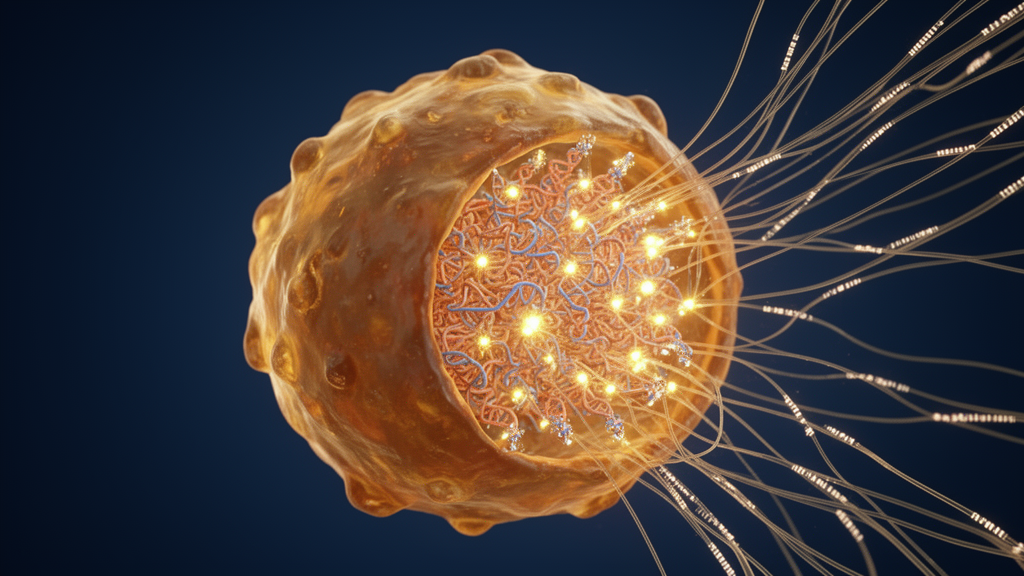
Most human cancers share a striking but often overlooked feature: a global upregulation of transcription, known as hypertranscription. A new review in Epigenetics & Chromatin, authored by Steven Henikoff, Robert N. Eisenman and Kami Ahmad, examines how this widespread transcriptional amplification is driven by oncogene-encoded transcription factors and what its consequences may be for chromosome integrity, aging and neoplasia.
According to the review, the interactions between these oncogenic transcription factors and RNA Polymerase II are mediated by kinases that phosphorylate the polymerase’s C-terminal domain, a step that drives productive elongation of transcription. The authors note that the combinatorial complexity involved—hundreds of transcription factors and kinases acting on thousands of genes whose expression differs between cell types—has obscured common features that may result from hypertranscription across cancers.
One such shared feature, the review highlights, is histone overexpression. The authors propose that this surplus of histones can accelerate cell-cycle progression and cause transcription-replication conflicts, which in turn can trigger chromosomal instability. These mechanisms are presented as potential consequences of hypertranscription, linking the transcriptional amplification seen in tumors to the genomic damage that characterizes cancer.
The review also points to a practical implication: profiling of RNA Polymerase II provides a direct measure of hypertranscription and of histone gene upregulation in cancer. The authors suggest this could serve as a pan-cancer diagnostic to stratify patient populations and to follow the course of treatment. As the article is a review, this proposal represents the authors’ assessment of the field rather than the results of a new clinical study, and its diagnostic value would need to be established through further research.
Finally, the authors turn to therapeutics. Many broadly effective anticancer drugs target Pol II activity, and the review argues that a better understanding of how such drugs counteract hypertranscription has implications for drug development and for improved treatment regimens. By framing hypertranscription as a common denominator of cancer epigenetics, the review aims to draw attention to a phenomenon the authors describe as an ‘invisible hand’—one that may shape tumor behavior in ways that single-gene analyses have missed.
Subject of Research: Hypertranscription in cancer and its effects on chromosome integrity
Article Title: Hypertranscription: the invisible hand in cancer epigenetics
Article References: Henikoff, S., Eisenman, R. N., & Ahmad, K. (2026). Hypertranscription: the invisible hand in cancer epigenetics. Epigenetics & Chromatin. https://doi.org/10.1186/s13072-026-00702-0
Image Credits: AI Generated
DOI: 10.1186/s13072-026-00702-0
Keywords: hypertranscription, cancer epigenetics, RNA Polymerase II, transcription factors, histone overexpression, chromosomal instability, oncogenes, kinases, Pol II CTD phosphorylation, Epigenetics & Chromatin, invisible, hand
News Source: Nathaniel Bowman. (October 28, 2026). Cancer cells ramp up transcription across the genome, review finds. Scienmag.