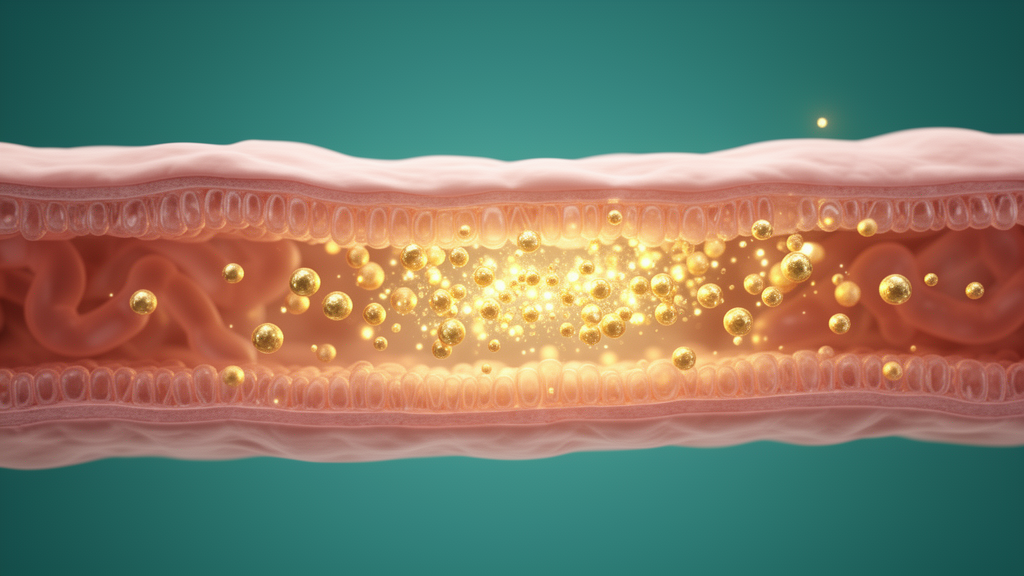
A tiny capsule designed to carry a fragile fatty acid past the stomach and into the colon has shown early promise in diabetic mice, according to a new preclinical study published in Frontiers in Nutrition. Researchers at Peking University Third Hospital built microspheres from chitosan, protocatechualdehyde and calcium alginate, loaded them with sodium butyrate, and tested whether the formulation could raise butyrate levels in the gut and improve metabolic markers in mice with high-fat diet and streptozotocin-induced diabetes. The results were encouraging but came with clear caveats: the study was small, the doses were not matched across comparison groups, and the microbiota findings did not survive rigorous statistical correction.
Sodium butyrate is the salt form of butyrate, a short-chain fatty acid that gut bacteria normally produce when they ferment dietary fiber. It has attracted attention because it can act as a histone deacetylase inhibitor, stimulate glucagon-like peptide-1 secretion through free fatty acid receptors, and support the integrity of the intestinal barrier. The problem with taking it by mouth is simple: it is rapidly absorbed in the proximal small intestine, so very little reaches the colon, where much of its supposed local benefit would occur. Delivering butyrate to the colon intact has therefore become a central challenge for researchers hoping to exploit its metabolic effects.
The microspheres were designed to solve that delivery problem. The team first synthesized a chitosan-protocatechualdehyde conjugate through Schiff-base condensation, then used a water-in-oil microemulsion method combined with calcium-mediated ionic crosslinking of sodium alginate. Positively charged CS-PA deposited electrostatically onto the negatively charged calcium alginate surface, forming the composite shell. The resulting particles carried a drug-loading content of 27.23 percent by weight and an encapsulation efficiency of 37.70 percent relative to the sodium butyrate initially added. Notably, the authors report that batch-specific scanning electron microscopy, particle-size distribution and zeta potential were not determined, an acknowledged gap in the physicochemical characterization.
In vitro release testing supported the intended colon-directed design. When microspheres were incubated in simulated gastric fluid at pH 1.2 for two hours, only 0.91 percent of the butyrate was released. In simulated intestinal fluid at pH 6.8 over four hours, release reached 8.53 percent. But in simulated colonic fluid at pH 7.2 containing colonic bacterial enzymes, over 24 hours, 94.17 percent of the butyrate was released, using the concentration measured in a phosphoric acid reference condition as the complete-release benchmark. The release pattern increased in the order gastric, intestinal, colonic, exactly as a colon-targeting formulation should behave in the laboratory.
For the animal experiment, 35 male C57BL/6J mice were allocated to seven groups: a normal control and six diabetic groups receiving vehicle, unloaded microspheres, free sodium butyrate, the loaded microspheres, metformin, or metformin plus the microspheres. Diabetes was induced by six weeks of high-fat diet followed by three daily intraperitoneal streptozotocin injections at 50 mg/kg, with mice considered diabetic when random blood glucose reached at least 16.7 mmol/L. The intervention lasted four weeks, and 34 of the 35 mice completed it; one mouse in the unloaded-microsphere group died during gavage from suspected accidental aspiration and provided no endpoint samples.
The metabolic results were the strongest part of the study. Fecal butyrate in the microsphere group reached 0.0523 ± 0.0121 μg/mg versus 0.0180 ± 0.0068 μg/mg in the untreated diabetic model group, a difference the authors report as statistically significant after multiple-comparison adjustment (p < 0.0001). Random blood glucose fell from 30.42 mmol/L at baseline to 18.64 mmol/L at week four in the microsphere group. HOMA-IR, a surrogate index of insulin resistance calculated from fasting glucose and fasting insulin, was lower in the microsphere group than in the model group (3.14 ± 0.43 vs. 4.81 ± 1.30; p = 0.046), and serum interleukin-6, an inflammatory marker, was also reduced (85.82 ± 1.90 vs. 93.55 ± 4.10 pg/mL; p = 0.008). Serum LDL cholesterol and alpha-diversity of the gut microbiota did not change significantly.
Metformin remained the stronger glucose-lowering agent. Random blood glucose fell to 14.16 mmol/L with metformin alone and 12.82 mmol/L with metformin plus microspheres, and between-group comparisons showed metformin and the combination both outperformed the microspheres alone (p = 0.022 and p = 0.002, respectively). The combination group did not differ significantly from metformin alone for blood glucose or HOMA-IR after adjustment, so the authors interpret the data as supporting compatibility and potential complementary activity rather than a proven additive benefit. Free sodium butyrate also lowered blood glucose and HOMA-IR without significantly raising fecal butyrate, which the authors suggest is consistent with rapid proximal absorption of unencapsulated butyrate.
The microbiota findings were more tentative. Sequencing of the V3–V4 region of the 16S rRNA gene from fecal samples of all 34 completing mice yielded 2,669 amplicon sequence variants after rarefaction to 29,948 sequences per sample. Principal coordinate analysis based on Bray-Curtis dissimilarities showed that normal-control samples clustered apart from the diabetic groups, while the intervention groups overlapped substantially with one another. Linear discriminant analysis effect size analysis identified 22 differential features in the model-versus-microsphere comparison, including enrichment of Bacteroidota, Muribaculaceae, Romboutsia, Bacteroides, Alistipes and Butyricimonas in the microsphere group. However, in a conservative Benjamini-Hochberg sensitivity analysis across all 263 tested taxonomic features, none of the features from any of the five model-versus-intervention comparisons retained significance. Similarly, of 300 predicted KEGG pathways compared between the model and microsphere groups using PICRUSt2, 46 met an unadjusted p < 0.05 threshold, but none survived correction, with the lowest adjusted q value at 0.1190.
The authors are candid about the limitations. The SB-equivalent and carrier-equivalent doses were not matched across groups: the microsphere formulation delivered approximately 27.23 mg of sodium butyrate per kilogram per day, while the free sodium butyrate group received 100 mg/kg/day and the unloaded carrier group received 100 mg/kg/day of carrier. This prevents separation of the effects of the butyrate itself, the carrier material, and the delivery mechanism. Only one dose of the microspheres was tested, the unloaded-microsphere group had just four evaluable mice, and independent in vitro incubations plus unlabeled luminal butyrate measurements cannot demonstrate that intact microspheres actually reached the colon in living animals. The gastrointestinal distribution experiment, which found colonic butyrate roughly 28-fold higher than gastric and 11-fold higher than small-intestinal levels in three treated mice, describes regional differences in total luminal butyrate but cannot distinguish administered butyrate from butyrate produced endogenously by gut microbes. Only interleukin-6 was measured as a circulating inflammatory marker, baseline microbiota samples and cage-effect analyses were unavailable, and microbial functions were inferred from marker-gene profiles rather than directly measured.
What the study does establish is a preclinical signal worth pursuing. In a four-week mouse model of induced diabetes, a colon-targeted butyrate formulation increased fecal butyrate, improved glycemic indices, and reduced a circulating inflammatory marker relative to untreated diabetic controls, without changing LDL cholesterol or community diversity. The authors call for follow-up studies with matched-dose controls, multiple dose levels, complete microsphere characterization, labeled-drug or particle tracking to verify in vivo targeting, longitudinal microbiota sampling, and direct measurements of glucose tolerance, intestinal barrier function and tissue insulin signaling. They also suggest microbiota-transfer or depletion experiments to test whether the observed microbial changes contribute to the metabolic response. Until such work is done, the formulation remains an experimental delivery system with promising laboratory behavior and early animal data, not a validated therapy, and nothing in the study supports clinical recommendations for people with diabetes.
Subject of Research: Colon-targeted sodium butyrate microspheres and their metabolic and gut microbiota effects in a mouse model of type 2 diabetes
Article Title: Colon-targeting potential and metabolic effects of sodium butyrate-loaded CPC microspheres in type 2 diabetic mice
Article References: Zhang, Q., & Yao, G. (2026). Colon-targeting potential and metabolic effects of sodium butyrate-loaded CPC microspheres in type 2 diabetic mice. Frontiers in Nutrition, 13, Article 1956044. https://doi.org/10.3389/fnut.2026.1956044
Image Credits: AI Generated
DOI: 10.3389/fnut.2026.1956044
Keywords: sodium butyrate, colon-targeted delivery, microspheres, type 2 diabetes, gut microbiota, short-chain fatty acids, HOMA-IR, interleukin-6, metformin, 16S rRNA sequencing, preclinical study, chitosan alginate
News Source: Daisy Hatcher. (October 29, 2026). Butyrate Microspheres Boost Gut Butyrate and Ease Diabetes Signs in Mice. Scienmag.