• HOME
  • NEWS
  • EXPLORE
    • CAREER
      • Companies
      • Jobs
    • EVENTS
    • iGEM
      • News
      • Team
    • PHOTOS
    • VIDEO
    • WIKI
  • BLOG
  • COMMUNITY
    • FACEBOOK
    • INSTAGRAM
    • TWITTER
Friday, October 30, 2026
BIOENGINEER.ORG
No Result
View All Result
  • Login
  • HOME
  • NEWS
  • EXPLORE
    • CAREER
      • Companies
      • Jobs
        • Lecturer
        • PhD Studentship
        • Postdoc
        • Research Assistant
    • EVENTS
    • iGEM
      • News
      • Team
    • PHOTOS
    • VIDEO
    • WIKI
  • BLOG
  • COMMUNITY
    • FACEBOOK
    • INSTAGRAM
    • TWITTER
No Result
View All Result
Bioengineer.org
No Result
View All Result
Home NEWS Science News Health

Parent-Caregivers of Children with Medical Complexity in Singapore Share Their Lived Experience

by
October 29, 2026
in Health
Reading Time: 2 mins read
0
Parent-Caregivers of Children with Medical Complexity in Singapore Share Their Lived Experience

Parent-Caregivers of Children with Medical Complexity in Singapore Share Their Lived Experience

Share on FacebookShare on TwitterShare on LinkedinShare on RedditShare on Telegram

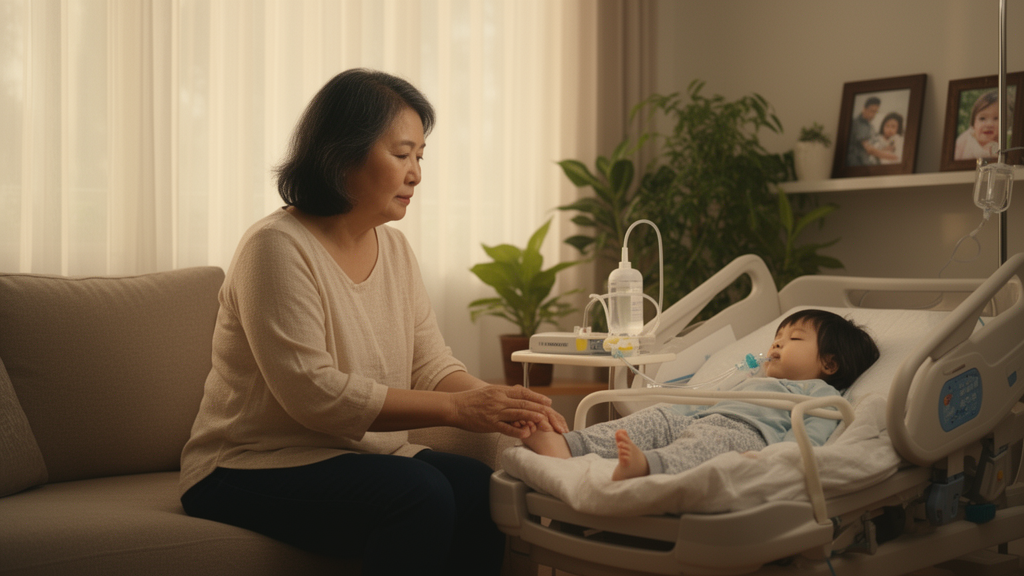
A qualitative study published in BMC Palliative Care has documented how parent-caregivers of children with medical complexity in Singapore experience their caregiving journeys, identifying six key themes that span personal trauma, practical learning, social support, and structural barriers. Children with medical complexity have conditions that ultimately lead to death despite curative efforts, and although they remain a small population in Singapore, their numbers are steadily growing, placing complex emotional, financial, and social demands on the families who care for them.

The researchers conducted a qualitative descriptive study aimed at characterizing the lived experiences of these parent-caregivers. Seventeen families were purposefully selected to participate in semi-structured interviews that explored caregiving journeys, social support, personal reflections, and future concerns. The study was motivated in part by the observation that, despite evolving paediatric care systems, limited research has explored the lived experiences of these families, particularly within Asian contexts where caregiving practices, cultural norms, and family values may differ from Western settings.

The analysis identified six themes characterising the lived experiences of parent-caregivers: the early days of trauma, learning to care, the support of social networks, navigating complex systems of care, the challenges of disability inclusion in Singapore, and confronting the future. The authors emphasise that the journey is certainly not a linear one. Rather than portraying parent-caregivers simply as managers of their child’s medical needs, the themes reframe them as individuals who must continually negotiate intimate personal experiences and broader structural forces in order to provide the best possible care for their children.

The study also surfaced aspects of caregiving that the researchers describe as uniquely Singaporean. These include the involvement of migrant domestic workers in care work, and manifestations of social stigma within structures such as aid organisations. These findings suggest that the caregiving experience is shaped not only by the child’s medical condition but also by the local social and institutional environment in which families seek support.

Concluding from their in-depth insights, the authors argue that multidimensional, individualized interventions across personal, relational, and structural domains are essential to improve outcomes for families of children with medical complexity. As a qualitative descriptive study of seventeen purposefully selected families in a single country, the findings offer a detailed portrait of one specific population rather than generalisable estimates, but they provide a foundation for designing support systems that reflect what these parent-caregivers actually experience and need.

Subject of Research: Qualitative research on the lived experiences of Singaporean parent-caregivers of children with medical complexity

Article Title: Lived experience of parent-caregivers of children with medical complexity in Singapore: a qualitative study

Article References: Madhumitha, A., Suo, M., & Chow, C. C.-T. (2026). Lived experience of parent-caregivers of children with medical complexity in Singapore: a qualitative study. BMC Palliative Care. https://doi.org/10.1186/s12904-026-02392-7

Image Credits: AI Generated

DOI: 10.1186/s12904-026-02392-7

Keywords: children with medical complexity, parent-caregivers, qualitative research, Singapore, palliative care, semi-structured interviews, social support, disability inclusion, migrant domestic workers, caregiving, Lived, experience

News Source: Ophelia Keating. (October 29, 2026). Parent-Caregivers of Children with Medical Complexity in Singapore Share Their Lived Experience. Scienmag.

Tags: caregivingchildren with medical complexitydisability inclusionexperiencelivedmigrant domestic workersPalliative careparent-caregiversqualitative researchsemi-structured interviewsSingaporeSocial support
Share12Tweet7Share2ShareShareShare1

Related Posts

Alisma-Derived Triterpenoid Eases Acute Lung Injury in Mice by Blocking IL-17A/NF-κB Signaling

Alisma-Derived Triterpenoid Eases Acute Lung Injury in Mice by Blocking IL-17A/NF-κB Signaling

October 30, 2026
Simulating the Microcirculation: How Models Reveal Hidden Blood Vessel Networks

Simulating the Microcirculation: How Models Reveal Hidden Blood Vessel Networks

October 30, 2026

Round and tape sutures hold equally well inside shoulder anchors, cadaver study finds

October 30, 2026

Scientists map plan to test Raman spectroscopy for real-time glioma diagnosis

October 30, 2026

POPULAR NEWS

  • Coronary calcium on lung scans may flag heart risk in pulmonary embolism patients

    Coronary calcium on lung scans may flag heart risk in pulmonary embolism patients

    29 shares
    Share 12 Tweet 7
  • Gold nanoparticles turn blue in the presence of milk fatty acids, pointing toward low-cost fat sensing

    29 shares
    Share 12 Tweet 7
  • Caper Flower Extract Shows Antioxidant and Vibrio-Killing Power in Lab Tests

    29 shares
    Share 12 Tweet 7
  • Cold agglutinin disease: rare anemia gets first approved drug as treatment map redrawn

    29 shares
    Share 12 Tweet 7

About

We bring you the latest biotechnology news from best research centers and universities around the world. Check our website.

Follow us

Recent News

Electric vehicle knowledge, attitude and practice may be one fused mindset, Indian survey suggests

Alisma-Derived Triterpenoid Eases Acute Lung Injury in Mice by Blocking IL-17A/NF-κB Signaling

Simulating the Microcirculation: How Models Reveal Hidden Blood Vessel Networks

Subscribe to Blog via Email

Enter your email address to subscribe to this blog and receive notifications of new posts by email.

Join 87 other subscribers
  • Contact Us

Bioengineer.org © Copyright 2023 All Rights Reserved.

Welcome Back!

Login to your account below

Forgotten Password?

Retrieve your password

Please enter your username or email address to reset your password.

Log In
No Result
View All Result
  • Homepages
    • Home Page 1
    • Home Page 2
  • News
  • National
  • Business
  • Health
  • Lifestyle
  • Science

Bioengineer.org © Copyright 2023 All Rights Reserved.