


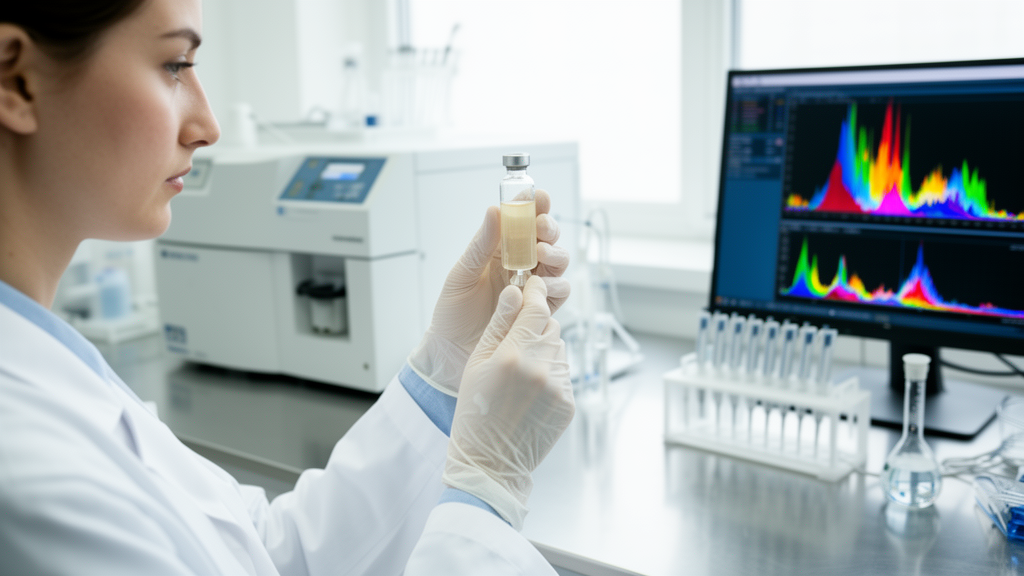
Patients experiencing acute exacerbations of COPD (AECOPD) do not share a single molecular response to their disease, according to a study published in BMC Pulmonary Medicine that combined deep proteomic profiling of induced sputum with quantitative chest CT radiomics. The researchers identified distinct molecular endotypes among exacerbating patients, one characterized by enriched ciliary proteins and another dominated by keratinization-related epithelial programs, and linked these patterns to measurable features on lung imaging.
The study analyzed induced sputum from 35 patients with AECOPD, 19 patients with stable COPD, and 15 healthy controls. Using weighted gene co-expression network analysis and consensus clustering, the team defined molecular endotypes within the exacerbation group. The ciliary-enriched endotype showed upregulation of ciliary proteins such as PCM1 and CFAP58, together with elevated MUC5AC, a pattern the authors interpret as reflecting preserved epithelial integrity. In contrast, the keratinization-dominant endotype featured epithelial repair programs, suggesting a different trajectory of airway epithelial response during exacerbation.
Correlating these proteomic modules with radiomic features from chest CT added a spatial dimension to the molecular findings. The keratinization module correlated positively with ground-glass opacity volume, consolidation, and parenchymal heterogeneity, while the ciliary module was associated with homogeneous lung parenchyma. This alignment between molecular endotype and radiographic inflammatory burden suggests that routinely acquired imaging may carry information about the underlying airway biology of an exacerbation.
The analysis also revealed dysregulation and consumptive depletion of mucosal immunoglobulins during AECOPD. Building on this observation, the researchers derived a composite prognostic risk score from immunoglobulin-related features measured at baseline. This score independently predicted future severe exacerbations and, according to the study, significantly outperformed the traditional clinical predictor of prior exacerbation history.
The authors conclude that AECOPD is molecularly heterogeneous, with a ciliary-enriched endotype reflecting preserved epithelial integrity and a keratinization-dominant endotype associated with greater radiographic inflammatory burden, and that baseline immunoglobulin levels provide powerful prognostic information. They present these findings as a framework for endotype-driven precision management in COPD. As with all early-stage biomarker research, the results come from a single profiling study with modest sample sizes, and the composite score’s predictive value will require validation in independent cohorts before it can inform routine clinical decision-making.
Subject of Research: Molecular endotypes and sputum proteomic biomarkers in acute exacerbations of COPD
Article Title: Ciliary-enriched and keratinization-dominant endotypes drive molecular heterogeneity in AECOPD
Article References: Zhong, J., Wang, Z., Li, H., Yang, K., Meng, Y., Chen, S., & Wang, L. (2026). Ciliary-enriched and keratinization-dominant endotypes drive molecular heterogeneity in AECOPD. BMC Pulmonary Medicine. https://doi.org/10.1186/s12890-026-04636-x
Image Credits: AI Generated
DOI: 10.1186/s12890-026-04636-x
Keywords: COPD, AECOPD, sputum proteomics, molecular endotypes, ciliary proteins, keratinization, radiomics, chest CT, immunoglobulins, exacerbation risk score, biomarkers, precision medicine
News Source: Kenneth Gardner. (October 29, 2026). Sputum Proteomics Reveals Two Molecular Endotypes in COPD Exacerbations. Scienmag.



