• HOME
  • NEWS
  • EXPLORE
    • CAREER
      • Companies
      • Jobs
    • EVENTS
    • iGEM
      • News
      • Team
    • PHOTOS
    • VIDEO
    • WIKI
  • BLOG
  • COMMUNITY
    • FACEBOOK
    • INSTAGRAM
    • TWITTER
Friday, October 30, 2026
BIOENGINEER.ORG
No Result
View All Result
  • Login
  • HOME
  • NEWS
  • EXPLORE
    • CAREER
      • Companies
      • Jobs
        • Lecturer
        • PhD Studentship
        • Postdoc
        • Research Assistant
    • EVENTS
    • iGEM
      • News
      • Team
    • PHOTOS
    • VIDEO
    • WIKI
  • BLOG
  • COMMUNITY
    • FACEBOOK
    • INSTAGRAM
    • TWITTER
No Result
View All Result
Bioengineer.org
No Result
View All Result
Home NEWS Science News Technology

Branch Wood Proves a Poor Substitute for Stem Wood in Spruce Pellet Production

by
October 29, 2026
in Technology
Reading Time: 2 mins read
0
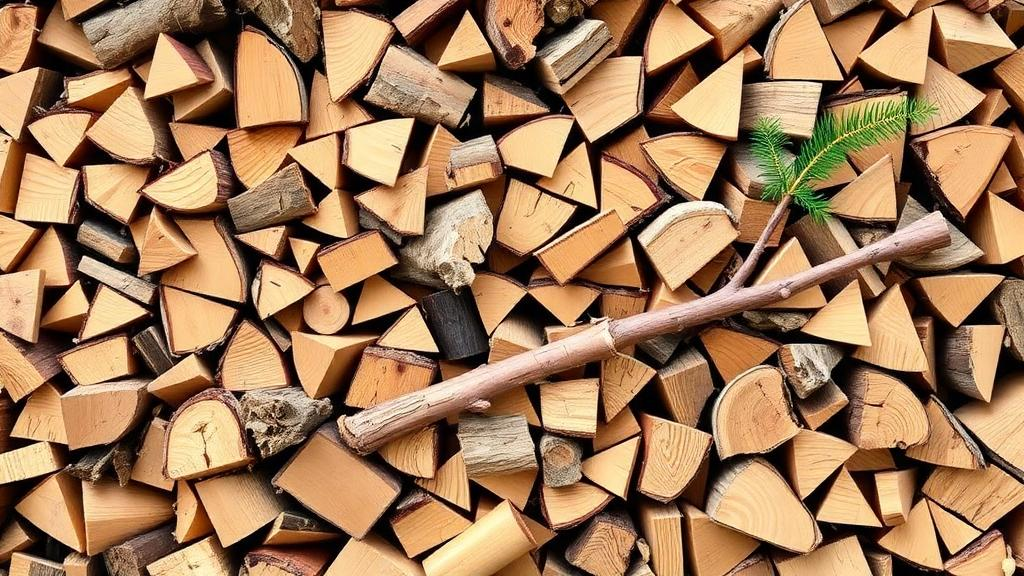
Branch Wood Proves a Poor Substitute for Stem Wood in Spruce Pellet Production

Branch Wood Proves a Poor Substitute for Stem Wood in Spruce Pellet Production

Share on FacebookShare on TwitterShare on LinkedinShare on RedditShare on Telegram

Pellets made from Norway spruce branches perform markedly worse than pellets made from stem wood, according to a laboratory study in which researchers pressed pellets from four distinct fractions of a single debarked tree. The work, published open access in Discover Applied Sciences by Magnus Ståhl, Jonas Berghel, Gunnar Henriksson and Stefan Frodeson, examined heartwood, sapwood, juvenile wood and branch material from one Picea abies stem and compared how each behaved in single pellet pressing.

The rising demand for wood fuel pellets and growing competition for conventional raw materials have intensified interest in alternative forest-derived feedstocks, the authors note. Juvenile wood and branches are among the residues that could expand the raw material base, but branches differ chemically and morphologically from stem wood, and their use may influence both the energy needed to pelletize the material and the quality of the resulting pellets.

In the experiments, pellets were produced in single pellet press systems at moisture contents between 6 and 12 percent on a wet basis. Energy inputs were quantified separately as compression work, friction work and total work, allowing the researchers to distinguish the mechanical demands of each feedstock fraction. Pellet quality was then evaluated through measurements of solid density, hardness and mechanical durability.

The results showed that pellet quality was broadly comparable among the stem-derived fractions, meaning heartwood, sapwood and juvenile wood performed similarly under the tested conditions. Branch material, however, told a different story: pellets produced from branches showed markedly inferior properties, including durability and hardness, when processed under conditions optimized for softwood. The branch-derived feedstock also exhibited pronounced differences in cell morphology and chemical composition relative to the stem wood fractions.

In several respects, the authors report, pelletizing branch material appears more similar to pellet production from hardwood than from softwood, a distinction with practical consequences for mills designed around softwood sawdust. Because the study used material from a single tree and a single pellet press technique, the findings describe the mechanical behaviour of these specific fractions under controlled conditions rather than full-scale production outcomes. The paper discusses the implications for utilizing juvenile wood and branches and presents recommendations for the industry, but the central message is that branch wood cannot simply be swapped into softwood pelletizing without accounting for its distinct structure and chemistry.

Subject of Research: Single pellet pressing of heartwood, sapwood, juvenile wood and branch fractions from one Norway spruce tree

Article Title: Mechanical behaviour of Norway spruce fractions in single pellet pressing and consequences for using juvenile wood and branches

Article References: Ståhl, M., Berghel, J., Henriksson, G., & Frodeson, S. (2026). Mechanical behaviour of Norway spruce fractions in single pellet pressing and consequences for using juvenile wood and branches. Discover Applied Sciences, 8(11), Article 1279. https://doi.org/10.1007/s42452-026-09802-8

Image Credits: AI Generated

DOI: 10.1007/s42452-026-09802-8

Keywords: Norway spruce, wood pellets, single pellet pressing, juvenile wood, branches, pellet durability, biofuel, forest residues, Picea abies, compression energy, Mechanical, behaviour

News Source: Denise Maddox. (October 29, 2026). Branch Wood Proves a Poor Substitute for Stem Wood in Spruce Pellet Production. Scienmag.


Tags: behaviourBiofuelBranchescompression energyforest residuesjuvenile woodmechanicalNorway sprucepellet durabilityPicea abiessingle pellet pressingwood pellets
Share12Tweet7Share2ShareShareShare1

Related Posts

Frequency-guided AI detector spots tiny pests in crowded trap images

Frequency-guided AI detector spots tiny pests in crowded trap images

October 30, 2026
Virtual Reality Titration Training Shows No Clear Advantage Over Real Lab Work in Pilot Study

Virtual Reality Titration Training Shows No Clear Advantage Over Real Lab Work in Pilot Study

October 30, 2026

Attitudes steer EV purchase intent in Bahrain more than price or range

October 30, 2026

Machine learning predicts wastewater aeration efficiency, but only when data stay close to home

October 30, 2026

POPULAR NEWS

  • Gut microbes linked to Alzheimer's, Parkinson's, Huntington's and ALS

    Gut microbes linked to Alzheimer’s, Parkinson’s, Huntington’s and ALS

    29 shares
    Share 12 Tweet 7
  • Lipid emulsions as antidotes: a 2025 review maps promise and limits in drug poisoning

    29 shares
    Share 12 Tweet 7
  • Grape pomace bread boosts fiber and antioxidants but tests taste limits

    29 shares
    Share 12 Tweet 7
  • TGF-β signaling symposium reveals new paths from development to cancer therapy

    29 shares
    Share 12 Tweet 7

About

We bring you the latest biotechnology news from best research centers and universities around the world. Check our website.

Follow us

Recent News

Two Heart Disease Genes in One Family: Case Report Reveals Genetic Complexity of Dilated Cardiomyopathy

Nearly one in three teens in Brazil’s poorest urban schools reports chronic musculoskeletal pain

Frequency-guided AI detector spots tiny pests in crowded trap images

Subscribe to Blog via Email

Enter your email address to subscribe to this blog and receive notifications of new posts by email.

Join 87 other subscribers
  • Contact Us

Bioengineer.org © Copyright 2023 All Rights Reserved.

Welcome Back!

Login to your account below

Forgotten Password?

Retrieve your password

Please enter your username or email address to reset your password.

Log In
No Result
View All Result
  • Homepages
    • Home Page 1
    • Home Page 2
  • News
  • National
  • Business
  • Health
  • Lifestyle
  • Science

Bioengineer.org © Copyright 2023 All Rights Reserved.