• HOME
  • NEWS
  • EXPLORE
    • CAREER
      • Companies
      • Jobs
    • EVENTS
    • iGEM
      • News
      • Team
    • PHOTOS
    • VIDEO
    • WIKI
  • BLOG
  • COMMUNITY
    • FACEBOOK
    • INSTAGRAM
    • TWITTER
Tuesday, May 12, 2026
BIOENGINEER.ORG
No Result
View All Result
  • Login
  • HOME
  • NEWS
  • EXPLORE
    • CAREER
      • Companies
      • Jobs
        • Lecturer
        • PhD Studentship
        • Postdoc
        • Research Assistant
    • EVENTS
    • iGEM
      • News
      • Team
    • PHOTOS
    • VIDEO
    • WIKI
  • BLOG
  • COMMUNITY
    • FACEBOOK
    • INSTAGRAM
    • TWITTER
  • HOME
  • NEWS
  • EXPLORE
    • CAREER
      • Companies
      • Jobs
        • Lecturer
        • PhD Studentship
        • Postdoc
        • Research Assistant
    • EVENTS
    • iGEM
      • News
      • Team
    • PHOTOS
    • VIDEO
    • WIKI
  • BLOG
  • COMMUNITY
    • FACEBOOK
    • INSTAGRAM
    • TWITTER
No Result
View All Result
Bioengineer.org
No Result
View All Result
Home NEWS Science News Biology

Brain protein that causes Alzheimer’s also protects against the disease: USask research

Bioengineer by Bioengineer
February 8, 2021
in Biology
Reading Time: 3 mins read
0
IMAGE
Share on FacebookShare on TwitterShare on LinkedinShare on RedditShare on Telegram

IMAGE

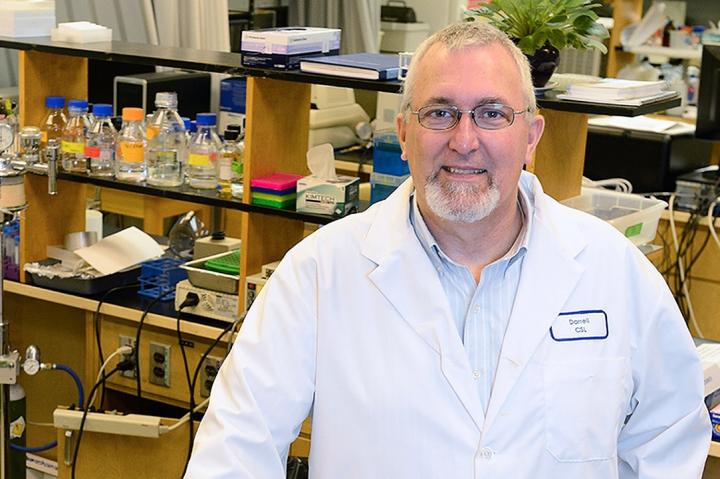
Credit: University of Saskatchewan

Findings from a new study on Alzheimer’s disease (AD), led by researchers at the University of Saskatchewan (USask), could eventually help clinicians identify people at highest risk for developing the irreversible, progressive brain disorder and pave the way for treatments that slow or prevent its onset.

The research, published in the journal Scientific Reports in early January, has demonstrated that a shorter form of the protein peptide believed responsible for causing AD (beta-amyloid 42, or Aβ42) halts the damage-causing mechanism of its longer counterpart.

“While Aβ42 disrupts the mechanism that is used by brain cells to learn and form memories, Aβ38 completely inhibits this effect, essentially rescuing the brain cells,” said molecular neurochemist Darrell Mousseau, professor in USask’s Department of Psychiatry and head of the Cell Signalling Laboratory.

Previous studies have hinted that Aβ38 might not be as bad as the longer form, said Mousseau, but their research is the first to demonstrate it is actually protective.

“If we can specifically take out the Aβ42 and only keep the Aβ38, maybe that will help people live longer or cause the disease to start later, which is what we all want.”

Aβ42 is toxic to cells, disrupts communication between cells, and over time accumulates to form deposits called plaques. This combination of factors is believed responsible for causing AD. Experts have long thought that all forms of Aβ peptides cause AD, despite the fact that clinical trials have shown removing these peptides from the brains of patients does not prevent or treat the disease.

Mousseau said the idea behind the study was simple enough: If two more amino acids is bad, what about two less?

“We just thought: Let’s compare these three peptides, the 40 amino acid one that most people have, the 42 amino acid that we think is involved in Alzheimer’s, and this 38 one, the slightly shorter version,” said Mousseau, who is Saskatchewan Research Chair in Alzheimer disease and related dementias, a position co-funded by the Saskatchewan Health Research Foundation and the Alzheimer Society of Saskatchewan.

The project confirmed the protective effects of the shorter protein across a variety of different analyses: in synthetic versions of the protein in test tubes; in human cells; in a worm model widely used for studying aging and neurodegeneration; in tissue preparations used to study membrane properties and memory; and in brain samples from autopsies. In the brain samples, they also found that men with AD who had more Aβ42 and less Aβ38 died at an earlier age. The fact that they didn’t see this same pattern in samples from women suggests the protein peptide behaves differently in men and women.

The USask team also included Maa Quartey and Jennifer Nyarko from the Cell Signalling Lab (Department of Psychiatry), Jason Maley at the Saskatchewan Structural Sciences Centre, Carlos Carvalho in the Department of Biology, and Scot Leary in the Department of Biochemistry, Microbiology and Immunology. Joseph Buttigieg at the University of Regina and Matt Parsons at Memorial University of Newfoundland were also part of the research team.

While Mousseau wasn’t surprised to see that the shorter form prevents the damage caused by the longer version, he said he was a little taken aback at how significant an effect it had.

“As soon as you put Aβ38 into it, it brings it back up to control levels, completely inhibiting the toxic effects of Aβ42. That’s what was pleasantly surprising.”

###

Media Contact
Victoria Dinh
[email protected]

Original Source

https://news.usask.ca/articles/research/2021/usask-led-research-team-shows-alternate-form-of-brain-protein-that-causes-alzheimers-actually-protects-against-the-disease.php

Related Journal Article

http://dx.doi.org/10.1038/s41598-020-80164-w

Tags: AlzheimerDiagnosticsGerontologyMedicine/HealthneurobiologyPhysiology
Share12Tweet8Share2ShareShareShare2

Related Posts

From Complexity to Clarity: Unraveling the “Topological Laws” Governing Cell Death — Biology

From Complexity to Clarity: Unraveling the “Topological Laws” Governing Cell Death

May 11, 2026
New Classification Framework Identifies Tumor-Associated Bacterial Effectors as Crucial Drivers of Tumor Biology and Immune Response — Biology

New Classification Framework Identifies Tumor-Associated Bacterial Effectors as Crucial Drivers of Tumor Biology and Immune Response

May 11, 2026

HIV-1 Strains Reveal Varied Paths to Antibody Escape

May 11, 2026

CRISPRi Screening Identifies Fungal-Specific Drug Targets

May 11, 2026
Please login to join discussion

POPULAR NEWS

  • Research Indicates Potential Connection Between Prenatal Medication Exposure and Elevated Autism Risk

    841 shares
    Share 336 Tweet 210
  • New Study Reveals Plants Can Detect the Sound of Rain

    728 shares
    Share 290 Tweet 182
  • Salmonella Haem Blocks Macrophages, Boosts Infection

    62 shares
    Share 25 Tweet 16
  • Breastmilk Balances E. coli and Beneficial Bacteria in Infant Gut Microbiomes

    57 shares
    Share 23 Tweet 14

About

We bring you the latest biotechnology news from best research centers and universities around the world. Check our website.

Follow us

Recent News

Humans and Zebra Finches Share Similar Speech Learning Techniques #ASA190

New Study Uncovers How Fungal Parasites Attack Strawberries and Raspberries

City of Hope Researchers to Present Groundbreaking Immunotherapy and Precision Medicine Advances Across Multiple Cancer Types at ASCO 2026

Subscribe to Blog via Email

Enter your email address to subscribe to this blog and receive notifications of new posts by email.

Join 82 other subscribers
  • Contact Us

Bioengineer.org © Copyright 2023 All Rights Reserved.

Welcome Back!

Login to your account below

Forgotten Password?

Retrieve your password

Please enter your username or email address to reset your password.

Log In
No Result
View All Result
  • Homepages
    • Home Page 1
    • Home Page 2
  • News
  • National
  • Business
  • Health
  • Lifestyle
  • Science

Bioengineer.org © Copyright 2023 All Rights Reserved.