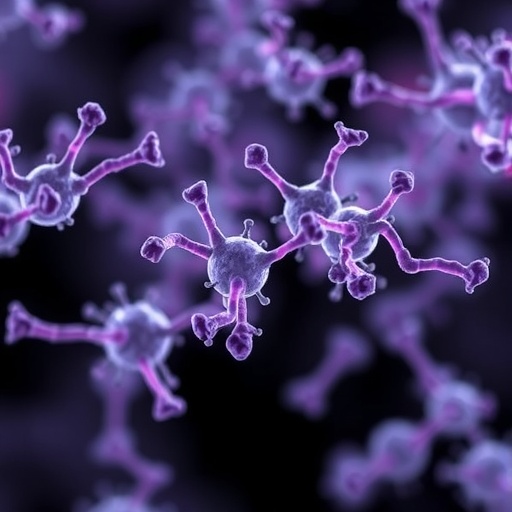
In recent years, the discovery of bacteria within tumor microenvironments has transformed our understanding of cancer biology. Far beyond their established roles in the gut and respiratory tracts, these tumor-associated bacteria have emerged as influential agents in cancer onset, progression, and immune landscape modulation. While various studies have attempted to identify specific bacterial species enriched in particular cancers, the findings often diverge, raising questions about the true nature of these microorganisms’ involvement in tumor biology.
Because the mere taxonomic identity of tumor-associated bacteria seems insufficient to fully explain their impact, scientists are shifting focus toward their functional attributes. Functional metagenomic analyses have unveiled a striking phenomenon: although the bacterial species differ widely among patients and cancer types, the biological functions they perform tend to be conserved. This suggests that it is the functional repertoire of these bacterial communities – rather than who they are – that plays the critical role in driving tumor dynamics and immune responses.
Understanding the functional effectors produced by tumor-associated bacteria, however, remains a formidable challenge. The diversity and complexity inherent within these microbial communities complicate direct characterization and manipulation. Addressing this challenge head-on, a pioneering research team spearheaded by Professor Na Liu at Sun Yat-sen University Cancer Center has proposed a unified conceptual framework categorizing these functional bacterial components as “tumor-associated bacterial effectors” (TABEs). These TABEs are classified into six distinct functional categories based on their chemical characteristics, structural conservation, and mechanistic parallels in modulating host cell biology.
The proposed TABE categories include virulence factors, microbe-associated molecular patterns, bacterial metabolites, biotransformative enzymes, cross-reactive antigens, and non-coding RNAs. Each of these classes represents a unique avenue through which bacteria can influence tumor cells and the surrounding microenvironment. Virulence factors, for instance, may directly damage host tissues or interfere with immune signaling, while microbe-associated molecular patterns can engage pattern recognition receptors to shape inflammatory responses. Meanwhile, metabolites and enzymes released by bacteria may alter tumor metabolism or the chemical composition of the microenvironment, thereby indirectly affecting tumor growth and immune evasion.
Critically, this TABE-centric framework allows for a multidimensional understanding of tumor-associated bacteria, moving beyond simplistic taxonomic catalogs to mechanistic insights. The research team has systematically summarized the multifaceted roles of TABEs—demonstrating how these effectors collectively influence tumor progression and immune modulation through diverse molecular pathways. These mechanistic insights pave the way for novel therapeutic strategies aimed at targeting not the bacteria themselves, but their functional outputs.
Exploring the therapeutic landscape, the researchers advocate for approaches that target different functional stages of TABEs, which could complement conventional cancer therapies such as chemotherapy, immunotherapy, and radiotherapy. By precisely modulating the activity or presence of key bacterial effectors, it may be possible to enhance anti-tumor immunity, suppress metastatic potential, or mitigate therapy resistance. Such strategies represent a frontier in precision oncology that recognizes the microbiome as an active participant in cancer biology rather than a passive bystander.
Looking ahead, the research outlines critical directions necessary for advancing this field. Integrative multi-omics approaches—including metagenomics, metatranscriptomics, metaproteomics, and metabolomics—are essential to capture the dynamic functional evolution of tumor-associated bacterial communities. These techniques can elucidate temporal shifts in effector expression and their correlations with disease stages, therapeutic responses, and immune status.
Additionally, culturomics techniques are vital for isolating and growing bacterial strains directly from clinical tumor specimens. This effort is crucial to dissect the heterogeneity of TABEs within and between bacterial lineages, permitting functional studies that are currently hindered by reliance on sequencing alone. Cultured isolates enable targeted experimentation to determine operational conditions such as effector concentration thresholds, spatial localization within tumors, and structural variations that influence their activity.
Understanding interbacterial communication or synergistic cross-talk also represents an important frontier. TABEs rarely act in isolation; insights into how microbial communities coordinate effector production and interact with each other’s signals will illuminate community-level mechanisms driving tumor progression. Similarly, employing single-cell and spatial resolution techniques to examine host-bacteria interactions will help move beyond correlative associations, establishing causative links by pinpointing precisely where and when specific bacterial effectors engage host targets.
Translating these discoveries into clinic-ready interventions requires rigorous preclinical validation and standardized clinical trials. Because the landscape of tumor-associated bacteria is highly complex and patient-specific, multi-center, controlled trials will be necessary to assess the long-term safety, efficacy, and reproducibility of TABE-targeted therapies. Only through such efforts can the promise of functionally-informed microbiome engineering bear fruit in improving patient outcomes.
Collectively, the TABE framework provides a robust foundation for harnessing bacterial effectors as next-generation biomarkers and therapeutic targets in oncology. By integrating microbial functional insights, cancer treatment can evolve into a truly precision discipline that accounts not only for tumor genetics but also for the microbial ecologies embedded within tumors. The research led by Professor Na Liu and colleagues charts a clear path toward a future where tumor-associated bacteria are consciously manipulated to transform tumor biology and immune landscapes.
Over the coming decade, the integration of TABE-based diagnostics and therapeutics with conventional options holds immense potential. It could revolutionize approaches to cancer management by enabling therapies tailored to the unique microbial functions shaping each patient’s tumor environment. With continued technological innovation and interdisciplinary collaboration, the microbiome’s role in cancer is poised to shift from scientific curiosity to foundational element of oncology practice, opening novel avenues for improving survival and quality of life for millions worldwide.
Subject of Research: Tumor-associated bacterial functional effectors (TABEs) and their roles in cancer progression and immune regulation.
Article Title: Tumor-associated Bacterial Effectors: Novel Frontiers in Tumor Biology and Immunity
News Publication Date: Not specified in provided content.
Web References: DOI 10.1016/j.scib.2026.04.034
References: Literature review as stated in source article.
Image Credits: ©Science Bulletin
Keywords: tumor-associated bacteria, tumor microenvironment, bacterial effectors, cancer immunity, microbiome, functional metagenomics, virulence factors, microbial metabolites, precision oncology
Tags: bacterial drivers of cancer progressionbacterial impact on tumor biologybacterial influence on tumor microenvironmentbacterial role in cancer immune evasioncancer immune response modulationfunctional metagenomics in cancerimmune landscape and bacteriametagenomic analysis of cancer bacteriamicrobial effectors in oncologymicrobial functional repertoire in tumorstumor microbiome diversitytumor-associated bacterial effectors