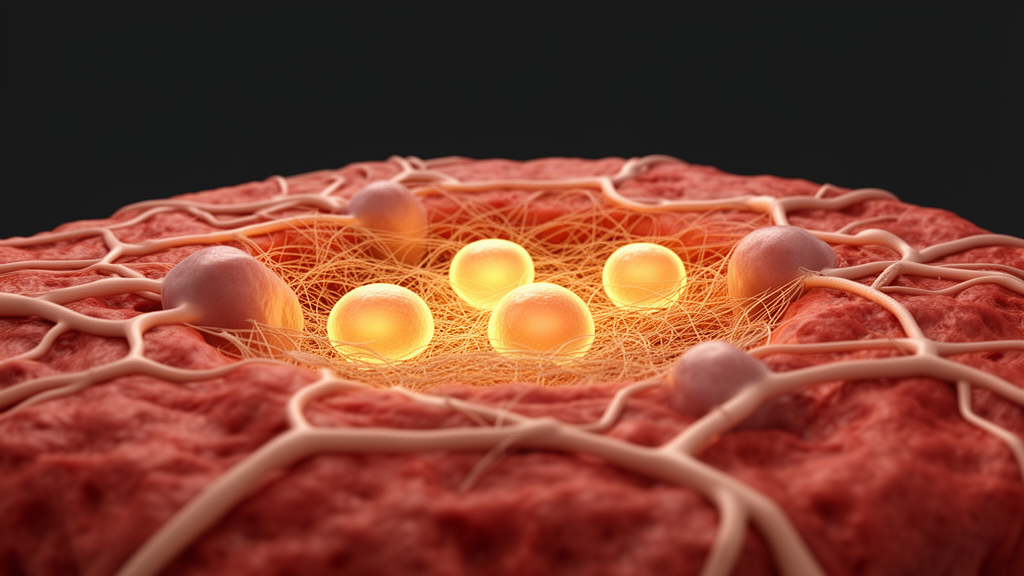
A study published in EMBO Molecular Medicine reports that a one-hour bath in activated protein C keeps human CD34+ hematopoietic stem and progenitor cells in a quiescent, undifferentiated state and improves their ability to engraft and regenerate blood lineages after transplantation into immunodeficient mice. Its molecular cousin, thrombin—the enzyme that triggers clotting—acts on the very same receptor but pushes the cells in the opposite direction, accelerating differentiation and undermining engraftment.
The receptor in question is protease-activated receptor 1, or PAR1, a G protein-coupled receptor that sits on the surface of most human CD34+ cells. The researchers found PAR1 expressed on 93.5 percent of CD34+ cells from mobilized peripheral blood and 73.6 percent of those from bone marrow, with nearly all CD34+CD38− cells, multipotent progenitors, and phenotypic HSCs carrying the receptor regardless of source. PAR1 is also the coreceptor of the endothelial protein C receptor, or EPCR, a well-established marker of a highly quiescent subpopulation of hematopoietic stem cells with exceptional long-term repopulating potential. Yet on freshly isolated adult human HSCs, EPCR itself is expressed on fewer than 1 percent of cells, a discrepancy that has led some to question whether the EPCR–protein C axis matters at all in human hematopoiesis.
The new work suggests it does, but through a route that does not require abundant EPCR. Both thrombin and activated protein C cleave PAR1, but at different sites—thrombin at Arg41 and activated protein C at Arg46—and this difference in cleavage produces what biologists call biased signaling. Using phosphoflow cytometry on expanded CD34+ cells, the team showed that both ligands triggered phosphorylation of the transcription factor CREB, with activated protein C producing a tenfold increase in phospho-CREB signal within ten minutes and thrombin a 5.8-fold increase. But the pathways then diverged sharply. Activated protein C strongly and durably activated AKT, a kinase associated with stem cell survival in culture, whereas thrombin drove phosphorylation of ERK1/2, a signaling node linked to differentiation and migration. Neither ligand activated NF-κB in these cells.
The most dramatic divergence appeared in calcium handling and metabolism. Thrombin stimulation produced a roughly sixty-second surge of calcium ions into the cytosol of CD34+CD45RA−CD90+ cells, detected with the fluorescent indicators Fluo-4 and Rhod-2, while activated protein C left cytosolic calcium untouched across doses from 1 to 10 micrograms per milliliter and incubations up to ten minutes. Within twenty minutes, thrombin significantly raised the extracellular acidification rate, a readout of glycolysis, and increased maximal respiration and spare respiratory capacity in Seahorse metabolic assays. Activated protein C changed neither. Consistent with this metabolic stir-up, thrombin increased mitochondrial membrane potential within ten minutes and raised levels of methylglyoxal protein adducts—damaging advanced glycation end products—by 1.4-fold after thirty minutes, while activated protein C left these adducts unchanged.
Single-cell RNA sequencing reinforced the picture. Four hours after stimulation, activated protein C had altered 836 genes and thrombin 647, with most changes unique to one ligand or the other. Activated protein C downregulated genes involved in DNA replication, protein folding, and translation, and upregulated genes for cell adhesion, actin cytoskeleton regulation, and migration; thrombin instead induced genes involved in myeloid differentiation and calcium signaling. Cell cycle inference from the transcriptomes showed more cells resting in G1 after twenty-four hours of activated protein C exposure. Notably, the researchers found no changes in TET2 levels or 5-hydroxymethylcytosine, ruling out DNA demethylation as the mechanism behind the altered differentiation, even though the calcium-elevating drug thapsigargin, used as a positive control, did reduce both.
Functionally, the quiescent profile translated into preserved stemness. In single-cell expansion assays, cells given a one-hour activated protein C pulse before sorting produced colonies richer in CD34+ cells and in HSC-enriched CD34+CD90+ cells after seven days, without changing total colony size. Colony-forming unit assays showed more colonies after activated protein C treatment, and a trend toward higher counts upon secondary plating, whereas thrombin-treated cells generated significantly fewer secondary colonies. Continuous activated protein C over seven days reduced total cell expansion but increased the fraction of CD34+CD45RA−CD90+ cells, leaving absolute numbers of that immature compartment unchanged—a trade-off favoring maintenance over proliferation.
The protein also protected the cells from inflammatory stress. Interleukin-1α is known from mouse studies to drive myeloid priming and eventual hematopoietic impairment, and in these human cultures it accelerated cell division. A four-hour pretreatment with activated protein C fully prevented the IL-1α-driven proliferation, normalizing both division and proliferation indices measured by CFSE dye dilution. Within the CD34+CD45RA−CD90+ population, EPCR-positive cells divided more slowly than EPCR-negative ones even under IL-1α stimulation, hinting at an intrinsic protection of the EPCR-marked fraction. Thrombin, by contrast, altered neither BrdU incorporation nor cell cycle status, separating its differentiation-promoting effects from direct proliferative pressure.
The transplantation experiments delivered the study’s headline result. The team stimulated CD34+ cells for one hour with activated protein C, thrombin, or the allosteric PAR1 modulator Parmodulin 2 plus thrombin, then injected 2.5 × 10^5 cells into unconditioned NBSGW mice, a strain that accepts human hematopoietic grafts without irradiation. Four weeks later, activated protein C-treated cells had produced a sevenfold increase in the median number of human CD34+CD38− cells in recipient bone marrow, while thrombin caused a 65 percent reduction. Parmodulin 2 pretreatment prevented the thrombin-driven loss and tripled the median CD34+CD38− count relative to control, apparently by biasing thrombin’s PAR1 signal toward the cytoprotective pattern. In secondary transplants, which selectively test cells with genuine self-renewal capacity, all seven mice receiving activated protein C-treated cells showed multilineage humanization including T cells, compared with only 1 of 7 for thrombin and 2 of 7 for controls.
The authors are careful about limits. They did not assess long-term engraftment in the NBSGW model, a major caveat, though secondary transplantation is widely accepted as a stringent test of self-renewing HSCs, since most multipotent progenitors and committed precursors fail to persist into secondary recipients. They also note that at the high activated protein C concentrations used ex vivo, PAR1 activation was largely independent of EPCR—blocking EPCR with an antibody did not prevent PAR1 internalization or AKT activation, though it did blunt peak CREB signaling. Because physiological free activated protein C in blood sits below 1–2 nanograms per milliliter, the clinically relevant question is whether local concentrations in the bone marrow niche, where EPCR-positive endothelial cells can generate the enzyme, reach effective levels. Recent work showing that aPC-stimulated EPCR+ bone marrow endothelial cells support human HSPC function via NOTCH3 suggests they might.
Even with those caveats, the study positions PAR1 as a druggable lever on human hematopoietic stem cell fate. Ex vivo culture is known to erode HSC quiescence within one to three days, and non-cycling HSCs engraft better, so a brief pharmacological pulse that holds cells in G1 could directly benefit transplant protocols and gene therapies that require manipulating cells outside the body. The finding that a single hour of activated protein C exposure leaves a lasting imprint on engraftment—without any sustained presence of the molecule in the recipient—makes the approach unusually simple. Whether the same biasing strategy, perhaps with parmodulins alone or refined analogs, can improve real clinical grafts will now depend on follow-up studies that can disentangle individual PAR1 downstream signals and test long-term repopulation directly.
Subject of Research: Divergent PAR1 signaling by activated protein C and thrombin regulates quiescence and engraftment of human hematopoietic stem and progenitor cells
Article Title: Activated protein C promotes hematopoietic stem and progenitor cell quiescence and engraftment
Article References: Pöllmann, S. J., Rommel, M. G. E., Oburoglu, L., Hirch, T., Valdivia-Francia, F., Siow, K. M., Menzi, T., Ackva, J., Schenk, F., Neeracher, M. J., Sendoel, A., Reichenbach, J., Forsberg, E. C., & Modlich, U. (2026). Activated protein C promotes hematopoietic stem and progenitor cell quiescence and engraftment. EMBO Molecular Medicine. https://doi.org/10.1038/s44321-026-00529-y
Image Credits: AI Generated
DOI: 10.1038/s44321-026-00529-y
Keywords: activated protein C, thrombin, PAR1, EPCR, hematopoietic stem cells, CD34+ cells, quiescence, engraftment, NBSGW mice, glycolysis, Parmodulin 2, xenotransplantation
News Source: Drew Townsend. (October 29, 2026). Blood-clotting protein’s cousin keeps stem cells resting and transplants thriving. Scienmag.