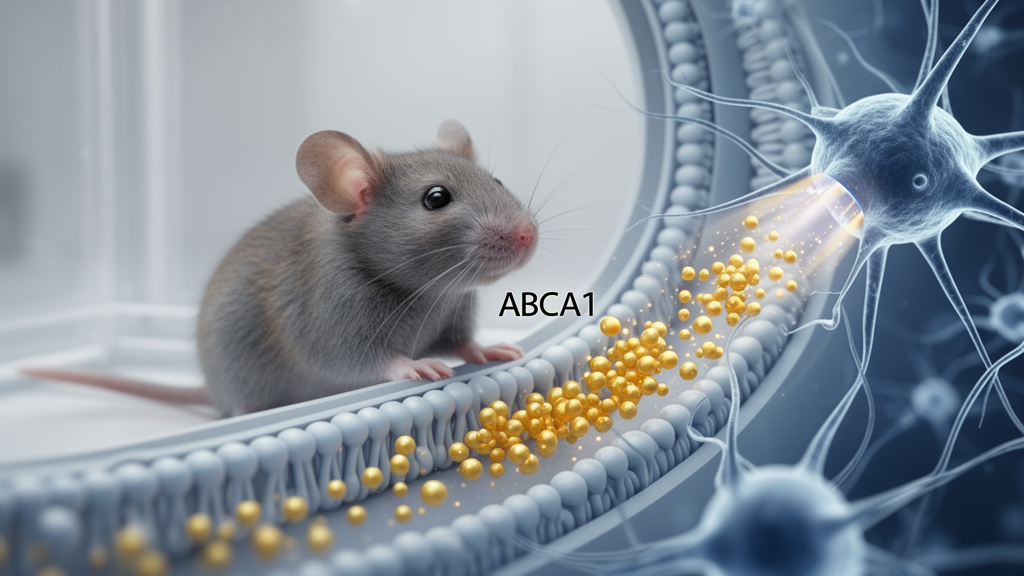
Elevated expression of the cholesterol transporter ABCA1 was detected in the substantia nigra of postmortem brains from people with Parkinson’s disease and in a mouse model of the disorder. Together, experiments in human brain tissue, cultured cells and mice indicate that disturbed ABCA1-dependent cholesterol trafficking can promote lysosomal cholesterol accumulation, impaired autophagy, α-synuclein pathology and neuronal death. The findings identify a disease mechanism and a potential intervention target, but they do not establish a treatment effect in people.
The researchers traced part of the mechanism to interactions between astrocytes and neurons. The experimental evidence is causal within the tested mouse and cell systems, although the postmortem observations alone cannot establish when or why ABCA1 expression becomes elevated in human disease. Mechanistic experiments located ABCA1 in neuronal lysosomes, where it facilitated cholesterol import.
The researchers further reported that ABCA1-mediated lysosomal cholesterol accumulation impeded autophagy by activating the lysosomal cholesterol sensor GPR155. These results link a specific route of intracellular cholesterol handling to the accumulation of pathological α-synuclein and cell death, rather than associating elevated ABCA1 merely with already damaged tissue. The protective effects were then tested in the PFF mouse model of Parkinson’s disease.
Genetic silencing of Abca1 in dopaminergic neurons attenuated neurodegeneration and disease-related pathology, while silencing Abca1 in astrocytes reduced excessive cholesterol efflux and lessened neurodegeneration and behavioral deficits. The researchers also identified magnesium citrate as an ABCA1 inhibitor and reported that treatment reduced dopaminergic neuronal loss in PFF mice. These findings support ABCA1 inhibition as a possible disease-modifying strategy, but the evidence comes from experimental models.
Subject of Research: ABCA1-dependent cholesterol trafficking as a mechanism of neurodegeneration in Parkinson’s disease
Article Title: Dysregulated cholesterol trafficking through ABCA1 drives neurodegeneration in Parkinson’s disease
Article References: Ma, F.-X., Zhao, X.-X., Wang, X.-X., Fang, S.-Y., Xu, S.-H., Wang, M., Liu, Y.-X., Wang, C., Wang, Q.-L., Lu, M., & Cao, L. (2026). Dysregulated cholesterol trafficking through ABCA1 drives neurodegeneration in Parkinson’s disease. Nature Neuroscience. https://doi.org/10.1038/s41593-026-02487-7
Image Credits: AI Generated
DOI: 10.1038/s41593-026-02487-7
Keywords: ABCA1, Parkinson’s disease, cholesterol trafficking, astrocytes, dopaminergic neurons, lysosomes, autophagy, α-synuclein, magnesium citrate, mouse models, Dysregulated, cholesterol
News Source: Diana Fleming. (October 20, 2026). ABCA1 cholesterol trafficking implicated in Parkinson’s neurodegeneration in mice. Scienmag.