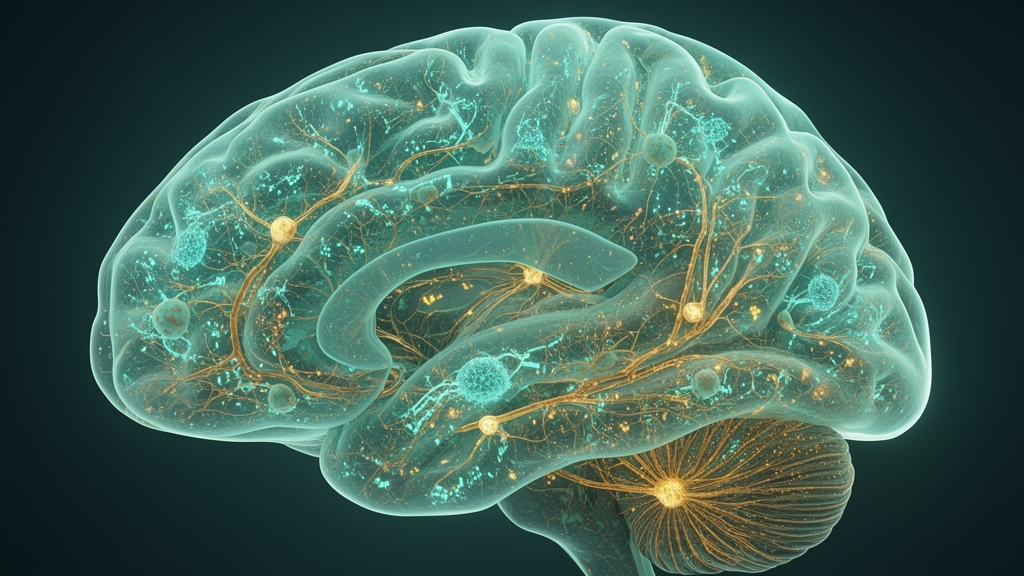
A computational framework informed by neural pathway activity has mapped molecular and cellular heterogeneity in Alzheimer’s disease across bulk, single-nucleus, and spatial transcriptomic datasets. By evaluating transcriptomic profiles across differing experimental resolutions, the study identified distinct pathway-associated subgroups that correlate with specific metabolic, immune, and pathological features in the brain.
The unsupervised learning model grouped brain transcriptomic samples into a common three-subgroup partition representing relatively high, intermediate, and low neural enrichment across analyzed bulk datasets. Profiles classified as Neu-H demonstrated enhanced metabolic activity and higher DNA repair capacity alongside reduced immune signatures and lower tissue-level cellular heterogeneity. In contrast, samples categorized as Neu-L exhibited the opposite molecular profile and were associated with more severe clinical pathology across the examined datasets.
To evaluate these transcriptional divisions, the analytical framework was applied separately to six bulk brain transcriptomic datasets. In four of the six bulk datasets, tissue samples from donors with Alzheimer’s disease demonstrated significantly lower neural gene-set enrichment than non-disease control samples. Conversely, the GSE5281 dataset exhibited higher neural gene-set enrichment in Alzheimer’s samples, while the ROSMAP dataset showed no significant difference between Alzheimer’s cases and controls. Across most of the bulk cohorts examined, Alzheimer’s samples displayed lower DNA repair and metabolic gene-set enrichment combined with elevated immune signatures.
Application of the pathway framework to single-nucleus RNA sequencing data provided cellular-level detail corresponding to the patterns observed in whole-tissue profiles. Within the single-nucleus resolution, investigators identified neuronal subgroups characterized by differing neural pathway enrichment scores and distinct molecular features. Neu-H excitatory and inhibitory neurons demonstrated greater differentiation, higher diversity, elevated metabolic activity, and stronger DNA repair competence compared to Neu-L neuronal populations.
The single-nucleus evaluation also revealed alterations linked directly to disease diagnosis regardless of subgroup classification. Excitatory and inhibitory neurons from donors with Alzheimer’s disease across all three subgroups exhibited reduced DNA repair capacity, heightened cellular heterogeneity, and weakened cell-to-cell communication when compared directly to control neurons, highlighting shared cellular dysfunctions across heterogeneous disease states.
Spatial transcriptomic profiling recapitulated these tissue and cellular distributions in situ across organized brain regions. Spots categorized as Neu-H were spatially enriched within neuronal populations and gray matter regions. Conversely, Neu-L transcriptomic spots predominated in white matter tracts, showing an increased representation of microglia and oligodendrocyte precursor cells.
Comparing Alzheimer’s disease brain tissues to non-disease control specimens in spatial transcriptomics demonstrated a greater overall representation of Neu-L spots in diseased tissues. Alzheimer’s samples in the spatial dataset also displayed significantly lower enrichment scores for neural, DNA repair, and metabolic gene sets, underscoring an anatomical and molecular link between these transcriptional patterns and Alzheimer’s disease pathology.
While Alzheimer’s disease is recognized as a heterogeneous neurodegenerative disorder, its underlying cellular and molecular mechanisms remain poorly understood, partly because prior investigations relied heavily on a single molecular modality. To overcome these limitations, the research team constructed an unsupervised learning framework grounded in the activity of twenty-five curated neural pathways. The investigators applied this framework across three experimental resolutions: six bulk brain transcriptomic datasets, a single-nucleus RNA sequencing dataset, and a spatial transcriptomic dataset. This multi-resolution design enabled comprehensive characterization of subgroup-specific clinical features, DNA repair capacity, metabolic function, immune signatures, cellular heterogeneity, cell-cell communication, and spatial distributions.
The authors concluded that their neural pathway–informed framework effectively characterizes Alzheimer’s disease heterogeneity across tissue, cellular, and spatial levels, emphasizing clear associations among neural pathway expression, DNA repair, metabolic signatures, immune profiles, and tissue organization.
Subject of Research: Neural pathway-informed transcriptomic profiling of Alzheimer's disease heterogeneity across bulk, single-nucleus, and spatial data
Article Title: Neural pathway–informed unsupervised learning for cross-resolution transcriptomic profiling of Alzheimer’s disease heterogeneity
Article References: Wang, X., Tung, C.-H., & Zhao, Z. (2026). Neural pathway–informed unsupervised learning for cross-resolution transcriptomic profiling of Alzheimer’s disease heterogeneity. Journal of Translational Medicine. https://doi.org/10.1186/s12967-026-09193-9
Image Credits: AI Generated
DOI: 10.1186/s12967-026-09193-9
Keywords: Alzheimer's disease, transcriptomics, spatial transcriptomics, single-nucleus RNA sequencing, unsupervised learning, neural pathways, DNA repair, cellular heterogeneity, metabolic activity, immune signatures, neurodegeneration, brain tissue profiling, excitatory neurons, inhibitory neurons, microglia, oligodendrocyte precursor cells
News Source: Cassandra Pierce. (November 12, 2026). Cross-Resolution Analysis Maps Alzheimer’s Disease Transcriptomic Heterogeneity Across Brain Tissues. Scienmag.