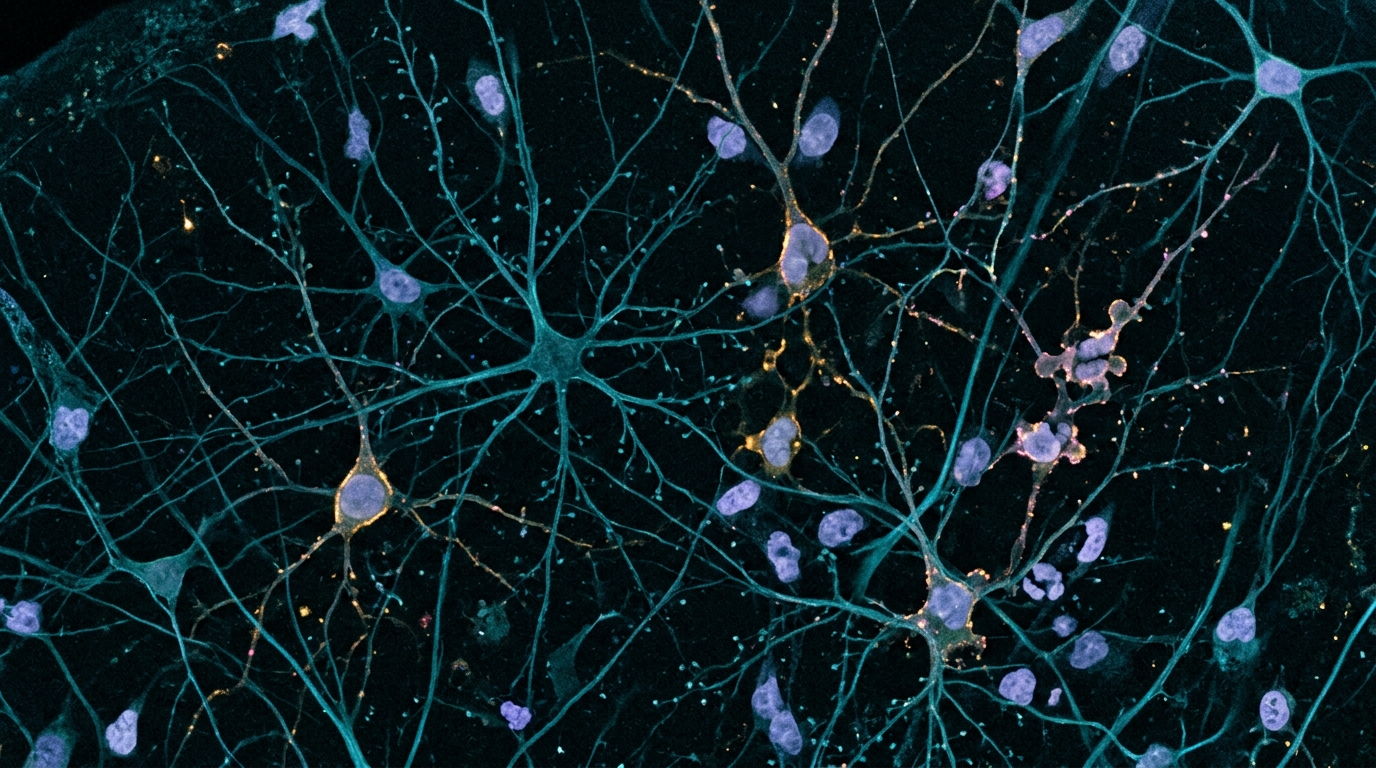
A protein called RACK1 appears to act as a built-in shield for the mouse brain during sepsis, and losing it makes things worse. In a study published in Cell & Bioscience, researchers report that hippocampal RACK1 protein levels drop after systemic lipopolysaccharide (LPS) injection, a laboratory model used to study sepsis-associated encephalopathy (SAE). When the team reduced RACK1 further using siRNA, mice developed more severe depressive and anxiety-like behaviors and their neurons showed heightened signs of necroptosis, a form of programmed cell death. The work points to RACK1 as a potential target for preventing the long-term affective impairments associated with SAE.
Sepsis-associated encephalopathy is a common severe complication in surviving sepsis patients and is associated with enduring cognitive deficits. Although neuronal activity strongly impacts the functionality of the limbic system, specific prevention and therapy for SAE remain limited because the underlying network mechanisms are inadequately comprehended. The research team, led by Yao Wu, Yang Yu, Jing-wen Zheng and colleagues under the senior guidance of Li-hong Wan, Xia Wang and Ling Zhu, had previously identified RACK1, the Receptor for Activated C-Kinase 1, as a crucial regulator in various forms of programmed cell death and as an endogenous memory enhancer.
To map RACK1’s role, the researchers characterized its expression in relation to systemic LPS-induced neuronal necroptosis. They found that hippocampal RACK1 protein expression was downregulated and that this reduction was associated with the depressive and anxiety-like behaviors triggered by systemic LPS injection in mice. Association, not causation, at this stage. The team then used RACK1 siRNA transfection, both in vivo and in vitro, to explore what endogenous RACK1 contributes when the LPS insult hits.
The knockdown experiments showed that silencing RACK1 promoted systemic LPS-induced abnormal behaviors and neuronal necroptosis in mice. At the molecular level, the loss of RACK1 contributed to potentiating the LPS-associated activation of MLKL, the molecule that executes necroptotic death.
Where does RACK1 act in the necroptosis machinery? The researchers used molecular docking and immunoprecipitation to probe protein partnerships. The results demonstrated that LPS induced neuronal necroptosis by forming the RACK1/RIPK1 complex. The authors note this might point to a novel mechanism underlying RACK1’s potential as a target for preventing SAE.
The team concludes that their research presents what they describe as the inaugural evidence that endogenous RACK1 is the critical protective element within the limbic system against neuronal necroptosis, and that it contributes to ameliorating long-term affective impairments associated with SAE.
Several caveats frame these findings. The study was conducted in mice and in vitro preparations using LPS, not in sepsis patients, so translation to human SAE remains untested. The behavioral readouts were depressive and anxiety-like measures following LPS injection, and the paper links RACK1 downregulation to these outcomes rather than proving RACK1 loss causes them in every context. The siRNA approach establishes contribution but does not demonstrate that boosting RACK1 would be safe or effective as a therapy. The early-release version remains subject to further edits.
If future work confirms this pathway in independent models and eventually in clinical settings, RACK1 could become a point of leverage against a complication that currently has limited specific prevention or therapy.
Subject of Research: The role of RACK1 downregulation in LPS-induced neuronal necroptosis and sepsis-associated encephalopathy in mice
Article Title: Downregulation of RACK1 promotes LPS-induced neuronal necroptosis contributes to sepsis-associated encephalopathy in mice
Article References: Wu, Y., Yu, Y., Zheng, J.-W., Qiu, Z.-Q., Liao, S.-P., Wang, X., Zhu, L., & Wan, L.-H. (2026). Downregulation of RACK1 promotes LPS-induced neuronal necroptosis contributes to sepsis-associated encephalopathy in mice. Cell & Bioscience. https://doi.org/10.1186/s13578-026-01636-6
Image Credits: AI Generated
DOI: 10.1186/s13578-026-01636-6
Keywords: RACK1, sepsis-associated encephalopathy, necroptosis, LPS, RIPK1, MLKL, hippocampus, siRNA knockdown, mice, limbic system, programmed cell death, neuroinflammation
News Source: Cassandra Pierce. (November 5, 2026). RACK1 Loss Drives Neuronal Necroptosis in Mouse Sepsis Brain Study. Scienmag.