Deleting a single innate immune sensor can reshape the gut microbiome in ways that protect the intestine from inflammatory damage, according to a study published in AMB Express. Researchers found that mice lacking the NLRP3 inflammasome, a multiprotein complex that drives inflammatory signaling, suffered far less severe colitis than normal animals, and the improvement tracked closely with the survival of bacteria that produce short-chain fatty acids, metabolites known to soothe inflamed gut tissue.
The team began by examining colonic tissue from patients with active ulcerative colitis and from a mouse model of the disease induced by dextran sulfate sodium, a chemical that damages the colonic epithelial barrier and triggers inflammation. In both settings, the NLRP3 inflammasome was significantly upregulated, suggesting that the sensor becomes more active as intestinal inflammation flares. This observation set the stage for the central experiment: comparing disease outcomes in mice with and without a functional Nlrp3 gene.
When Nlrp3 was deleted, disease severity dropped markedly. Histopathological examination of the colon showed less tissue injury, and levels of pro-inflammatory cytokines, the chemical messengers that recruit and activate immune cells, were reduced. Alongside these inflammatory changes, the researchers documented a striking shift in the gut microbial community: microbial alpha diversity, a measure of how many different species coexist within an individual animal, increased in the knockout mice. Loss of microbial diversity is a common feature of inflammatory bowel disease, so its restoration in Nlrp3-deficient animals pointed toward a protective role for the microbiota itself.
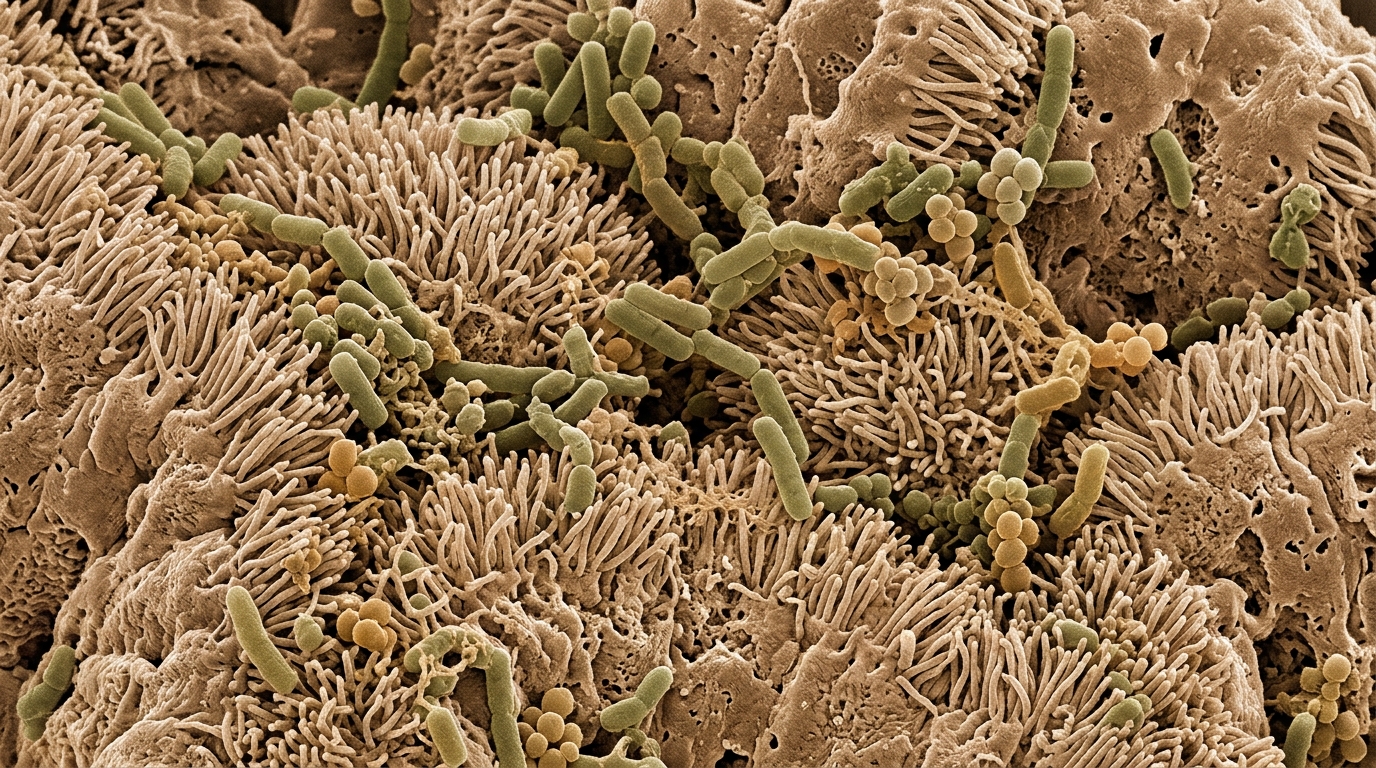
The most detailed findings concerned specific bacterial taxa. Nlrp3 deficiency prevented the depletion of beneficial short-chain fatty acid-producing bacteria, and two groups in particular, Dubosiella and Rikenellaceae_RC9_gut_group, were enriched in the protected mice. These enrichments were associated with the recovery of fecal propionate and butyrate levels, two short-chain fatty acids that serve as fuel for colonic epithelial cells and help maintain the integrity of the gut barrier.
To test whether the short-chain fatty acid connection was more than correlation, the researchers turned to Clostridium butyricum, a probiotic bacterium that produces butyrate. In wild-type mice with colitis, treatment with C. butyricum alleviated disease, consistent with the idea that boosting short-chain fatty acid production can dampen intestinal inflammation. However, the probiotic provided no additional benefit in mice that already lacked Nlrp3, indicating that the protective pathway this bacterium supports overlaps with the one removed by the gene deletion.
Even more revealing was the experiment involving nigericin, a pharmacological activator of the NLRP3 inflammasome. When mice received nigericin, C. butyricum failed to reduce inflammation.
Taken together, the study reframes NLRP3 not simply as a pro-inflammatory driver within immune cells but as a regulator of the gut ecosystem. The findings underscore a complex interplay between host inflammasome signaling and microbiota-mediated regulation in inflammatory bowel disease, and they hint that therapies targeting the microbiome may need to account for the inflammatory state of the host.
The work carries important caveats. The human component was observational, limited to detecting NLRP3 upregulation in tissue from patients with active disease, and the mechanistic conclusions rest on the DSS mouse model, which mimics but does not fully reproduce human ulcerative colitis. The association between specific bacterial enrichments and restored metabolite levels does not by itself prove causation, and the nigericin experiments, while suggestive, involve an artificial activator rather than the natural triggers of inflammasome activity in patients.
Subject of Research: How NLRP3 inflammasome signaling shapes gut microbiota and short-chain fatty acid production during intestinal inflammation
Article Title: NLRP3 deficiency alleviates colitis in association with short-chain fatty acid–producing bacteria
Article References: Guo, X., Xu, J., He, H., Huang, C., Li, J., Xu, H., Liao, Y., Zhao, Y., Jin, N., Zhang, L., Wang, H., Zhou, Y., & Nie, Y. (2026). NLRP3 deficiency alleviates colitis in association with short-chain fatty acid–producing bacteria. AMB Express. https://doi.org/10.1186/s13568-026-02112-7
Image Credits: AI Generated
DOI: 10.1186/s13568-026-02112-7
Keywords: NLRP3 inflammasome, colitis, ulcerative colitis, gut microbiota, short-chain fatty acids, Clostridium butyricum, butyrate, propionate, Dubosiella, microbial diversity, inflammatory bowel disease, DSS mouse model
News Source: Morgan Morrow. (November 5, 2026). NLRP3 Deficiency Eases Colitis by Preserving Gut Bacteria That Make Short-Chain Fatty Acids. Scienmag.