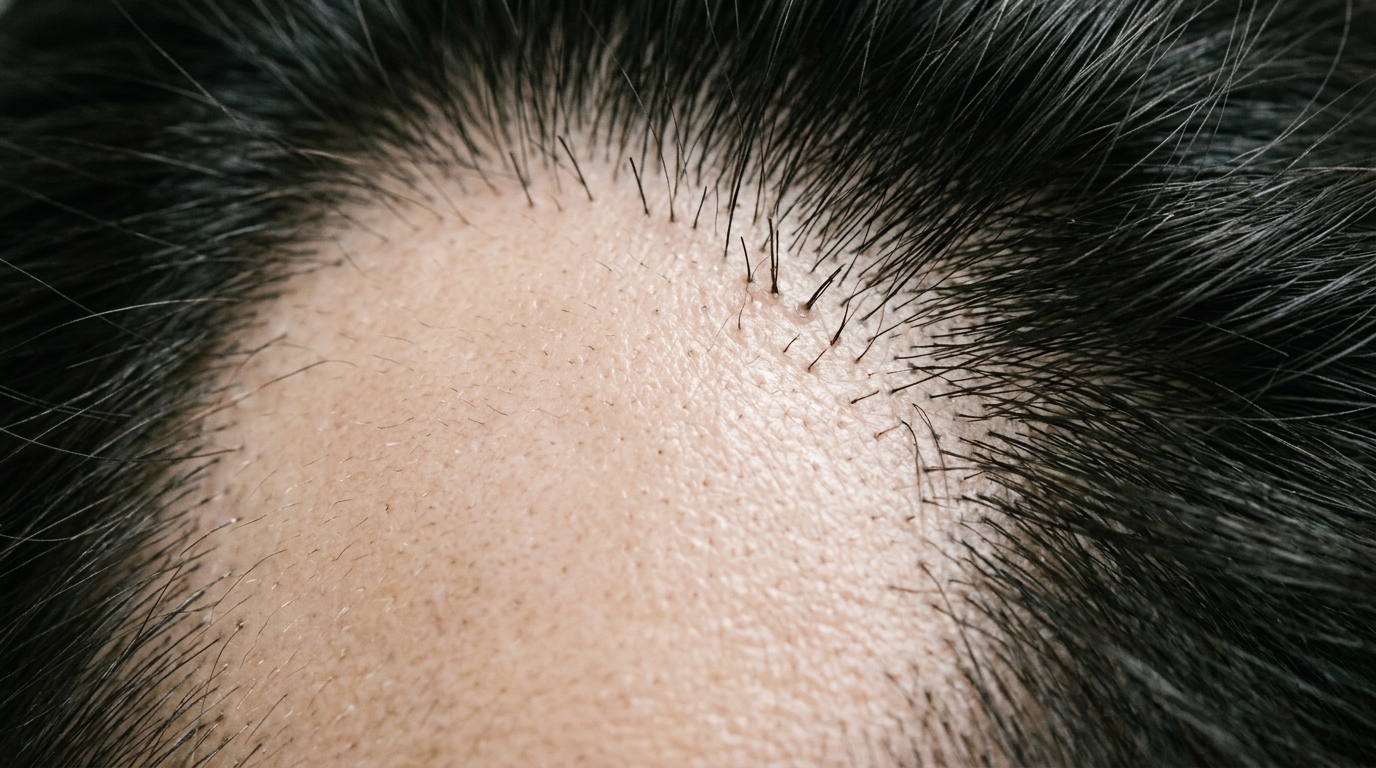
Alopecia areata, a chronic inflammatory autoimmune condition that targets hair follicles and causes non-scarring hair loss, affects up to 2% of the population at some point in life, according to a comprehensive review published in the journal Discover Immunity in October 2025. The review, authored by Ebru Akbaba, Esra Aydemir and Furkan Ayaz, brings together clinical, immunologic, genetic and therapeutic evidence on a disease that can present as small bald patches or progress to complete loss of scalp and body hair. Although no definitive medical cure exists today, the authors argue that recent advances in understanding the immunological and molecular mechanisms of the disease point toward new treatment possibilities in the near future.
Clinically, alopecia areata is remarkably variable. Hair loss occurs on the scalp in 90% of cases, and classification depends on the amount and pattern of loss. Patchy hair loss is the most common presentation, but total scalp hair loss, known as alopecia totalis, and loss involving the entire body, known as alopecia universalis, can also develop. The condition occurs more frequently in children than in adults, and early symptoms can resemble other hair loss disorders such as androgenetic alopecia, female pattern hair loss and telogen effluvium, which makes diagnosis challenging. Beyond the scalp, nail involvement is a well-documented feature, reported in 10 to 66% of cases and ranging from pitting and trachyonychia to koilonychia and Beau’s lines. A 2018 survey by Roest and colleagues found nail changes in 64.1% of patients, most often pitting at 29.7% and trachyonychia at 18.0%, while a 2024 study of 197 patients reported nail abnormalities in 83.8%, with pitting in 53.3%, longitudinal striations in 46.7% and distal notching in 26.9%. Nail involvement was more prevalent in younger individuals and in severe forms such as alopecia totalis and universalis, supporting the view of alopecia areata as a systemic disease.
The course of the disease is notoriously unpredictable. Spontaneous recovery occurs in approximately 80% of patients within the first year, which leads some clinicians to adopt a wait-and-see approach. Yet instead of recovery the disease may progress, and reported rates indicate that the probability of chronic alopecia areata after one year is nearly 100%, while the risk of progression to alopecia universalis may reach up to 45%. Literature data indicate that roughly 34 to 50% of patients recover spontaneously within the first year, whereas 14 to 25% progress to more severe forms such as alopecia totalis or universalis. Recovery among those already diagnosed with the severe forms is considered rare. Poorer prognosis is suggested by early age of onset, a family history of the disease, nail dystrophy, atopic disorders or a personal history of autoimmune disease. When hair regrows, it is often patchy and unpigmented, a phenomenon attributed to abnormal melanogenesis and defects in melanoblasts; this white hair may be permanent or only transient during regrowth.
The pathophysiology centers on the hair cycle itself, which moves through anagen, the growth phase, catagen, the regression phase, and telogen, the resting phase. In healthy follicles, anagen proceeds through six stages, with anagen VI representing a fully developed follicle. In alopecia areata, anagen VI follicles prematurely enter telogen, and even when they re-enter anagen, progression is typically arrested at stage III or IV due to early regression. These disrupted cycles may resume when disease activity subsides or if the follicle remains in anagen for a prolonged period. Under normal conditions the anagen follicle enjoys immune privilege, a specialized immune tolerance marked by downregulation of MHC class I and II molecules in the proximal follicular epithelium, absence of activating ligands such as MICA and ULBP, low expression of adhesion molecules and local production of immunosuppressive cytokines including TGF-β and α-MSH.
In alopecia areata this immune privilege collapses. MHC class I and II molecules are aberrantly upregulated, and stress-induced NKG2D ligands, particularly MICA and ULBP, appear on follicular epithelial cells. These ligands activate cytotoxic CD8-positive T cells carrying the NKG2D receptor, which accumulate around the hair bulb and mount a cytotoxic attack on the follicle. Neighboring CD4-positive T helper cells sustain the response by secreting gamma-c family cytokines such as IL-2, IL-15 and IL-21, and by producing the proinflammatory cytokine IFN-γ, which amplifies follicular infiltration and destruction. The review describes this as a shift from an immune-tolerant to an immune-reactive follicular microenvironment, one that not only interrupts anagen but also prevents its reinitiation, producing prolonged follicular dormancy or miniaturization. Because immune privilege mechanisms are tightly interwoven with hair cycling, the authors characterize alopecia areata as a disorder of hair cycle regulation as well as a localized immune disease.
Genetic evidence reinforces this autoimmune framework. A familial relationship, particularly with first-degree relatives, is identified in approximately 10 to 42% of cases, with the disease reported in at least one sibling in 3% of cases and at least one parent in 7%, compared with a general population prevalence of around 2%. The concordance rate in monozygotic twins is 55%, and first-degree relatives of affected individuals carry a tenfold higher risk, indicating a complex, non-Mendelian inheritance pattern. Early candidate gene studies identified HLA class I and II genes as major risk factors, with alleles such as HLA-DQB103, HLA-DQB104, HLA-DQB116, HLA-C04:01 and HLA-DR implicated in mediating CD8- and CD4-positive T cell effector functions; a study of 118 unaffected and 102 affected individuals supported this association. Genome-wide association studies have identified eight distinct genomic regions linked to the disease, including loci involved in innate and adaptive immunity, and specific polymorphisms in IL2RA, CTLA-4, the IL-2/IL-21 locus, NKG2D and IKZF4, genes central to T cell activation, proliferation and cytotoxic function. Genetic predisposition also varies by ethnicity and region, and it interacts with environmental triggers such as medications, comorbid conditions and metabolic deficiencies in folate, selenium, ferritin, zinc and vitamin D.
Environmental and lifestyle factors add further complexity. Current smokers show a 1.88-fold increased risk of developing the disease compared with non-smokers, and cigarette smoke promotes proinflammatory cytokine production while lowering anti-inflammatory cytokines, although a causal relationship has not been established. Alcohol intake was associated with a lower risk in statistical analyses, with a reported hazard ratio of 0.49, yet alcohol can worsen skin inflammation in conditions such as psoriasis and atopic dermatitis. Evidence on sleep is conflicting: a cohort study by Seo and colleagues of 25,800 individuals with diagnosed sleep disturbances and 129,000 controls found a significantly higher risk of alopecia areata in those under 45, with a hazard ratio of 1.651, whereas a study by Inui and colleagues using the Epworth Sleepiness Scale found no notable differences between patients and healthy controls. The authors stress that these conflicting results highlight the need for further large-scale, controlled investigations.
Diagnosis relies on clinical findings supplemented by dermatoscopy and histopathology. Trichoscopy, a non-invasive technique, distinguishes scarring from non-scarring alopecia and confirms the diagnosis, with characteristic findings including black dots, exclamation mark hairs, yellow dots, broken hairs and vellus hairs. Histopathology varies by disease stage: acute disease shows the peribulbar lymphocytic infiltrate classically described as a swarm of bees, along with eosinophils, melanin and lymphocytes in fibrous tracts; subacute disease features increased terminal catagen and telogen hairs and follicular miniaturization; and chronic disease shows most follicles in telogen or miniaturized with anagen morphology, with inflammation no longer evident but sebaceous glands preserved. Microscopic abnormalities extend into clinically healthy perilesional scalp, including a 66% increased telogen rate, increased vellus hair count and miniaturization, indicating that the disease is not confined to visible bald areas.
Treatment remains symptomatic rather than curative. High-potency topical corticosteroids are recommended as first-line therapy in children, in whom intralesional injections are poorly tolerated and painful, and corticosteroids work by suppressing the immune attack on follicles. Minoxidil, available topically and orally, supports the anagen phase, reduces perifollicular lymphocytic infiltration and promotes hair growth, and can be used alone or in combination. Topical immunotherapy with agents such as SADBE and DPCP is considered when corticosteroids fail, though DPCP is no longer preferred because of mutagenic potential, and SADBE can cause blistering, eczema and lymphadenopathy. Janus kinase inhibitors, including ruxolitinib, tofacitinib and baricitinib, have become a growing area of interest because they target the IFN-γ and IL-15 signaling pathways that sustain the autoimmune attack, but only tofacitinib and ruxolitinib have received FDA approval, and side effects including anemia, leukopenia, malignancy, neutropenia, gastrointestinal effects and major adverse cardiovascular events require careful evaluation. The review also highlights associated conditions, including thyroid disease, vitiligo, psoriasis, atopic dermatitis and inflammatory bowel disease, alongside markedly elevated rates of anxiety, which is 2.5 times more prevalent in patients than in controls, with one recent study reporting that 51% of patients met diagnostic criteria for an anxiety disorder. Emerging research on oxidative stress, epigenetic markers, gut microbiota alterations and exosome-based approaches in mouse models suggests new directions, but the authors conclude that a personalized, multi-pronged strategy remains essential for managing this complex and unpredictable disease.
Subject of Research: Alopecia areata as an immune-mediated hair follicle disorder
Article Title: Alopecia areata: a comprehensive review of clinical, immunologic, and genetic perspectives
Article References: Akbaba, E., Aydemir, E., & Ayaz, F. (2025). Alopecia areata: a comprehensive review of clinical, immunologic, and genetic perspectives. Discover Immunity, 2(1), Article 8. https://doi.org/10.1007/s44368-025-00013-8
Image Credits: AI Generated
DOI: 10.1007/s44368-025-00013-8
Keywords: alopecia areata, autoimmunity, immune privilege, hair follicle cycle, JAK inhibitors, HLA genes, dermatoscopy, nail involvement, oxidative stress, gut microbiota, comorbidities, corticosteroids
News Source: Ophelia Keating. (November 6, 2026). Alopecia Areata: How Collapsing Immune Privilege Halts Hair Follicles. Scienmag.