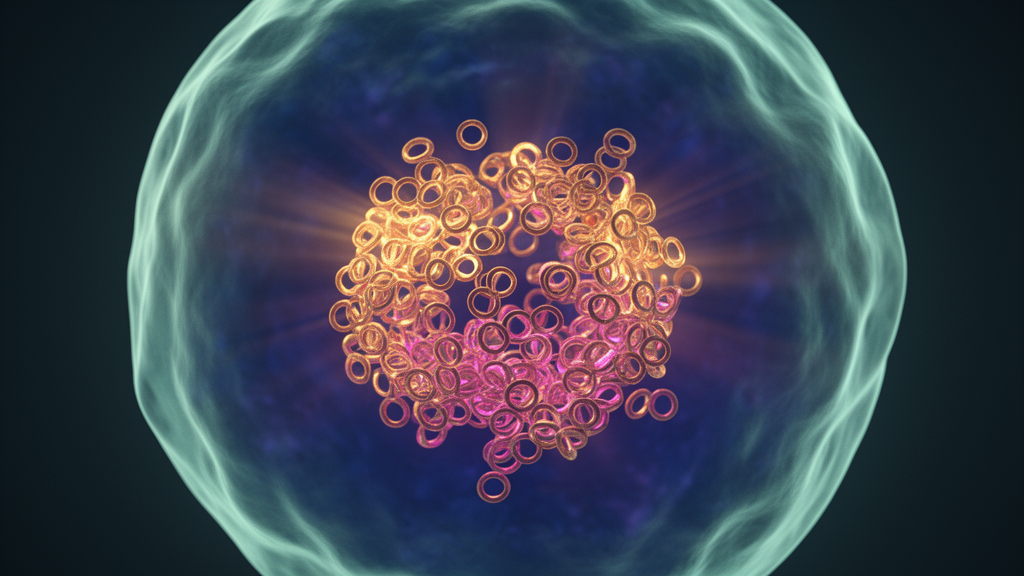
Cancer cells can carry their most dangerous genes on loops of DNA that float entirely outside the chromosomes, and a new review in Cellular Oncology examines how these extrachromosomal DNA molecules, or ecDNA, evolve when therapy pushes tumors to the brink. The article, published on 23 September 2026 and authored by Xiaoya Li, Zhiqiang Wang, Jie Tan, Xiaochun Peng and Xianqin Zeng, is an open-access review that synthesizes current evidence on ecDNA’s role in treatment adaptation and acquired resistance.
According to the review, ecDNA fuels intratumoral heterogeneity through three intertwined features: non-Mendelian inheritance, high-copy-number amplification of oncogenes, and structural plasticity. Because ecDNA copies are distributed unevenly during cell division rather than following the rules of ordinary chromosomes, tumors can rapidly expand or shrink the populations of cells carrying particular oncogene doses. Under therapeutic pressure, this creates fertile ground for clonal selection, allowing subpopulations that happen to tolerate a drug to dominate a tumor after treatment begins.
The review catalogs the specific changes ecDNA may undergo following chemotherapy or molecularly targeted therapy. These include copy-number gain or loss, transient loss of ecDNA followed by re-emergence after treatment withdrawal, structural remodeling of the ecDNA molecule itself, and switching of amplification topology between extrachromosomal and intrachromosomal forms. In other words, the rogue DNA is not a static target; it can change its abundance, its architecture, and even whether it remains outside the chromosomes at all.
A central question the authors address is where these treatment-resistant ecDNA states actually come from. They lay out three possible mechanisms: selection of pre-existing low-frequency ecDNA subclones that were already present in the tumor, copy-number adjustment or structural remodeling of ecDNA that existed before treatment, and de novo ecDNA formation triggered by the treatment itself.
On this point the review takes a clear position. The evidence it surveys is more consistent with treatment-mediated selection of pre-existing ecDNA subclones and with copy-number adjustment or structural remodeling of existing ecDNA than with treatment-associated de novo ecDNA formation. The authors note that direct in vivo evidence for de novo formation remains limited, a significant gap given how often the possibility is invoked in discussions of resistance.
Resolving that question, the review argues, requires careful origin attribution, and the authors describe the methodological toolkit needed to achieve it. Longitudinal and multiregional sampling can track ecDNA across time and across different regions of the same tumor. Breakpoint lineage tracing can reconstruct the ancestry of specific ecDNA molecules, while single-cell tracking resolves which individual cells carry which ecDNA variants. Structure-specific functional validation then tests whether a given ecDNA configuration actually drives the observed phenotype rather than merely accompanying it.
Beyond diagnosis and tracing, the review identifies potential therapeutic vulnerabilities rooted in ecDNA biology itself. These involve ecDNA biogenesis, replication stress, aberrant transcription, and ecDNA maintenance.
The authors are candid about what stands between this biology and the clinic. Clinical translation, they write, will require standardized detection methods, reliable biomarkers for patient stratification, and clearly defined therapeutic windows. Without agreed-upon ways to measure ecDNA and validated markers to identify which patients carry ecDNA-driven tumors, the field cannot yet convert its mechanistic insights into routine practice.
As a review, the article does not present new experimental data but consolidates a fast-moving literature into a framework for interpreting how ecDNA behaves under therapeutic pressure. Its central message is that resistance often reflects the reshaping and amplification of genetic material that was already present, waiting in the tumor’s heterogeneous landscape, and that untangling the origin of resistant ecDNA states will be essential for designing treatments that outmaneuver them.
Subject of Research: Extrachromosomal DNA in cancer treatment adaptation and acquired resistance
Article Title: Adaptive evolution of cancer-associated extrachromosomal DNA under therapeutic pressure: origin attribution, structural remodeling, mechanisms of acquired resistance, and therapeutic implications
Article References: Li, X., Wang, Z., Tan, J., Peng, X., & Zeng, X. (2026). Adaptive evolution of cancer-associated extrachromosomal DNA under therapeutic pressure: origin attribution, structural remodeling, mechanisms of acquired resistance, and therapeutic implications. Cellular Oncology. https://doi.org/10.1007/s13402-026-01297-0
Image Credits: AI Generated
DOI: 10.1007/s13402-026-01297-0
Keywords: ecDNA, extrachromosomal DNA, cancer, drug resistance, tumor evolution, oncogene amplification, chemotherapy, targeted therapy, copy-number variation, intratumoral heterogeneity, review, Cellular Oncology
News Source: Nathaniel Bowman. (October 29, 2026). Cancer’s rogue DNA: how ecDNA reshapes itself to survive treatment. Scienmag.