High blood sugar may help explain why people with type 1 diabetes appear to have a lower risk of certain cancers, according to new research published in The Journal of Immunology. The study, led by Dr. Anamika Bose of the National Institute of Pharmaceutical Education and Research in India, reports that in mouse models, hyperglycemia reprograms T cells in ways that improve their ability to control tumor growth, offering a possible biological mechanism behind a long-standing epidemiological observation.
Type 1 diabetes has previously been associated with a decreased risk of certain cancers, including melanoma, breast cancer and colon cancer, but the reasons for this association have remained unclear. The new work set out to untangle that question by comparing tumor growth in mice with hyperglycemia, similar to untreated type 1 diabetes, against diabetic mice receiving insulin and mice with normal blood sugar levels.
The researchers first observed that tumor growth in the hyperglycemic mice was reduced compared with both the insulin-treated diabetic mice and the mice with normal blood sugar. This difference in tumor growth provided the first clue that the elevated glucose itself, rather than diabetes as a disease entity, might be influencing the immune response against tumors.
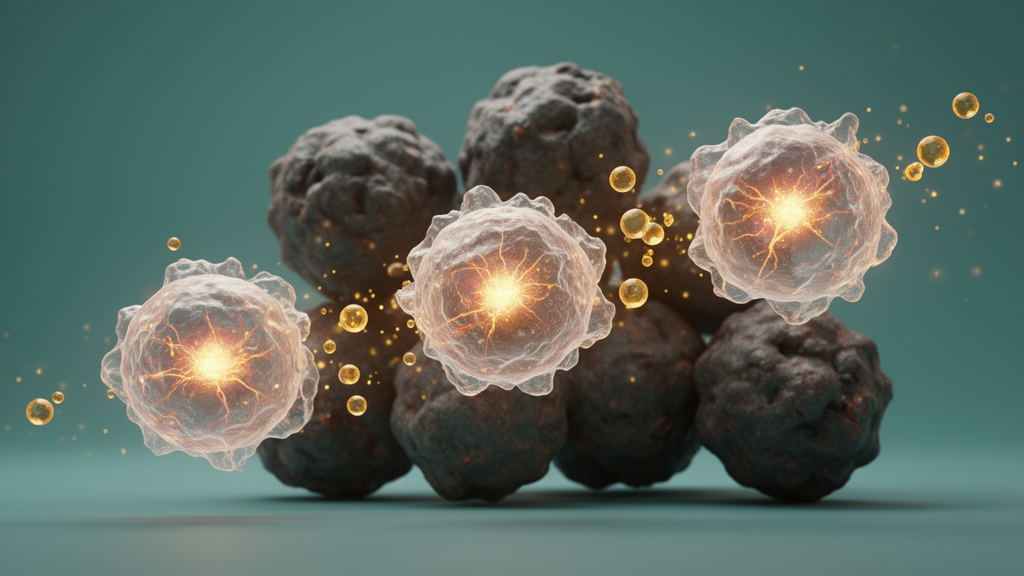
When the team investigated what caused tumors to grow more slowly in the hyperglycemic animals, they found that hyperglycemia was reprogramming T cells toward better control of tumor growth. The hyperglycemic mice not only had a greater number of T cells, but those T cells were also more effective at fighting tumors. According to the researchers, this is likely because hyperglycemia causes the body to maintain more inflammatory immune cells, which contributes to their cancer-fighting ability.
Notably, when the diabetic mice received insulin to control their blood sugar, their T cells lost this heightened cancer-fighting capacity. This finding suggests that the immune changes observed in the study are tied to the elevated glucose levels themselves rather than to diabetes-related factors that persist when glucose is normalized.
To identify the specific changes responsible, the researchers compared T cells from hyperglycemic mice, diabetic mice receiving insulin, and mice with normal blood sugar levels. They found that T cells from the hyperglycemic mice showed an increase in their use of a particular cellular signaling pathway, and that this increased signaling contributed to the cells’ enhanced tumor-fighting ability.
The article title, “Experimental high blood glucose metabolically rejuvenates CD8+ T cells for improved control of tumor growth through an IGF1-IGF1R axis,” indicates that the signaling pathway in question involves the IGF1-IGF1R axis and that the affected cells are CD8+ T cells, a subset known for directly killing tumor cells. The authors describe the pathway as metabolically rejuvenating these cells, linking glucose availability to the metabolic state and function of the anti-tumor immune response.
The study was not limited to mice. After observing the differences in the animal models, the researchers also looked for similar changes in people. They found that the same signaling pathway was increased in immune cells from blood samples taken from people with hyperglycemia, providing preliminary human evidence that the mechanism observed in mice may also operate in human immune cells.
Dr. Bose said the findings open several research avenues for new cancer immunotherapies by applying the changes seen in the T cells of patients with type 1 diabetes and mimicking those cell changes in new treatments for all patients. In a separate statement, she added that the findings are exciting because the team now partly understands how type 1 diabetes protects against certain cancers, and that the new understanding of the involvement of this specific signaling pathway provides new ways to develop T cell-based immunotherapies for cancer patients.
The researchers emphasize that identifying the signaling pathway as an important factor enhancing the tumor-fighting abilities of T cells is key to developing new cancer treatments that could mimic this enhancement. The research article, published on 29 October 2026, carries the DOI 10.1093/jimmun/vkag262. As with all preclinical work, the findings in mice will require further investigation before they can be translated into therapies, and the association between type 1 diabetes and reduced cancer risk remains an observational one that the mouse data help to illuminate mechanistically rather than prove clinically.
Subject of Research: How hyperglycemia reprograms T cells to control tumor growth in type 1 diabetes
Article Title: New cancer treatments could come from understanding diabetes
Article References: New cancer treatments could come from understanding diabetes. Original publication (Bibliographic details unavailable.)
Image Credits: AI Generated
DOI: Not provided
Keywords: type 1 diabetes, hyperglycemia, T cells, tumor growth, cancer immunotherapy, IGF1-IGF1R axis, CD8+ T cells, melanoma, breast cancer, colon cancer, The Journal of Immunology, immune cells
News Source: Nathaniel Bowman. (October 29, 2026). High blood sugar reprograms T cells to fight tumors in mouse study. Scienmag.