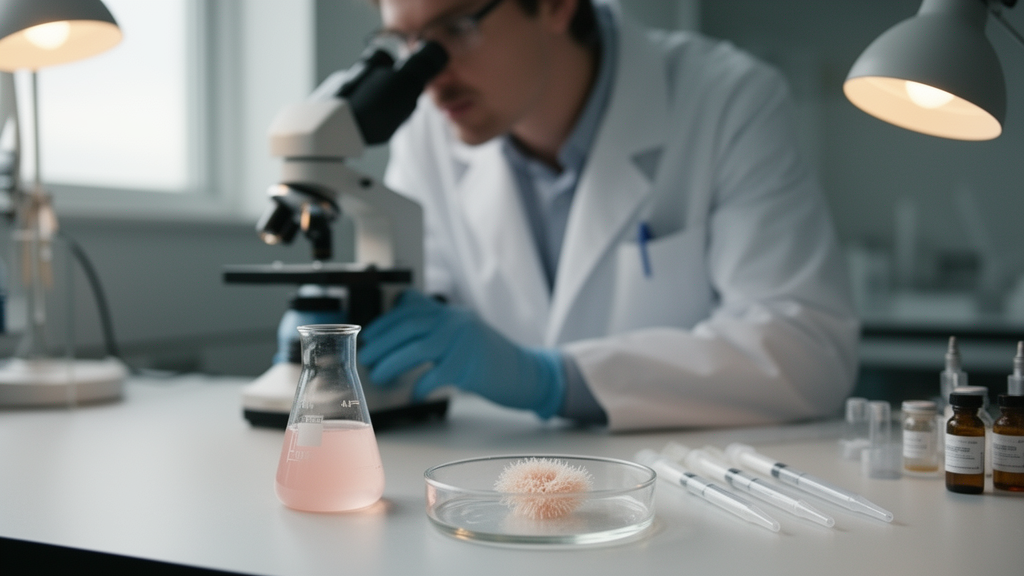
Marine invertebrate cell culture has crossed a threshold that eluded researchers for more than sixty years. A comprehensive review published in Aquaculture Science and Management synthesizes the field’s history and highlights its landmark achievement: the 2025 establishment of the first continuously proliferating marine invertebrate cell lines, derived from embryonic stages of the sea urchins Lytechinus variegatus and Strongylocentrotus purpuratus. Generated by mechanical dissociation of blastulae and gastrulae and cultured in an artificial seawater-based Urchin Medium supplemented with 3–15% fetal bovine serum, these lines have undergone more than 100 to 200 population doublings over three years without exogenous immortalization. They contain heterogeneous populations with stem-like cells expressing markers such as seawi, vasa, nanos2, and germ-layer markers, and they tolerate lentiviral transduction and CRISPR editing, making them the first genetically tractable cultures in the discipline.
The breakthrough stands out against a backdrop of persistent failure. Despite over six decades of research, no continuous, immortalized cell line existed from any marine invertebrate species until these embryonic cultures emerged, and as of late 2025 no continuous adult-derived cell line exists for any marine invertebrate phylum. Adult gonad-derived cells from the same sea urchin species reached only about 30 doublings, underscoring a fundamental difference in stemness regulation between embryonic and adult stages. The review, which draws on a systematic literature search across Web of Science, PubMed, Scopus, and Google Scholar, argues that the embryonic sea urchin lines represent the most important milestone in the field’s history, while cautioning that their scalability for industrial applications, long-term genetic stability, and efficiency in heterologous expression of marine natural products still require validation through extended studies.
The historical arc explains why success took so long. Early efforts from 1960 to 1989 concentrated on molluscan hemocytes, with primary cultures from the eastern oyster Crassostrea virginica and the blue mussel Mytilus edulis remaining viable for weeks and proving useful for studying phagocytosis and viral susceptibility, though never proliferating. The 1990s and early 2000s broadened the scope across phyla, driven by marine natural product discovery, but the proportion of cultures lasting longer than one month actually declined from 30% to 17.8%, partly because many earlier claims of proliferation were later attributed to thraustochytrid contamination rather than genuine invertebrate cell growth. From 2005 onward, the field shifted toward fewer but higher-quality investigations tied to model organisms and genomic resources, including sequenced genomes of the sponge Amphimedon queenslandica, the sea urchin Strongylocentrotus purpuratus, and the Pacific oyster Crassostrea gigas.
An analysis of roughly 480 publications from 2010 to 2025 shows a relatively balanced taxonomic distribution. Porifera contributed about 24% of studies, with the longest pre-2025 proliferative sponge cultures reaching 35 days. Crustacea accounted for 23%, achieving hemocyte-like cultures maintained for up to 347 days, including one report of 32 passages of hemocyte-like cells from the Chinese mitten crab Eriocheir sinensis in modified Grace’s medium. Mollusca represented 21%, with tissues such as mantle and heart often surviving six to eight months, and Cnidaria comprised 17%, with symbiont-free lines lasting three to six months. Echinodermata made up 11% and Urochordata 4%, while minor phyla such as Bryozoa and Brachiopoda contributed less than 1% with only brief cultures reported. A separate 2025 milestone, the establishment of a trochophore-derived cell line from the scallop Chlamys farreri, marks the first continuous molluscan line and offers a stable platform for pathogen studies, though its reliance on larval dissociation raises questions about scalability and long-term genetic stability.
The central obstacle remains cellular quiescence. Within 24 to 72 hours of isolation, most marine invertebrate cells cease division and enter a reversible, G0-like state marked by condensed chromatin, reduced metabolic activity, and resistance to apoptosis. Transcriptomic studies consistently show early upregulation of stress-response pathways, including MAPK and JNK cascades, alongside downregulation of cell-cycle regulators such as cyclins and CDKs. The review links this quiescence to the loss of stemness in marine invertebrate stem cells, including totipotent archaeocytes in sponges and interstitial cells in cnidarians, which rapidly downregulate markers such as piwi, vasa, nanos, and mys when removed from their natural niches. Unlike mammalian cellular senescence, which is largely irreversible and tied to telomere shortening or accumulated DNA damage, invertebrate quiescence is typically rapid and reversible upon niche restoration, a contrast the authors suggest could inform strategies for mammalian regenerative medicine.
Contamination compounds the problem. Thraustochytrids, lipid-rich marine protists measuring roughly 2 to 20 micrometers, were frequently misidentified as proliferating invertebrate cells in early literature, generating false claims of success. Broad-spectrum antibiotic and antimycotic mixtures provide only initial control and can select for resistant strains, so establishing truly axenic cultures requires labor-intensive combinations of mechanical washing, density-gradient separation, and short high-dose antimicrobial treatments. Scalability poses a further barrier: primary cultures are extremely sensitive to hydrodynamic shear, attachment-dependent sponge and molluscan cells resist suspension adaptation, and no culture has yet progressed beyond laboratory-scale flasks for metabolite production.
Methodological advances since 2015 have nonetheless reshaped the field. Optimized isolation protocols for sea urchin embryos, using calcium- and magnesium-free seawater followed by repeated pipetting, routinely achieve viability above 90%. Phylum-specific media have markedly improved outcomes: the nutrient-enriched M1 medium induced the fastest pre-2025 division rates in sponge cells, with Hymeniacidon perleve cells dividing approximately once per hour for seven days and yielding more than five population doublings, while modified crustacean media have supported hemocyte-like cultures for over 300 days. Omics technologies now provide molecular rationales for refinement, with transcriptomics revealing stress-pathway activation within 24 hours of culture, single-cell RNA sequencing identifying stem-cell markers in sea anemones, corals, and the new sea urchin lines, and ATAC-seq studies in corals demonstrating chromatin closing during culture. The authors note, however, that low cell yields, high salinity, and symbiont contamination still complicate single-cell applications in marine samples.
Practical applications are already tangible in aquaculture and environmental science. Primary lymphoid organ cultures from Penaeus vannamei support white spot syndrome virus propagation, with viral genome replication detectable by quantitative PCR as early as 9 hours post-infection, enabling antiviral screening that has identified compounds reducing viral load by up to 90% in infected cultures. Hemocyte cultures from Eriocheir sinensis have been used with single-cell RNA sequencing to study Spiroplasma eriocheiris infection, and mussel and oyster hemocyte assays measuring lysosomal membrane stability, DNA damage, and stress-gene expression have been incorporated into international biomonitoring programs. In drug discovery, sponge primmorphs from Dysidea avara produce the bioactive compound avarol at up to 50 micrograms per gram of biomass after 14 days, and the sea urchin lines are being explored for heterologous expression of biosynthetic gene clusters, with lentiviral transduction enabling production of halichondrin-like compounds at 5 to 10 micrograms per liter, though industrial-scale production remains a future goal.
Looking forward, the review identifies four interconnected knowledge gaps: media formulations remain largely empirical and lack phylum-specific optimization; strategies to maintain stemness in vitro are underdeveloped; omics data are underutilized, with most studies relying on bulk sequencing; and cultures are often initiated from mixed cell populations without sorting for totipotent subpopulations such as archaeocytes or interstitial cells. The authors propose multifaceted responses, including high-throughput robotic media screening guided by machine learning, CRISPR-based interventions targeting quiescence pathways and pluripotency factors, integrated multi-omics pipelines to map quiescence networks, low-shear bioreactor engineering, and international consortia with centralized cell banks modeled on existing repositories. They also flag ethical considerations, noting that genetic modifications pose risks of unintended environmental release and that equitable benefit-sharing under frameworks such as the Nagoya Protocol is essential to prevent biopiracy. Success, the review concludes, would enable sustainable production of high-value marine natural products, reduce reliance on wild harvesting of species such as sponges, and unlock unique models for regenerative medicine, evolutionary developmental biology, and environmental science.
Subject of Research: Marine invertebrate cell culture and the development of the first continuous cell lines
Article Title: Advances in marine invertebrate cell culture: historical progress, persistent challenges, and emerging biotechnological prospects
Article References: Xue, T., Zheng, J., Xu, Y., Guo, Y., Lu, B., Zhang, T., Wang, J., Zhao, Z., Wu, X., Ding, H., & Liu, C. (2026). Advances in marine invertebrate cell culture: historical progress, persistent challenges, and emerging biotechnological prospects. Aquaculture Science and Management, 3(1), Article 11. https://doi.org/10.1186/s44365-026-00039-5
Image Credits: AI Generated
DOI: 10.1186/s44365-026-00039-5
Keywords: marine invertebrates, cell culture, cell lines, sea urchins, quiescence, stem cells, sponges, aquaculture, CRISPR, biotechnology, thraustochytrids, omics
News Source: Juliet Wilcox. (October 29, 2026). First Continuous Cell Lines End Six-Decade Quest to Culture Marine Invertebrate Cells. Scienmag.