Stroke remains one of the world’s leading causes of death and long-term disability, and its burden continues to climb as populations age and modifiable risk factors spread. A newly published open-access review argues that the field’s focus on acute intervention has reached its limits, and that the future of stroke medicine lies in detecting vascular failure decades before an artery blocks or ruptures. The paper, published in Discover Medicine on 28 October 2026, reframes stroke not as a sudden catastrophe but as the clinical endpoint of a progressive neurovascular breakdown that begins silently, often years or even decades earlier.
The scale of the problem is stark. Between 1990 and 2021, global stroke incidence rose by 70 percent, deaths by 44 percent, and disability-adjusted life-years by 32 percent, according to the comprehensive estimates cited in the review. Low- and middle-income countries bear a disproportionate share, accounting for roughly 87 percent of stroke-related deaths and 89 percent of DALYs. The annual economic cost is estimated at US$890 billion and is projected to nearly double by 2050. Despite breakthroughs in acute reperfusion therapies such as thrombolysis and thrombectomy, narrow therapeutic time windows and strict eligibility criteria mean only a small fraction of stroke victims benefit, leaving prevention as the most promising frontier.
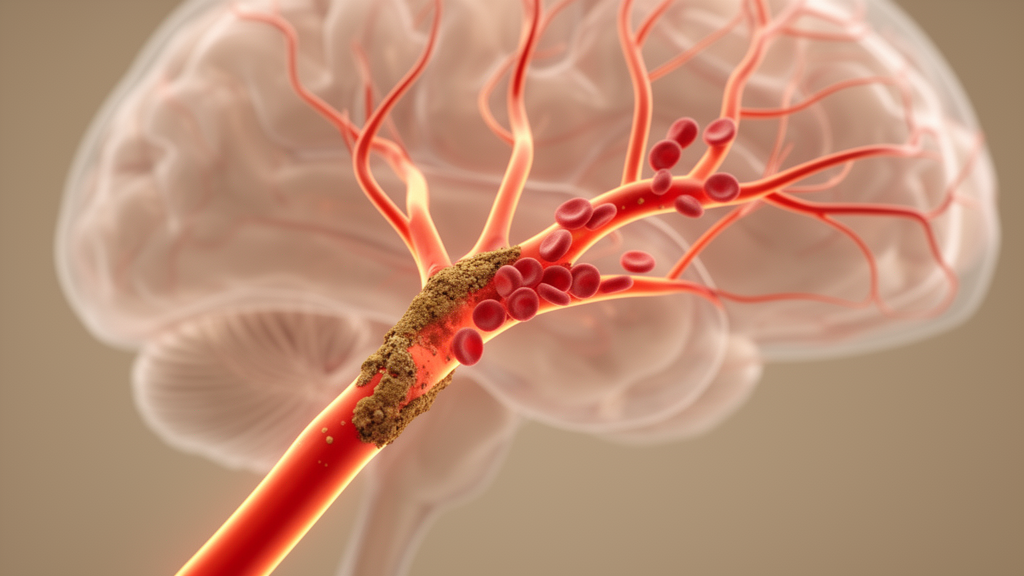
At the heart of the review’s argument is vascular dysfunction, a systemic deterioration of blood vessel structure and function that the authors position as the essential link between systemic risk factors and cerebral tissue injury. Under healthy conditions, the cerebral endothelium maintains vasodilation, antithrombotic balance, selective blood-brain barrier permeability, and regulated leukocyte trafficking. Chronic insults such as hypertension, hyperglycaemia, dyslipidaemia, ageing, smoking, and systemic inflammation push the endothelium into a maladaptive phenotype: reduced nitric oxide bioavailability, increased endothelin-1 activity, elevated tissue factor and von Willebrand factor expression, platelet activation, and upregulation of adhesion molecules including VCAM-1 and ICAM-1. The vascular surface becomes vasoconstrictive, pro-coagulant, pro-adhesive, and inflammatory.
The review organises stroke pathophysiology as a sequential cascade in which endothelial dysfunction precedes oxidative stress, angiopathy, excitotoxicity, and neuroinflammation. Reduced nitric oxide availability limits vasodilatory reserve and allows unopposed vasoconstrictor signalling, while mitochondrial dysfunction, NADPH oxidase activation, and uncoupled nitric oxide synthase drive the production of reactive oxygen and nitrogen species. These oxidants damage endothelial membranes, ion channels, mitochondrial proteins, DNA, and extracellular matrix components, creating a self-reinforcing cycle of vascular injury. Sustained damage then progresses to angiopathy, in which chronic hypertension produces lipohyalinosis, fibrinoid necrosis, and luminal narrowing of small penetrating arteries, while cerebral amyloid angiopathy deposits amyloid-beta in cortical and leptomeningeal vessels, heightening susceptibility to rupture and haemorrhage.
Angiopathy is tightly coupled to blood-brain barrier disruption, which the authors describe as a critical intersection between ischemic and haemorrhagic stroke. Barrier integrity depends on endothelial tight junctions, pericytes, astrocytic endfeet, and the basement membrane. Hypoxia, cytokines, oxidative stress, and matrix degradation compromise tight junction proteins such as claudin-5 and occludin, while matrix metalloproteinases, notably MMP-2 and MMP-9, degrade collagen IV and laminin, weakening the vascular scaffold. Once the barrier fails, plasma proteins, leukocytes, erythrocytes, thrombin, and complement components infiltrate the brain parenchyma, producing vasogenic oedema, impaired microvascular perfusion, and secondary neuronal injury. In ischemic stroke, barrier breakdown elevates the risk of haemorrhagic transformation after reperfusion.
Downstream of vascular failure, excitotoxicity emerges as the principal mechanism of neuronal death. Arterial occlusion or severe hypoperfusion deprives neurons and glia of oxygen and glucose, causing rapid ATP depletion and failure of energy-dependent ion pumps, especially Na+/K+-ATPase. The loss of ionic gradients triggers neuronal depolarisation, intracellular calcium accumulation, cytotoxic oedema, and excessive glutamate release, which overstimulates NMDA and AMPA receptors and activates proteases, phospholipases, endonucleases, and mitochondrial injury pathways. The ischemic core sustains rapid irreversible damage while the surrounding penumbra remains potentially salvageable if perfusion is restored in time. Microvascular flow failure compounds the problem: pericyte contraction can sustain capillary narrowing even after large-vessel recanalisation, contributing to the no-reflow phenomenon, meaning restored flow in a major artery may not rescue tissue if the downstream microcirculation remains obstructed.
Neuroinflammation completes the cascade. Injured cells release damage-associated molecular patterns including HMGB1, mitochondrial DNA, ATP, and heat-shock proteins, which activate microglia, astrocytes, and perivascular macrophages through pattern-recognition receptors. Activation of the NLRP3-ASC-caspase-1 inflammasome promotes maturation of IL-1beta and IL-18, and the resulting cytokines, chemokines, complement fragments, and matrix-degrading enzymes intensify endothelial activation, barrier disruption, and neuronal death. The review also highlights the microbiota-gut-brain axis: gut dysbiosis and a dysfunctional intestinal barrier allow lipopolysaccharide translocation into the circulation, contributing to metabolic endotoxaemia, while the gut-derived metabolite TMAO is associated with increased risk of adverse cardiovascular events including stroke and can cross a compromised blood-brain barrier to activate the NLRP3 inflammasome in microglia and astrocytes. In contrast, short-chain fatty acids promote neuroprotection by regulating inflammation, glucose metabolism, blood pressure, and barrier integrity.
A central translational challenge is that human stroke is not a monolithic entity. Ischemic stroke accounts for approximately 85 percent of cases and haemorrhagic stroke for roughly 15 percent, and ischemic stroke itself arises from large artery atherosclerosis, cardioembolism, small vessel occlusion, or rarer causes. The human neurovascular system, with its gyrencephalic cortex and complex immune response, differs profoundly from the lissencephalic rodent brain, and most preclinical studies have historically used young, healthy, male animals under controlled conditions, a stark contrast to the typical elderly comorbid patient. The review argues that no single model can capture this spectrum, and that model selection must be guided by the specific research question rather than convenience.
The models themselves span a wide range. In vitro oxygen-glucose deprivation systems allow high-throughput dissection of excitotoxicity, oxidative stress, mitochondrial dysfunction, and cell death pathways, but lack blood flow, an intact barrier, and systemic immunity. Organotypic brain slice cultures preserve native cytoarchitecture and synaptic connectivity, bridging cell culture and whole-animal work. Animal models include the intraluminal suture middle cerebral artery occlusion, embolic models using autologous clots, photothrombotic models with Rose Bengal, and endothelin-1 induced spasm, each with distinct strengths and limitations. Haemorrhagic models include collagenase injection and autologous blood infusion for intracerebral haemorrhage, and endovascular perforation for subarachnoid haemorrhage. Emerging bioengineered platforms, including blood-brain barrier-on-a-chip devices incorporating human endothelial cells, astrocytes, and pericytes, offer dynamic perfusable systems for studying barrier breakdown and drug delivery in real time, while computational models and machine learning integrate genomics, neuroimaging, and clinical outcomes to predict disease progression.
On the biomarker front, the review catalogues candidate indicators mapped to each stage of the cascade: soluble markers of endothelial activation such as von Willebrand factor and E-selectin, markers of barrier disruption such as cellular fibronectin and platelet-derived growth factor receptor-beta, and neuroinflammatory markers such as MMP-9 and IL-6. Transcriptomic analyses have shown downregulation of the endothelial marker Tek alongside upregulation of Plvap, Angpt2, Hmox1, and Serpine1 in ischemic injury. Blood-based gene expression profiles can differentiate cardioembolic from large-vessel ischemic stroke, and astrocyte-derived extracellular vesicles enriched with GFAP appear in plasma as early as one day after stroke. GFAP rises rapidly after intracerebral haemorrhage but only slowly after ischemic stroke, making it a potent hyperacute discriminator, while persistent MMP-9 elevation is associated with haemorrhagic transformation after thrombolysis and with perihematomal oedema expansion. The authors caution that many of these markers are also elevated in infection, systemic inflammation, cancer, and metabolic disease, so their clinical value depends on integration into multimarker panels interpreted alongside imaging, stroke subtype, and comorbidities. They argue that biomarkers should refine, not replace, clinical risk scores such as CHA2DS2-VASc and QRISK3 by adding biological resolution, and that large prospective cohorts, multi-omics integration, and reverse translation from clinical cohorts into preclinical models are needed to convert vascular biomarkers from descriptive correlations into clinically useful tools for precision stroke prevention.
Subject of Research: Vascular dysfunction as a precursor to stroke and the use of translational research models for biomarker discovery and prevention
Article Title: Vascular dysfunction and translational biomarker discovery in stroke prevention
Article References: Siakabanze, C., Bwalya, K., Mwape, L., Mweene, B. C., Siame, L., Luwaya, E., & Masenga, S. K. (2026). Vascular dysfunction and translational biomarker discovery in stroke prevention. Discover Medicine, 3(1), Article 166. https://doi.org/10.1007/s44337-026-00716-3
Image Credits: AI Generated
DOI: 10.1007/s44337-026-00716-3
Keywords: stroke, vascular dysfunction, endothelial dysfunction, biomarkers, blood-brain barrier, neuroinflammation, organ-on-a-chip, translational research, stroke prevention, cerebral small vessel disease, oxidative stress, precision medicine
News Source: Cassandra Pierce. (October 29, 2026). Stroke begins years earlier: vascular dysfunction offers a window for prevention. Scienmag.