


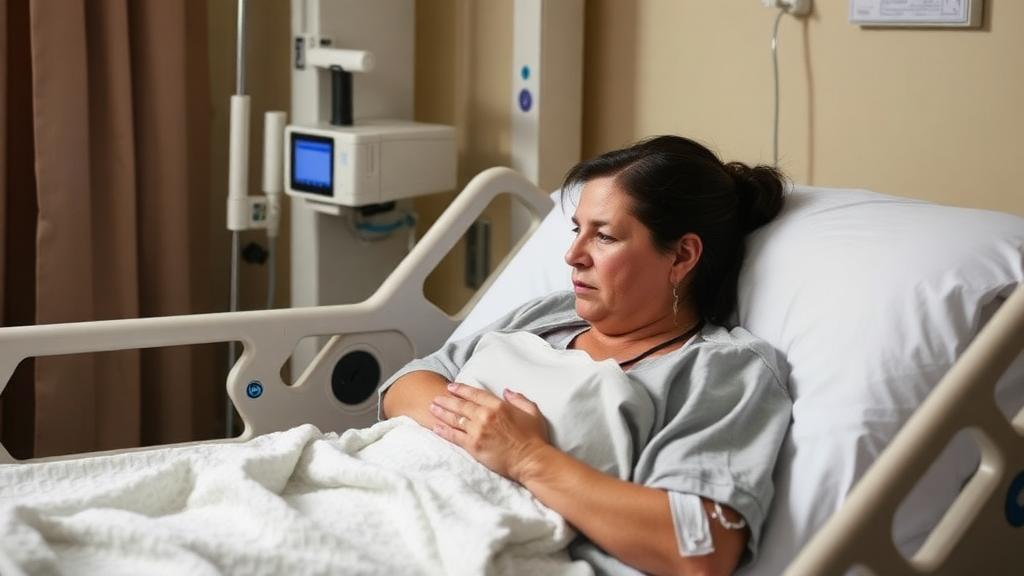
Critical illness rarely strikes one person alone. When a loved one is admitted to an intensive care unit, the entire family is pulled into a world of prognostic uncertainty, unfamiliar machinery and sudden, often unexpected disruption. Patient trajectories can vary enormously, from full recovery through persistent illness with disability and ongoing care needs to death, and these long-lasting consequences extend well beyond the patient. A new qualitative study published in Intensive Care Medicine by Kentish-Barnes and colleagues of the FAMIREA research group, highlighted in an editorial by Rahel Naef and O. Joseph Bienvenu, now traces in fine detail how families’ lived experiences in and around the ICU can push them along a pathway toward post-traumatic stress disorder.
The study focused on family members of mechanically ventilated patients whose ICU stays ranged from 3 to 55 days, with a mean of 19 days. All of the interviewed relatives had presented with PTSD symptoms at three months after the ICU admission, assessed with the PTSD Checklist for DSM-5, a standardized screening instrument. The researchers interviewed 17 family members: eight adult children, six spouses and three other first-degree relatives. Almost half of these relatives were bereaved, meaning the patient had died. Phone interviews took place around six months after the ICU stay and lasted between 49 and 155 minutes, with a mean of 98 minutes. They explored relatives’ experiences and coping strategies during the critical illness of their close family member and were analyzed inductively, using a thematic analysis approach with a conceptual focus on PTSD.
The editorial situates these findings within a broader clinical problem known as Post-Intensive Care Syndrome-Family, or PICS-F. This term describes the mental health sequelae that families can suffer after a critical illness, including anxiety, depression, post-traumatic stress disorder and prolonged grief disorder. According to the editorial, PICS-F affects between 20 and 60 percent of families following a critical illness. Insufficient communication, lack of support structures and dissatisfaction with care are identified as risk factors for family suffering and long-term ill health. Families are often described as the forgotten patient, because the efforts of critical care staff, and indeed of family members themselves, are fully concentrated on the patient. When families’ needs for communication and support are overlooked or neglected, the editorial notes, it adds to their suffering and may lead to unnecessary psychological injury.
What distinguishes the new study is its starting point. To date, the editorial explains, research on PICS-F has mostly used quantitative designs and a single risk factor approach, focusing on either patient or family characteristics present at ICU admission, such as gender, age, type of family relation, socio-economic status, illness severity or prior mental health. The Kentish-Barnes study instead takes families’ lived experience, in contrast to investigator expertise, as its starting point, and examines how experiential buffers and stressors accumulate over time along the pathway to PTSD. The authors identified pre-ICU and ICU-related buffers and stressors as relevant to this experiential pathway, organized around three major themes.
The first theme concerns the onset of the critical illness itself. Family members experienced the onset as sudden and disruptive, and it occurred in the context of other stressors and prior illness burden. This convergence brought difficult and potentially traumatic past events to the fore, along with a sense of guilt. The editorial emphasizes that recognizing such trajectories is timely, because critical illness occurs in the context of preexisting conditions and often alters families’ lives forever.
The second theme relates to the time spent in the ICU, and it contains both buffers and stressors. On the buffering side, family members described becoming increasingly familiar with the ICU environment and team, which instilled a sense of comfort. They valued the beneficial presence of clinicians, particularly empathy and compassionate acts, as well as high-quality communication and information.
On the stressful side of the same theme, families struggled with the unfamiliar and technical environment of the unit and with altered interactions with their loved one. Patients underwent physical and behavioral changes that relatives found disturbing and alienating, which altered family togetherness and produced a sense of exclusion and profound worries. Families reported emotional suffering, lack of sleep, and difficulties managing the ongoing demands of daily life while keeping vigil at the bedside. Over the course of the ICU stay, waiting related to illness progression and to access to the ICU emerged as particularly stressful, and this waiting was intertwined with hope, new uncertainties and fatalism.
The third theme pertained only to bereaved families, those whose relative died in the ICU. These families appreciated having time to anticipate and prepare for the death and to make decisions about when, but not if, to withdraw or withhold treatment. In contrast, the technical environment, difficulty recognizing that death was impending, and seeing the dead body were immensely challenging for families to bear. The phrase included in the study title, it was a torture, captures the nature of critical care experiences for family members who went on to develop PTSD.
The editorial argues that this trajectory-based, experiential perspective has practical value. Information on the accumulation of stressors may help in understanding PTSD risk and in identifying points of vulnerability during which a clinical consultation with families may be particularly helpful. Focusing on trajectories also underscores the need to follow families after the ICU phase, for example in post-ICU clinics. Moreover, modifiable risk factors related to ICU care have received scarce research attention, and studying experiences of care may reveal how ICU workflows, clinician behaviors and structures can enhance buffers and reduce stressors, pointing the way forward for family-focused ICU practice and research.
At the same time, the editorial strikes a sober note about what such research can achieve. Considering the current body of research on family-focused interventions and programs, it is important to acknowledge that PICS-F may not be fully preventable, but it is influenceable. Establishing a family-friendly culture and building capacity in ICU teams and structures to engage, communicate with and support families requires ongoing action, as recommended by professional societies whose clinical guidelines emphasize liberalizing ICU visitation and ensuring family-focused practices. This reflects a paradigm shift toward humanizing ICU care, in which families are seen not only as surrogate decision-makers but as a resource for patient well-being and essential care partners. Future research, the editorial concludes, will need to better understand characteristics of resilience and vulnerability in families to enable tailored interventions, and to examine buffers and stressors for PICS-F occurring after the ICU, particularly for families of ICU survivors with persistent and new health problems and for those who are bereaved, so that post-ICU care can be informed by evidence rather than assumption.
Subject of Research: Family experiences of ICU care that shape post-traumatic stress after critical illness
Article Title: Family suffering after critical illness: understanding buffers and stressors
Article References: Naef, R., & Bienvenu, O. J. (2026). Family suffering after critical illness: understanding buffers and stressors. Intensive Care Medicine. https://doi.org/10.1007/s00134-026-08621-0
Image Credits: AI Generated
DOI: 10.1007/s00134-026-08621-0
Keywords: intensive care, PICS-F, post-traumatic stress, family caregivers, qualitative research, ICU communication, bereavement, critical illness, post-ICU care, clinician empathy, Family, suffering
News Source: Ophelia Keating. (October 29, 2026). Interviews reveal ICU stressors and buffers shaping family PTSD pathways. Scienmag.



