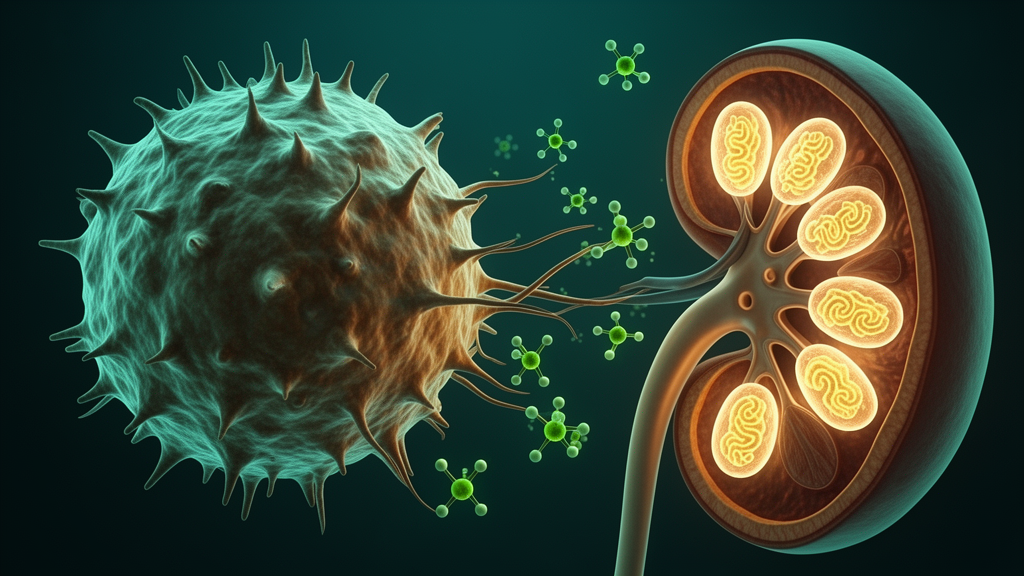
Diabetic nephropathy, a major microvascular complication of diabetes and a leading cause of kidney failure worldwide, continues to leave patients with substantial residual risk of progression even as disease-modifying therapies advance. A new review published in Biological Procedures Online argues that answering why may require looking at two cellular systems at once: the mitochondria that power kidney cells and the macrophages that drive inflammatory damage.
The review, authored by Jixi Li, Peishan Zhou, Fan Xu, Wu Liu, Shiyun Tang and Yulin Qi, synthesizes evidence that mitochondrial dysfunction and macrophage-associated inflammatory responses are interconnected in diabetic nephropathy. Rather than treating these as separate pathological threads, the authors frame them as a potentially self-reinforcing loop in which damage in one system feeds the other.
At the center of the argument is mitochondrial homeostasis, a term covering several distinct processes. The review describes how disturbances in mitochondrial redox homeostasis, dynamics, biogenesis, mitophagy and metabolism may promote inflammatory activation.
The loop then closes in the opposite direction. According to the review, macrophage-derived inflammatory signals can further aggravate mitochondrial injury, potentially forming what the authors call a feed-forward pathogenic network. In this model, each round of inflammation worsens mitochondrial function, and each round of mitochondrial damage amplifies inflammation, a dynamic that could help explain why kidney injury progresses even under current treatment.
The review synthesizes experimental evidence on natural products that modulate mitochondrial homeostasis, macrophage polarization, or related inflammatory signaling in models relevant to diabetic nephropathy.
The preclinical findings are described as encouraging, but the authors are careful to draw a firm line between laboratory promise and clinical reality. Clinical translation of natural products, they write, remains limited by several concrete obstacles rather than by a lack of interesting biology.
Those obstacles are enumerated in detail. The chemical complexity of natural products and the difficulty of standardizing preparations make it hard to know exactly what is being tested. Pharmacokinetics and tissue exposure remain uncertain, meaning researchers often cannot confirm that active compounds reach kidney tissue at meaningful concentrations. Causal target validation is incomplete, so it is not always clear which molecular targets actually drive observed effects. Safety concerns and potential drug-drug interactions add further risk, and high-quality clinical evidence is lacking altogether.
The review’s conclusion is measured rather than triumphant. Targeting the mitochondrial-macrophage crosstalk, the authors write, represents a promising therapeutic framework for diabetic nephropathy, but its clinical relevance requires further rigorous mechanistic, pharmacological and clinical validation. In other words, the crosstalk hypothesis now has a coherent mechanistic story and a growing body of preclinical support, but no demonstrated benefit in patients.
For a field searching for ways to close the residual-risk gap in diabetic kidney disease, the review offers a map of where to look next: at the intersection of mitochondrial quality control and immune cell polarization, and at whether natural products can be developed into standardized, validated interventions. Whether that intersection yields new treatments will depend on the kind of careful causal and clinical work the authors say is still missing.
Subject of Research: The crosstalk between mitochondrial homeostasis and macrophage polarization in diabetic nephropathy and the potential of natural products targeting it.
Article Title: Targeting the Crosstalk Between Mitochondrial Homeostasis and Macrophage Polarization Through Natural Products: A Promising Approach for Diabetic Nephropathy Treatment
Article References: Li, J., Zhou, P., Xu, F., Liu, W., Tang, S., & Qi, Y. (2026). Targeting the Crosstalk Between Mitochondrial Homeostasis and Macrophage Polarization Through Natural Products: A Promising Approach for Diabetic Nephropathy Treatment. Biological Procedures Online. https://doi.org/10.1186/s12575-026-00366-w
Image Credits: AI Generated
DOI: 10.1186/s12575-026-00366-w
Keywords: diabetic nephropathy, mitochondrial dysfunction, macrophage polarization, natural products, mitophagy, inflammation, kidney disease, diabetes complications, preclinical evidence, drug development, Targeting, Crosstalk
News Source: Drew Townsend. (October 29, 2026). Natural Products Target Mitochondria and Macrophage Crosstalk in Kidney Disease Review. Scienmag.