Prostate cancer does not simply grow faster than healthy prostate tissue; it rebuilds the way its cells handle energy. A new review published in Cellular & Molecular Biology Letters on 3 October 2026 sets out how that metabolic rebuilding is staged, and how tiny membrane-bound particles called extracellular vesicles may carry pieces of it between cells.
Normal prostate epithelium has an unusual specialization: it produces and secretes citrate, a metabolic state tied to a zinc–citrate axis. According to the review, malignant transformation reverses this axis and restores mitochondrial oxidation, meaning the cells return to burning fuels through their mitochondria rather than exporting citrate. From there, the authors describe a sequence of further changes: lipid remodeling linked to the androgen receptor, flexibility in nutrient use, and plasticity in organelles and cell lineage.
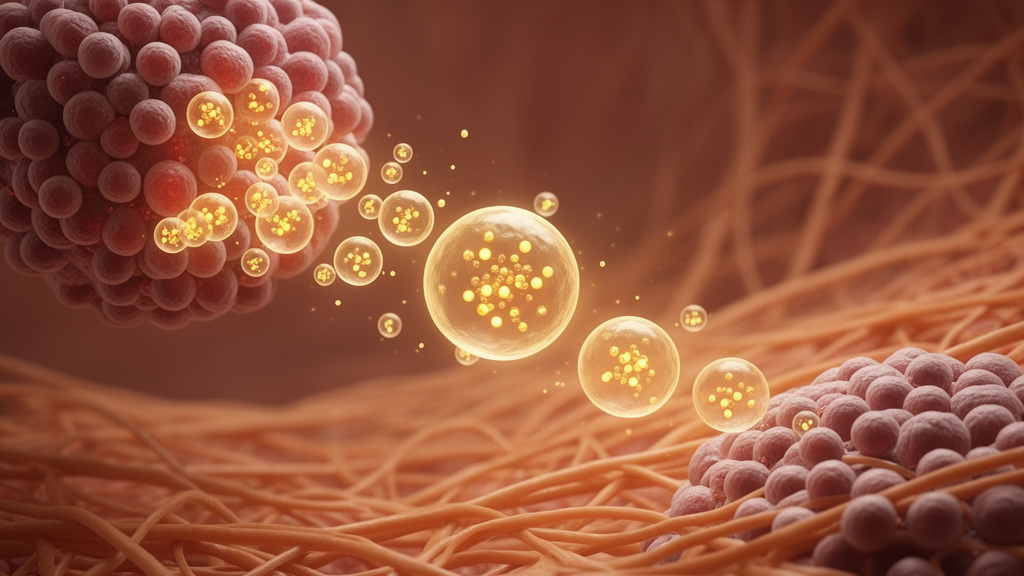
Extracellular vesicles, particularly the small subtype known as exosomes or small extracellular vesicles, are one route by which these metabolic states may be shared. The review explains that these vesicles can externalize aspects of a cell’s metabolic state by transferring proteins, regulatory RNAs, metabolites, and lipids to other cells. In other words, a tumor cell’s metabolic fingerprint may be packaged and delivered to neighbors, immune cells, or distant tissues.
The scope of the review is broad. Across tumor, stromal, immune, vascular, and metastatic compartments, the authors propose that vesicle-mediated transfer may redistribute nutrients and reshape bioenergetic, redox, and lipid programs in recipient cells. These processes, they argue, connect intercellular metabolic adaptation to proliferation, angiogenesis, metastasis, therapy resistance, immunosuppression, and remodeling of the tumor microenvironment.
Importantly, the authors are explicit about the limits of the evidence. The review states that evidence for some proposed vesicle–metabolism axes remains indirect or emerging, and that their interpretation requires evidence-matched claims. This is a review article, not a new experimental study, and it integrates existing literature rather than reporting new clinical trial results. Readers should therefore treat the described mechanisms as a framework of proposed and partially supported pathways rather than established clinical findings.
By placing vesicle signaling within broader intercellular communication networks, the review outlines implications for biomarkers, disease monitoring, and therapeutic development. If vesicles carry metabolic information between cells, their cargo could in principle be monitored in patient samples, and the transfer process itself could become a target for intervention. The authors frame vesicle-mediated metabolic communication as a biologically grounded view of prostate cancer progression and microenvironmental adaptation, while acknowledging that translating these mechanisms into clinical tools will require further work.
Subject of Research: Extracellular vesicle-mediated metabolic reprogramming in prostate cancer progression and tumor microenvironment remodeling
Article Title: Extracellular vesicles-mediated metabolic reprogramming in prostate cancer progression and tumor microenvironment remodeling
Article References: Zou, M., Deng, R., Liu, T., Qiu, J., Mao, K., Shang, J., Cai, L., Zhou, J., Wang, Y., & Gong, K. (2026). Extracellular vesicles-mediated metabolic reprogramming in prostate cancer progression and tumor microenvironment remodeling. Cellular & Molecular Biology Letters. https://doi.org/10.1186/s11658-026-01032-5
Image Credits: AI Generated
DOI: 10.1186/s11658-026-01032-5
Keywords: prostate cancer, extracellular vesicles, exosomes, metabolic reprogramming, tumor microenvironment, zinc-citrate axis, androgen receptor, lipid remodeling, biomarkers, therapy resistance, Extracellular, vesicles-mediated
News Source: Nathaniel Bowman. (October 28, 2026). Extracellular vesicles may reshape prostate cancer metabolism and its microenvironment. Scienmag.