


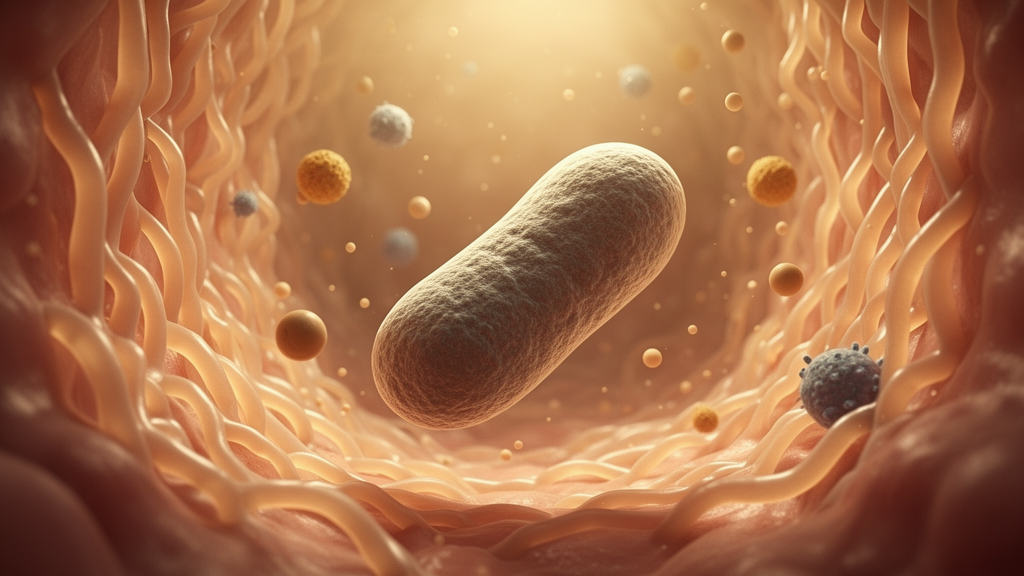
Recent observations that live Akkermansia muciniphila, a common gut symbiont, can worsen intestinal damage during acute radiation injury have triggered debate about the safety of this widely studied next-generation probiotic. A new perspective article, published in Food, Nutrition and Health on 11 September 2026, argues that these findings have been misread and that the microbe should continue to be regarded as a beneficial symbiont with therapeutic promise.
Writing in the perspective, Wanting Gong, Yan Tan and Shiqi Jia contend that classifying beneficial symbionts as intrinsically pathogenic on the basis of acute disruption models represents a fundamental misinterpretation of microbial ecology. They point out that severe epithelial trauma universally precipitates opportunistic pathobiont behaviour across normally benign commensals, meaning that the behaviour seen in the radiation model is not unique to Akkermansia muciniphila. According to the authors, this makes appropriate comparative probiotic controls essential for establishing whether any observed harm is specific to this organism.
The perspective also addresses a methodological concern about how the microbe’s ecology is measured. Because Akkermansia muciniphila preferentially colonizes the mucosal layer rather than the gut lumen, the authors argue that exclusive reliance on fecal shedding data can misrepresent true ecological dynamics, since physical sloughing of the mucosa during injury can distort what fecal samples appear to show. They propose that proper mucosal sampling, alongside fecal data, is needed to interpret the organism’s behaviour accurately.
Central to the authors’ argument is that Akkermansia muciniphila’s functional outcomes are strictly context-dependent, defined by host mucosal integrity and the timing of administration, rather than indicating intrinsic toxicity. In support of a beneficial classification, the perspective cites the organism’s proven prophylactic benefits, regulatory approval in pasteurized forms, and positive systemic metabolic impacts, stating that the broader consensus strongly affirms Akkermansia muciniphila as a beneficial symbiont.
Looking ahead, the authors conclude that future clinical applications should focus on precise administration timing, baseline tissue status, and proper mucosal sampling in order to safely leverage the microbe’s therapeutic potential. The article is published as an open access perspective, and its arguments are positioned as a reassessment of the recent radiation-injury findings rather than new experimental data.
Subject of Research: Context-dependent functions of the next-generation probiotic Akkermansia muciniphila
Article Title: Akkermansia muciniphila remains a beneficial symbiont with therapeutic promise: navigating context-dependent functions of next-generation probiotics
Article References: Gong, W., Tan, Y., & Jia, S. (2026). Akkermansia muciniphila remains a beneficial symbiont with therapeutic promise: navigating context-dependent functions of next-generation probiotics. Food, Nutrition and Health, 3(1), Article 34. https://doi.org/10.1007/s44403-026-00074-z
Image Credits: AI Generated
DOI: 10.1007/s44403-026-00074-z
Keywords: Akkermansia muciniphila, next-generation probiotics, gut microbiome, symbionts, radiation injury, pathobionts, mucosal integrity, pasteurized probiotics, metabolic health, microbial ecology, Akkermansia, muciniphila
News Source: Morgan Morrow. (October 28, 2026). Akkermansia muciniphila stays a beneficial symbiont, perspective argues, as context determines its effects. Scienmag.



