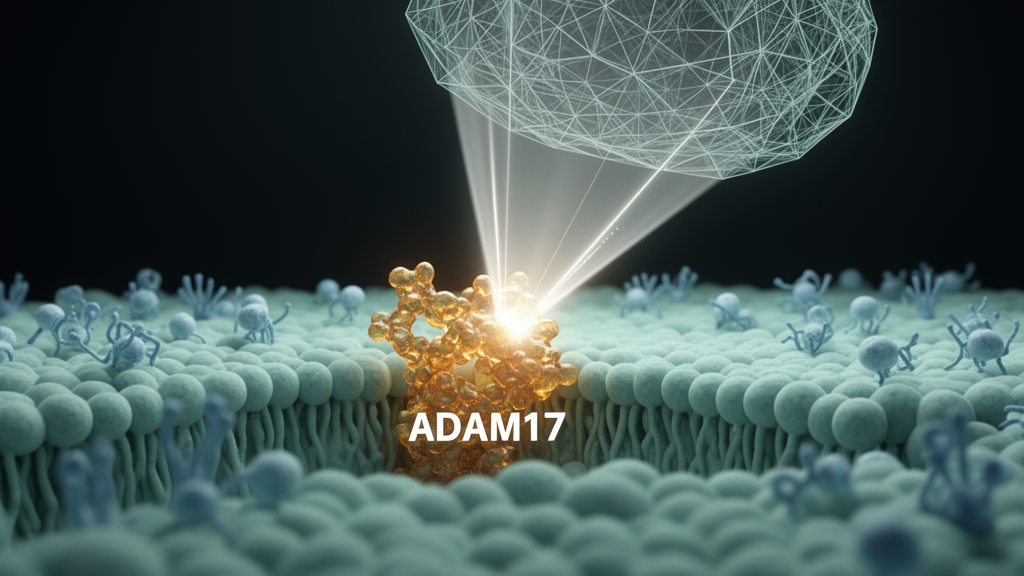
Researchers have built an artificial intelligence framework that scans multi-omics data to nominate druggable targets, and it has flagged a cell-surface protein called ADAM17 as a leading candidate against biliary tract cancer, a disease with few effective broad-spectrum therapies. The team, publishing in Cellular Oncology, paired the computational search with laboratory tests of antibody-drug conjugates and CAR-T cells directed at the target.
The framework, named ACT-Target, integrates several layers of evidence: multi-omics data, checks that a candidate protein sits on the cell surface, safety profiling, and structural developability assessments. Its purpose is to overcome the limitations of conventional target discovery by systematically prioritizing therapeutic candidates before any wet-lab work begins.
Benchmarking was performed with a time-split design, meaning the system was evaluated on whether it could recover targets that were validated only later. In that test, ACT-Target prospectively recovered 12 of 18 future solid-tumor ADC and CAR-T targets while introducing no unsafe false positives, according to the study’s abstract.
When applied to a tumor-only multi-omics cohort, the agent ranked ADAM17 first, citing its balanced omics support, surface accessibility, and compatibility with both antibody-drug conjugate and CAR-T modalities. The authors emphasize that this dual-modality compatibility was a key reason the protein rose to the top of the candidate list.
To confirm the computational nomination, the researchers examined ADAM17 expression in biliary tract cancer tissues using immunohistochemistry. The histological analysis confirmed significant upregulation of the protein in tumor tissues compared with normal controls, supporting its status as a prevalent target in this cancer type.
The team then generated novel murine monoclonal antibodies against human ADAM17. Three lead antibodies exhibited sub-nanomolar affinities and strict target specificity, with no cross-reactivity reported. These antibodies were engineered into two therapeutic formats: antibody-drug conjugates carrying the payload MMAE, and chimeric antigen receptor T cells.
In laboratory dish experiments, both the ADAM17-directed antibody-drug conjugates and the CAR-T cells induced potent, specific cytotoxicity against biliary tract cancer cells. In mouse models, the treatments profoundly inhibited tumor growth while showing preclinical tolerability, the abstract reports.
The authors caution that these are preclinical findings. The safety profile described is based on animal and in vitro testing, and the study concludes that the strategy warrants further translational evaluation for advanced disease rather than implying immediate clinical availability. The article itself is being shared early as a peer-reviewed accepted manuscript, subject to further edits before the final version of record.
If validated in subsequent studies, the approach could offer a versatile dual-modality strategy for biliary tract cancer, a malignancy that currently lacks effective, broad-spectrum therapeutic targets.
Subject of Research: Computational target discovery identifying ADAM17 as a therapeutic target in biliary tract cancer
Article Title: Modality-aware computational agent identifies ADAM17 as a novel therapeutic target in biliary tract cancer
Article References: Che, Y., Wang, G., Chen, H., Gao, Q., & Xu, Y. (2026). Modality-aware computational agent identifies ADAM17 as a novel therapeutic target in biliary tract cancer. Cellular Oncology. https://doi.org/10.1007/s13402-026-01314-2
Image Credits: AI Generated
DOI: 10.1007/s13402-026-01314-2
Keywords: biliary tract cancer, ADAM17, ACT-Target, multi-omics, antibody-drug conjugates, CAR-T cells, target discovery, immunohistochemistry, monoclonal antibodies, preclinical study, Modality-aware, computational
News Source: Nathaniel Bowman. (October 28, 2026). Computational agent pinpoints ADAM17 as drug target in biliary tract cancer. Scienmag.