• HOME
  • NEWS
  • EXPLORE
    • CAREER
      • Companies
      • Jobs
    • EVENTS
    • iGEM
      • News
      • Team
    • PHOTOS
    • VIDEO
    • WIKI
  • BLOG
  • COMMUNITY
    • FACEBOOK
    • INSTAGRAM
    • TWITTER
Wednesday, October 28, 2026
BIOENGINEER.ORG
No Result
View All Result
  • Login
  • HOME
  • NEWS
  • EXPLORE
    • CAREER
      • Companies
      • Jobs
        • Lecturer
        • PhD Studentship
        • Postdoc
        • Research Assistant
    • EVENTS
    • iGEM
      • News
      • Team
    • PHOTOS
    • VIDEO
    • WIKI
  • BLOG
  • COMMUNITY
    • FACEBOOK
    • INSTAGRAM
    • TWITTER
No Result
View All Result
Bioengineer.org
No Result
View All Result
Home NEWS Science News Biology

Endothelial TXNIP emerges as a driver of pulmonary vascular remodeling

by
October 28, 2026
in Biology
Reading Time: 2 mins read
0
Endothelial TXNIP emerges as a driver of pulmonary vascular remodeling

Endothelial TXNIP emerges as a driver of pulmonary vascular remodeling

Share on FacebookShare on TwitterShare on LinkedinShare on RedditShare on Telegram

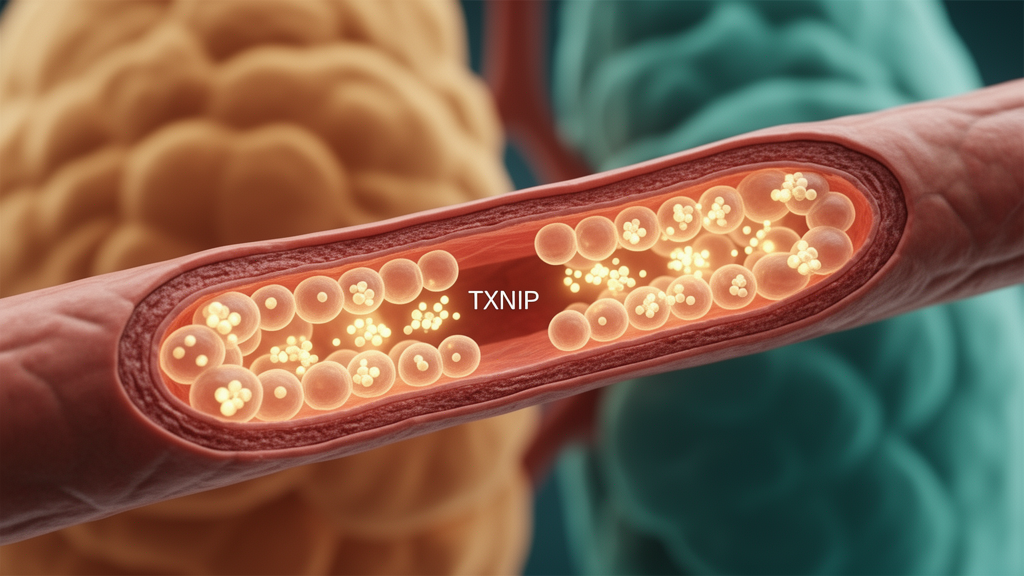
Blocking the protein TXNIP in the cells lining pulmonary blood vessels reduces the vascular remodeling that underlies pulmonary hypertension, according to a new open-access study published in Cellular & Molecular Biology Letters on 5 October 2026.

Pulmonary hypertension is characterized by high morbidity and mortality worldwide, and dysfunction of the pulmonary vascular endothelium is considered a core component of its onset and progression. The researchers first tested whether TXNIP, a protein known to influence cellular growth, survival and homeostasis in other diseases, is altered in the diseased lung. Their multiomics analyses found elevated TXNIP expression in lung tissue from animal models of pulmonary hypertension and from human patients with the disease, supporting the idea that the protein is associated with the remodeling process in both settings.

To probe causality, the team used genetic tools in mice. Global deletion of TXNIP attenuated the development of pulmonary hypertension and pulmonary vascular remodeling in the animal models. In a more targeted approach, endothelial-specific inhibition of TXNIP attenuated disease progression, while overexpression of TXNIP accelerated it. The cell-type specificity mattered: in vitro work showed TXNIP was upregulated in endothelial cells rather than in smooth muscle cells or neutrophils, pointing to the endothelium as the relevant site of action.

The study also addressed mechanism. Using small hairpin RNA and plasmids in human pulmonary artery endothelial cells, together with histological, transcriptomic, proteomic and single-cell RNA sequencing analyses, the researchers found that TXNIP promotes endothelial dysfunction by driving cell proliferation, angiogenesis and adhesion. Upstream, the transcription factor ETV4 was found to induce TXNIP transcription and its nuclear translocation. TXNIP then bonded with annexin A2 (ANXA2) to promote endothelial dysfunction, defining a signaling pathway from ETV4 through TXNIP and ANXA2.

Beyond genetics, the team reported that pharmacological inhibition of TXNIP attenuated pulmonary vascular remodeling and the development of pulmonary hypertension in the animal models. Taken together, the authors conclude that TXNIP plays a crucial role in endothelial homeostasis during the development of pulmonary hypertension and describe it as a promising therapeutic target. As with all preclinical work, the findings in animal surrogates and human tissue samples will require further validation before any clinical application, and the article is currently shared as an accepted manuscript that remains subject to final editorial edits.

Subject of Research: The role of endothelial TXNIP in pulmonary hypertension and pulmonary vascular remodeling

Article Title: Targeting endothelial thioredoxin-interacting protein (TXNIP) attenuates pulmonary vascular remodeling

Article References: Gao, Z., Guo, Y., Zhang, M., Long, H., Liu, Y., Lv, J., Zhang, R., Liu, L., Xu, M., Cui, Y., Jia, Y., Zhang, Q., Wang, L., Corrigan, C. J., Ying, S., Liu, J., & Wang, W. (2026). Targeting endothelial thioredoxin-interacting protein (TXNIP) attenuates pulmonary vascular remodeling. Cellular & Molecular Biology Letters. https://doi.org/10.1186/s11658-026-01033-4

Image Credits: AI Generated

DOI: 10.1186/s11658-026-01033-4

Keywords: pulmonary hypertension, TXNIP, endothelial dysfunction, pulmonary vascular remodeling, ETV4, ANXA2, single-cell RNA sequencing, mouse models, multiomics, drug target, Cellular & Molecular Biology Letters, Targeting

News Source: Juliet Wilcox. (October 28, 2026). Endothelial TXNIP emerges as a driver of pulmonary vascular remodeling. Scienmag.

Tags: ANXA2Cellular & Molecular Biology Lettersdrug targetEndothelial dysfunctionETV4mouse modelsmultiomicspulmonary hypertensionpulmonary vascular remodelingsingle-cell RNA sequencingTargetingTXNIP
Share12Tweet7Share2ShareShareShare1

Related Posts

RNA Sequencing Reveals Which Gut Antibiotic Resistance Genes Are Actually Switched On

RNA Sequencing Reveals Which Gut Antibiotic Resistance Genes Are Actually Switched On

October 28, 2026
Monopile acoustic shadows cut receiver detections but still aid fish tracking

Monopile acoustic shadows cut receiver detections but still aid fish tracking

October 28, 2026

Hedgehog Gene Splitting in Spider Heads Undermines Claim That Arthropod Face Segments Evolved Independently

October 28, 2026

Fungal endophyte from hibiscus yields zinc oxide nanoparticles that curb Staphylococcus aureus virulence

October 28, 2026

POPULAR NEWS

  • Engineered Probiotic Co-Culture Eases Antibiotic-Linked Diarrhea in Mice

    Engineered Probiotic Co-Culture Eases Antibiotic-Linked Diarrhea in Mice

    29 shares
    Share 12 Tweet 7
  • Lessons from a global effort to center lived experience in climate and mental health research

    29 shares
    Share 12 Tweet 7
  • Vegetarian diet does not offset ABCG2 gene variant’s hyperuricemia risk in Taiwanese cohort

    29 shares
    Share 12 Tweet 7
  • Short-Term CD8+ T Cell Depletion Alters Tau Pathology in Aged Alzheimer’s Model Mice

    29 shares
    Share 12 Tweet 7

About

We bring you the latest biotechnology news from best research centers and universities around the world. Check our website.

Follow us

Recent News

Colonial buildings and kampungs together form Surabaya’s hybrid urban heritage, study finds

RNA Sequencing Reveals Which Gut Antibiotic Resistance Genes Are Actually Switched On

Akkermansia muciniphila stays a beneficial symbiont, perspective argues, as context determines its effects

Subscribe to Blog via Email

Enter your email address to subscribe to this blog and receive notifications of new posts by email.

Join 85 other subscribers
  • Contact Us

Bioengineer.org © Copyright 2023 All Rights Reserved.

Welcome Back!

Login to your account below

Forgotten Password?

Retrieve your password

Please enter your username or email address to reset your password.

Log In
No Result
View All Result
  • Homepages
    • Home Page 1
    • Home Page 2
  • News
  • National
  • Business
  • Health
  • Lifestyle
  • Science

Bioengineer.org © Copyright 2023 All Rights Reserved.