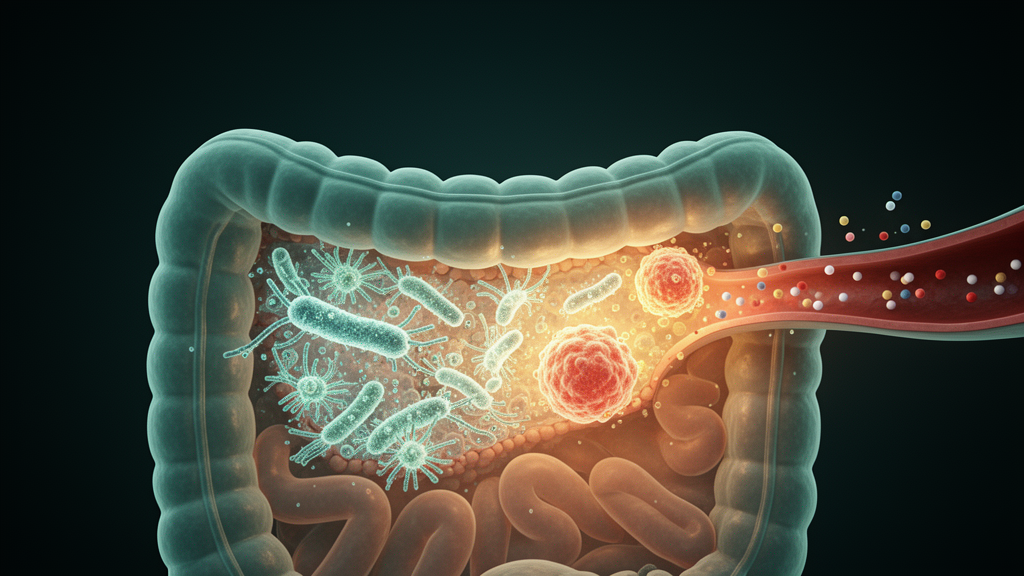
Chemotherapy remains a cornerstone of cancer treatment, yet its effectiveness is routinely undermined by primary and acquired drug resistance. A new review published in Discover Oncology argues that a neglected factor deserves a central place in oncology: the gut microbiota, which the authors describe as a critical determinant of therapeutic outcomes through the gut–tumor–microbiota axis.
The review, published open access on 27 October 2026, systematically examines the bidirectional crosstalk between chemotherapeutic agents and the microbiome. According to the authors, cytotoxic treatment itself drives dysbiosis, while chemo-tolerant pathobionts undergo adaptive evolution under the selective pressure that therapy imposes.
Rather than stopping at descriptive correlations, the authors set out molecular mechanisms by which microbes influence treatment results. One is the so-called “drug sink” effect, in which microbial-mediated sequestration of chemotherapeutic agents alters how much active drug reaches its target.
Metabolic reprogramming is a second route of influence. The review also describes how microbes hijack host pro-survival cascades, citing Notch1 and PI3K/AKT signaling as well as epigenetic m6A modifications, thereby potentially buffering cancer cells against cytotoxic stress.
A third mechanism involves the immune system: the authors describe how the microbiota can orchestrate intratumoral immunosuppressive niches, shaping the microenvironment in ways that may favor treatment tolerance.
Beyond mechanisms, the review evaluates the clinical translation of predictive microbial signatures for patient stratification, an application the authors frame as part of a move toward precision oncology. If validated, such signatures could help identify patients likely to respond poorly to standard regimens.
On the therapeutic side, the authors outline the potential of rationally defined microbial consortia and synthetic biology as future interventions. They propose leveraging the synergy of single-cell multi-omics and spatiotemporal imaging technologies to support this work.
The overall proposal is a transition toward a microbiota-centered framework in precision oncology, aimed at overcoming conventional therapeutic failure. As a review article, the piece synthesizes existing literature rather than presenting new experimental data, and its clinical proposals remain at the stage of evaluation and planning rather than demonstrated patient benefit.
Subject of Research: How the gut microbiota influences chemotherapy efficacy and resistance in cancer
Article Title: The gut microbiota modulates chemotherapy efficacy and resistance in cancer
Article References: Luo, Y., Luan, T., Zhang, J., & Li, S. (2026). The gut microbiota modulates chemotherapy efficacy and resistance in cancer. Discover Oncology. https://doi.org/10.1007/s12672-026-06152-0
Image Credits: AI Generated
DOI: 10.1007/s12672-026-06152-0
Keywords: gut microbiota, chemotherapy, drug resistance, cancer, precision oncology, dysbiosis, drug sink effect, metabolic reprogramming, microbial signatures, synthetic biology, Discover Oncology, microbiota
News Source: Nathaniel Bowman. (October 28, 2026). Gut microbes shape how well chemotherapy works in cancer patients. Scienmag.