• HOME
  • NEWS
  • EXPLORE
    • CAREER
      • Companies
      • Jobs
    • EVENTS
    • iGEM
      • News
      • Team
    • PHOTOS
    • VIDEO
    • WIKI
  • BLOG
  • COMMUNITY
    • FACEBOOK
    • INSTAGRAM
    • TWITTER
Wednesday, October 28, 2026
BIOENGINEER.ORG
No Result
View All Result
  • Login
  • HOME
  • NEWS
  • EXPLORE
    • CAREER
      • Companies
      • Jobs
        • Lecturer
        • PhD Studentship
        • Postdoc
        • Research Assistant
    • EVENTS
    • iGEM
      • News
      • Team
    • PHOTOS
    • VIDEO
    • WIKI
  • BLOG
  • COMMUNITY
    • FACEBOOK
    • INSTAGRAM
    • TWITTER
No Result
View All Result
Bioengineer.org
No Result
View All Result
Home NEWS Science News Cancer

Breast cancer surgery performed on full ECMELLA support after HER2-drug cardiogenic shock

by
October 28, 2026
in Cancer, Health
Reading Time: 2 mins read
0
Breast cancer surgery performed on full ECMELLA support after HER2-drug cardiogenic shock

Breast cancer surgery performed on full ECMELLA support after HER2-drug cardiogenic shock

Share on FacebookShare on TwitterShare on LinkedinShare on RedditShare on Telegram

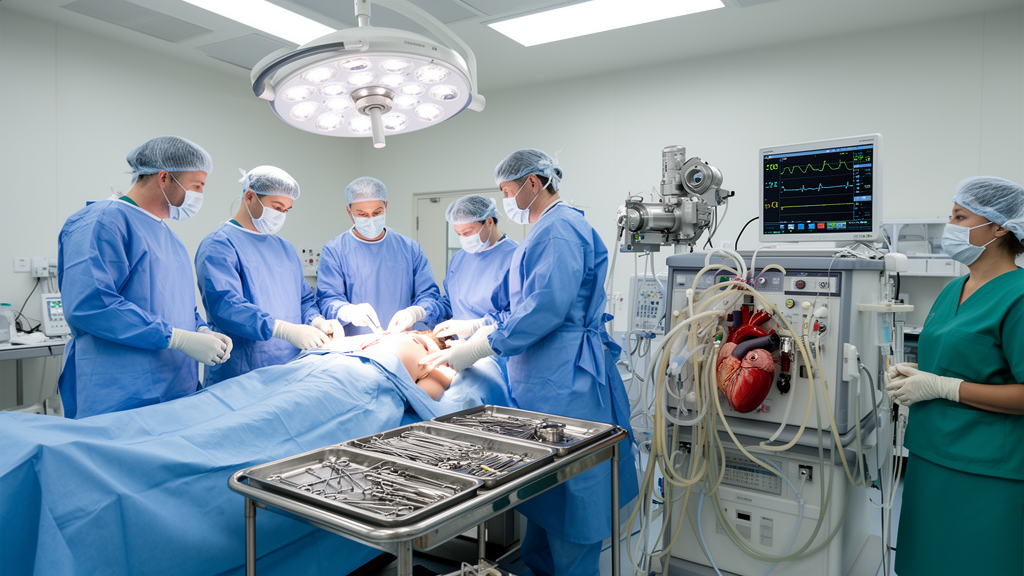
A case report published in the journal Cardio-Oncology describes a woman with HER2-positive breast cancer who developed severe left ventricular failure and refractory cardiogenic shock shortly after receiving dual HER2 blockade with trastuzumab and pertuzumab, and who then underwent curative removal of her breast tumour while supported by a combined mechanical circulation setup known as ECMELLA.

Trastuzumab and pertuzumab are key agents in the treatment of HER2-positive breast cancer, but they may cause left ventricular dysfunction. According to the report’s authors, fulminant cardiotoxicity leading to cardiogenic shock is extremely uncommon, and management strategies for this complication remain poorly defined. The published account is a single-patient case report, released as a peer-reviewed accepted manuscript with a permanent DOI, and its conclusions are correspondingly limited to what happened in this one patient.

In the case described, haemodynamic stabilisation was first attempted with inotropes and vasopressors. When that proved insufficient, clinicians implanted a percutaneous left ventricular assist device, the Impella CP. Owing to persistent circulatory collapse, the team then initiated veno-arterial extracorporeal membrane oxygenation, or VA-ECMO, and combined it with the Impella device. This dual configuration, in which the ECMO circuit supports the circulation while the Impella unloads the left ventricle, is referred to as an ECMELLA configuration.

During this period of full mechanical circulatory support, the patient underwent surgical removal of the breast tumour after multidisciplinary evaluation. The report states that progressive myocardial recovery followed, allowing complete weaning from mechanical circulatory support. She achieved sustained haemodynamic stability, with a left ventricular ejection fraction of approximately 45 percent while on standard heart failure therapy.

The authors present the case as an illustration of the potential reversibility of a presumed HER2-blocker-induced fulminant cardiomyopathy. They also highlight the role of timely escalation of mechanical circulatory support and coordinated cardio-oncology care, which in this instance extended to successful oncologic surgery being carried out while the patient remained on ECMELLA support. As the authors themselves frame it, the case underscores what coordinated multidisciplinary management may make possible in this rare and poorly defined clinical situation, rather than establishing a general treatment standard.

Subject of Research: A case report of curative breast cancer surgery performed during combined ECMO and Impella mechanical circulatory support for severe cardiotoxicity from trastuzumab and pertuzumab.

Article Title: Curative breast cancer surgery during full ECMELLA support for trastuzumab/pertuzumab related cardiogenic shock

Article References: d’Aiello, A., Pedicino, D., Franceschini, G., D’Archi, S., Di Guglielmo, E., Paris, I., Massetti, M., Scapigliati, A., Antoniucci, M. E., Burzotta, F., Trani, C., Aurigemma, C., Lunardi, M., Luzi, G., D’Avino, E., Sbaraglia, F., & Sanna, T. (2026). Curative breast cancer surgery during full ECMELLA support for trastuzumab/pertuzumab related cardiogenic shock. Cardio-Oncology. https://doi.org/10.1186/s40959-026-00595-8

Image Credits: AI Generated

DOI: 10.1186/s40959-026-00595-8

Keywords: cardio-oncology, HER2-positive breast cancer, trastuzumab, pertuzumab, cardiogenic shock, cardiotoxicity, ECMELLA, VA-ECMO, Impella, mechanical circulatory support, left ventricular dysfunction, case report

News Source: Nathaniel Bowman. (October 28, 2026). Breast cancer surgery performed on full ECMELLA support after HER2-drug cardiogenic shock. Scienmag.

Tags: cardio-oncologycardiogenic shockcardiotoxicitycase reportECMELLAHER2-positive breast cancerImpellaleft ventricular dysfunctionMechanical circulatory supportpertuzumabtrastuzumabVA ECMO
Share12Tweet7Share2ShareShareShare1

Related Posts

Diabetes duration and hypertension drive cardiovascular risk in Nigerian patients with type 2 diabetes

Diabetes duration and hypertension drive cardiovascular risk in Nigerian patients with type 2 diabetes

October 28, 2026
MRI and Ultrasound Disagree on Crohn's Disease Measurements, Major Study Finds

MRI and Ultrasound Disagree on Crohn’s Disease Measurements, Major Study Finds

October 28, 2026

Cardiovascular disease remains a major burden for people with type 1 diabetes

October 28, 2026

From small 1997 initiative to one of Europe’s largest breast imaging societies

October 28, 2026

POPULAR NEWS

  • RNA methyltransferase NSUN2 stabilizes PARP9 transcript to drive breast cancer growth and immune escape, study finds

    RNA methyltransferase NSUN2 stabilizes PARP9 transcript to drive breast cancer growth and immune escape, study finds

    29 shares
    Share 12 Tweet 7
  • Linalool reshapes microbial networks during cigar tobacco fermentation, study finds

    29 shares
    Share 12 Tweet 7
  • Retrospective study wrongly claimed prospective validation, letter warns

    29 shares
    Share 12 Tweet 7
  • Sepsis Kills One in Three Patients in Mogadishu Emergency Department, Prospective Cohort Finds

    29 shares
    Share 12 Tweet 7

About

We bring you the latest biotechnology news from best research centers and universities around the world. Check our website.

Follow us

Recent News

Diabetes duration and hypertension drive cardiovascular risk in Nigerian patients with type 2 diabetes

MRI and Ultrasound Disagree on Crohn’s Disease Measurements, Major Study Finds

Hospital AI platform lifts brain bleed detection accuracy in three-month real-world trial

Subscribe to Blog via Email

Enter your email address to subscribe to this blog and receive notifications of new posts by email.

Join 85 other subscribers
  • Contact Us

Bioengineer.org © Copyright 2023 All Rights Reserved.

Welcome Back!

Login to your account below

Forgotten Password?

Retrieve your password

Please enter your username or email address to reset your password.

Log In
No Result
View All Result
  • Homepages
    • Home Page 1
    • Home Page 2
  • News
  • National
  • Business
  • Health
  • Lifestyle
  • Science

Bioengineer.org © Copyright 2023 All Rights Reserved.