A 2026 commentary argues that the tumor microenvironment is not a passive scaffold around malignant cells but an active, adaptable ecosystem that contributes to invasion, distant-organ colonization, immune evasion and treatment tolerance. Drawing on experimental studies, human tissue analyses and an earlier integrative multi-omics framework, the authors propose that metabolic plasticity, stromal reprogramming and competition for nutrients and signals jointly create “ecosystem resilience.” They define this resilience as the capacity of tumor, stromal and immune compartments to preserve or rapidly restore collective proliferation, survival and immune evasion after disturbance by therapy, hypoxia, nutrient limitation or acidosis. The commentary emphasizes that most ecosystem-level treatment ideas remain preclinical, vary by cancer type and may damage normal tissues or antitumor immunity when they lack sufficient selectivity.
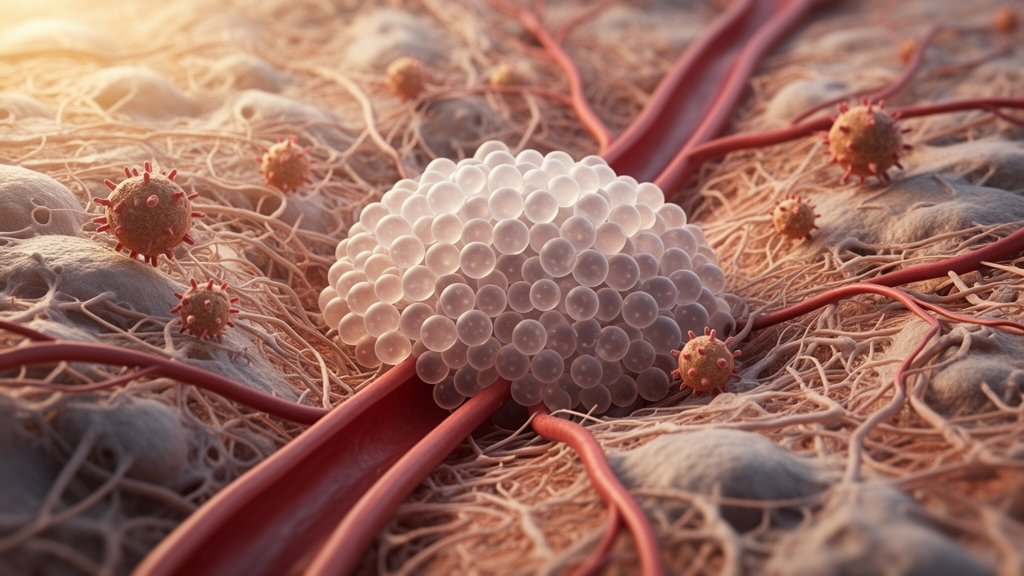
The proposed model departs from the traditional view of cancer as a disease driven mainly by genetic and epigenetic changes within malignant cells. Tumors instead contain heterogeneous cancer cells interacting with cancer-associated fibroblasts, endothelial cells, pericytes, adipocytes, immune populations and extracellular matrix. Cytokines, chemokines, growth factors, metabolites and extracellular vesicles connect these compartments, while collagen, laminin and fibronectin transmit mechanical signals through integrins and mechanotransduction pathways.
These interactions influence tumor growth, local invasion, dissemination, immune avoidance and resistance. The environment is itself highly plastic: hypoxia, nutrient scarcity, oxidative stress and extracellular acidosis impose selective pressure on malignant and nonmalignant cells, encouraging changes in metabolism, signaling and cell phenotype. The authors therefore treat the microenvironment as a context-dependent regulator rather than a universal cause of every stage of cancer progression.
Metastasis illustrates how environmental forces extend tumor-cell behavior beyond the primary site. Under low oxygen, stabilization of hypoxia-inducible factors HIF-1α and HIF-2α activates transcriptional programs associated with epithelial–mesenchymal transition, angiogenesis and invasion. Factors including SNAIL, SLUG, TWIST and ZEB1/2 reduce epithelial characteristics while increasing motility and resistance to programmed cell death.
Vascular endothelial growth factor, angiopoietin-2 and platelet-derived growth factor support abnormal vessel formation that can facilitate entry of cancer cells into circulation. Much of the causal evidence linking specific signals to metastatic competence comes from genetically engineered mouse models and correlative human tissue, however, and the relative contribution of hypoxia-, fibroblast- and macrophage-driven programs may differ substantially among tumor types and between primary and metastatic sites. Cancer-associated fibroblasts help establish a permissive metastatic niche by releasing transforming growth factor-β, CXCL12, interleukin-6 and hepatocyte growth factor.
These signals engage SMAD, STAT3 and PI3K–AKT pathways in malignant cells, while lysyl oxidase and matrix metalloproteinases alter collagen organization and matrix stiffness. The resulting mechanical changes activate integrin–focal adhesion kinase–SRC signaling and can create routes for collective migration. Macrophages contribute through cytokines and chemokines that sustain NF-κB and STAT3 signaling, promote angiogenesis and impair antitumor immunity.
Together, these observations support describing the microenvironment as an amplifier of metastatic competence rather than its sole determinant. The commentary also emphasizes that the receptivity of a distant organ may be more important than the absolute number of tumor cells reaching it, because successful colonization requires a favorable premetastatic niche. Primary tumors can prepare distant niches through soluble factors and extracellular vesicles, especially exosomes carrying proteins, metabolic enzymes, noncoding RNAs and organ-associated integrins.
Exosomal integrin patterns have been associated with lung and liver tropism. Transferred regulators such as pyruvate kinase M2, lactate dehydrogenase A and fatty acid synthase can alter nutrient availability and redox balance in recipient cells, while tumor-derived lactate, glutamine-related metabolites and fatty acids may modify stromal metabolism, favor vascular support and suppress local immunity. These changes can lower the energetic barrier to survival for dormant disseminated cells.
Several questions remain unresolved, including how much a surviving circulating tumor cell actively conditions a distant site compared with entering one already primed by the primary tumor. It is also uncertain whether signaling and metabolic programs at the primary site remain conserved after tumor cells enter a new organ or become substantially rewired by the new tissue context. Metabolic plasticity provides another foundation for drug tolerance.
A single tumor can contain cells dominated by glycolysis, oxidative phosphorylation or hybrid metabolic states, allowing different populations to respond differently as oxygen, nutrients and drug exposure change. In one commonly discussed stromal arrangement, glycolytic cancer-associated fibroblasts export lactate, pyruvate, alanine and ketone bodies, which tumor cells use to support mitochondrial respiration and biosynthesis. Transporters MCT4 and MCT1 participate in this exchange, while hexokinase 2, pyruvate kinase M2, glutaminase and fatty acid synthase influence carbon use, anaplerosis, membrane production and redox balance.
Adaptive rewiring can preserve therapy-tolerant populations, minimal residual disease, relapse and multidrug resistance. Evidence does not establish one universal direction for lactate flow: other models place lactate export in hypoxic tumor cells rather than fibroblasts, and much of the support for mixed metabolic states comes from ex vivo snapshots that cannot reveal the timing of switching under treatment. Dormant cancer stem cells add another layer of treatment tolerance.
Functionally defined by self-renewal, multilineage differentiation and tumor initiation, these cells can occupy hypoxic niches enriched in fibroblasts, endothelial cells, macrophages and regulatory T cells. They can alternate between glycolysis and mitochondrial respiration, use glutamine and lipids to preserve redox balance, and receive interleukin-6 and transforming growth factor-β signals that activate STAT3, SMAD and stemness-associated factors. Low proliferation, efficient DNA repair and anti-apoptotic proteins can shelter them from treatments directed mainly at rapidly dividing cells.
Reactivation of these residual cells may contribute to recurrence or metastatic growth. Their identity remains uncertain, however: cancer stem cell markers vary across and within tumor types, non-stem cells can reacquire stem-like properties, and human evidence on dormant disseminated cells is sparse. A metabolic strategy aimed specifically at this population would also need to avoid harming normal stem cells that use overlapping pathways.
The same metabolic environment that protects tumors can constrain anticancer immunity. Rapidly growing cancer cells consume glucose, glutamine and oxygen, creating shortages that impair the activation, proliferation, cytokine production and cytolytic activity of cytotoxic T lymphocytes and natural killer cells. Glucose deficiency inhibits PI3K–AKT–mTOR signaling, while hypoxia stabilizes HIF-1α, inhibits effector activity and can facilitate T-cell exhaustion.
Lactate and acidosis may reduce T-cell motility and interferon-γ production, and adenosine generated through CD39 and CD73 can engage A2A receptors and suppress T-cell-receptor signaling. Lactate transport, adenosine signaling and metabolism in suppressive cells are therefore candidate intervention points, but the effects are context-dependent. Effector and suppressive cells share metabolic pathways, so disrupting nutrient competition or metabolite accumulation may also impair the immune response needed for treatment success.
Molecular strategies directed beyond malignant cells are being explored to interrupt cooperative networks. Candidate metabolic targets include HK2, PFKFB3 and PKM2 in glycolysis; GLS and SLC1A5 in glutaminolysis; FASN, ACC1 and CPT1A in lipid metabolism; and MCT1 and MCT4 in lactate transport. Stromal reprogramming through transforming growth factor-β, PDGF or YAP/TAZ signaling could potentially restore a more tumor-restraining extracellular matrix and improve drug delivery, while altering NF-κB or STAT signaling in macrophages may encourage antitumor phenotypes.
Blocking extracellular-vesicle formation or uptake through targets such as Rab27a, Alix and TSG101 is another proposed strategy for preventing niche conditioning and sustaining metabolic symbiosis. These remain hypotheses rather than established treatments. Metabolism-targeting drugs must likewise spare normal proliferating tissue and active immune cells, a narrow therapeutic window illustrated by the modest single-agent activity of the glutaminase inhibitor telaglenastat in renal cell carcinoma.
Multi-omics technologies could identify vulnerabilities hidden within this complexity, but their current contribution is mainly descriptive. Single-cell RNA sequencing can distinguish transcriptionally defined cell populations, while spatial transcriptomics and imaging mass cytometry preserve relationships among cells, nutrients, hypoxia and matrix structure. Proteomics maps protein abundance and pathway activation; metabolomics tracks differences in glucose, glutamine, fatty acid and lactate use.
Joint analysis may reconstruct signaling and metabolic networks, and longitudinal sampling before, during and after treatment could reveal early adaptive changes. Computational modeling, machine learning and artificial intelligence may help identify dependencies in particular tumors. These platforms nevertheless face dropout, batch effects, limited throughput, high costs and major data-integration challenges.
Prospective evidence that multi-omics-guided microenvironmental targeting improves clinical outcomes is also scarce, so associated molecular signatures should remain candidate dependencies until they are causally and prospectively validated. The commentary’s main translational implication is to measure tumors repeatedly and treat them as changing ecosystems. Longitudinal sampling could track shifts in metabolic state, stromal remodeling, immune activity and emerging resistance, while circulating tumor DNA, metabolites, exosomes and circulating tumor cells may help monitor those changes.
Patient-derived organoids, tumor-on-chip systems and humanized mouse models could test interventions in settings that preserve human architecture, metabolism and immune complexity. Temporally sequenced combinations might use a metabolic inhibitor to alter the microenvironment, stromal normalization to improve drug penetration, or immune therapy during a window of restored effector function. Because transient conditions may create opportunities that do not persist, dose, timing, patient selection and sequencing could be as important as molecular target selection.
The evidence assembled in the commentary supports a shift from examining malignant cells in isolation toward characterizing the full ecosystem. It does not yet establish that ecosystem-based therapy will prevent metastasis or defeat resistance. The decisive next step, the authors argue, is prospective validation with temporally resolved measurements and interventions selective enough to preserve healthy tissue and antitumor immunity.
Subject of Research: Commentary on tumor-microenvironment drivers of metastasis, drug tolerance and multi-omics targeting
Article Title: Emerging Role of the Tumor Microenvironment in the Development of Metastasis, Drug Resistance, and Molecular Targeted Strategies A Commentary
Article References: Mir, R., Waza, A. A., & Khan, S. (2026). Emerging Role of the Tumor Microenvironment in the Development of Metastasis, Drug Resistance, and Molecular Targeted Strategies A Commentary. Medical Oncology, 43(11), Article 335. https://doi.org/10.1007/s12032-026-03465-6
Image Credits: AI Generated
DOI: 10.1007/s12032-026-03465-6
Keywords: tumor microenvironment, cancer metastasis, drug resistance, metabolic plasticity, cancer-associated fibroblasts, immune suppression, cancer stem cells, multi-omics, spatial profiling, precision oncology, Emerging, Role
News Source: Nathaniel Bowman. (October 20, 2026). Commentary frames tumor microenvironment as a driver of metastasis and resistance. Scienmag.