Glioblastoma has long stood as one of immunotherapy’s most stubborn adversaries, a brain cancer that shrugs off the checkpoint inhibitors and cell therapies that have reshaped the outlook for melanoma, lung cancer, and many other malignancies. Now, scientists at The Wistar Institute report that a carefully sequenced combination treatment can dismantle two of the tumor’s chief defenses at once, shrinking tumors and preventing their return in preclinical models. The study, published in Neuro-Oncology and led by Filippo Veglia, assistant professor in the Genome Regulation and Cell Signaling Program at the Ellen and Ronald Caplan Cancer Center, points to a strategy that could finally give glioblastoma patients a meaningful shot at benefiting from immunotherapy.
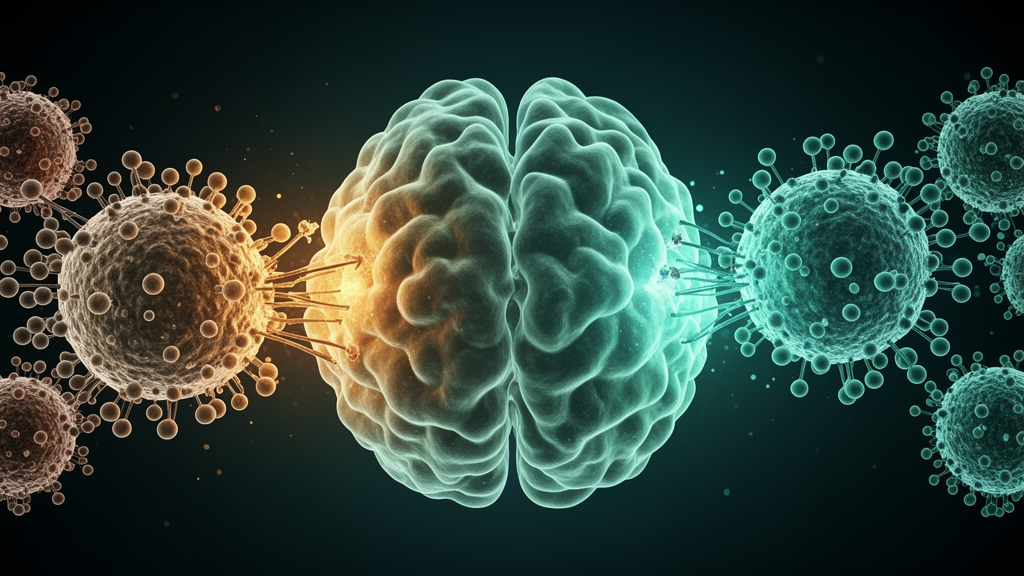
The numbers explain why the field has been so frustrated. According to Veglia, immunotherapy works in many different cancer types, but the same approach has yielded only a 10 percent success rate in glioblastoma. That failure is not simply a matter of the blood-brain barrier or the tumor’s aggressive growth, though both play a role. The deeper problem lies in the tumor microenvironment itself. Glioblastoma tumors are densely packed with myeloid cells, a family of immune cells that the tumor co-opts and reprograms into bodyguards. Rather than sounding the alarm against the cancer, these cells actively suppress the immune response, shutting down nearby T cells that would otherwise recognize and destroy tumor cells.
Even the few functional T cells that manage to reach the tumor face a second, independent obstacle. Once inside the hostile microenvironment, they become chronically activated, and that constant stimulation wears them down into a dysfunctional state known as T cell exhaustion. An exhausted T cell has essentially put down its weapons: it can no longer kill tumor cells effectively, no matter how well it initially recognized its target. Any strategy that hopes to make immunotherapy work in glioblastoma, the Wistar team reasoned, must therefore attack both problems simultaneously, disarming the myeloid suppressors while reinvigorating the T cells they have worn down.
To find the root cause of myeloid cell betrayal, Veglia’s laboratory, working with international collaborators, took a cell-by-cell inventory of the immune cells inside tumors in a preclinical model. This single-cell survey revealed something striking: the two most abundant and immunosuppressive myeloid cell populations in the tumor both displayed strong molecular signatures of hypoxia, or oxygen starvation. Tumors grow so quickly that they outstrip their blood supply, leaving interior regions chronically deprived of oxygen. The team then confirmed in laboratory experiments that this hypoxia was not merely a byproduct but a critical driver, showing that low oxygen alone was sufficient to convert myeloid cells into potent suppressors of T cell activity and to recruit them into the tumor’s service.
That mechanistic insight suggested a pharmacological opening. To relieve the oxygen starvation inside the tumor, the researchers turned to axitinib, a drug already approved for use in combination with immunotherapy to treat advanced kidney cancer. In the preclinical glioblastoma model, low-dose axitinib reduced hypoxia within the tumor and prevented myeloid cells from being reprogrammed into their immunosuppressive state. The effect on T cell traffic was immediate: more T cells began entering the tumor microenvironment. Yet the survival benefit remained modest. Axitinib alone extended median survival only from 17 to 19 days, a reminder that opening the gates to the tumor is not the same as winning the battle inside it.
The reason, Veglia explained, is that the newly arriving T cells quickly run into the second barrier. By reducing hypoxia, the team could impair the immunosuppressive activity of myeloid cells, and this resulted in the accumulation of more T cells in the tumor microenvironment. But this was not enough, because when T cells entered the tumor, they became exhausted. The influx of fresh troops was being neutralized by the very process of chronic activation that defines the glioblastoma microenvironment, leaving the treatment incomplete on its own.
Here the single-cell data provided the crucial clue. Many of the T cells that accumulated after axitinib treatment belonged to a category the researchers describe as effector-like exhausted T cells: cells that are on their way to exhaustion but have not yet reached a terminal, irreversibly dysfunctional state. In other words, these T cells were getting worn down but still retained the capacity to attack cancer. Notably, they carried a surface receptor called 4-1BB, also known as CD137, a marker indicating that they had already recognized their cancer target and were primed for action. The team reasoned that activating 4-1BB with an agonist, an immunotherapeutic approach designed to stimulate that receptor, could boost both the number and the quality of these partially exhausted fighters, pushing them back toward full anti-tumor function.
The combination proved far more powerful than either treatment alone. In murine models, pairing axitinib with the 4-1BB agonist extended median survival to 42 days, compared with 19 days for axitinib by itself and 17 days without treatment, and produced a 40 percent long-term survival rate. Perhaps most striking was what happened when the researchers re-exposed the surviving animals to tumor cells later on: no new tumors grew. That result indicates the immune system had developed durable memory against the cancer, the hallmark of a genuinely protective anti-tumor response rather than a temporary suppression of disease. For a cancer in which recurrence is nearly universal, the emergence of immunological memory is the single most encouraging signal in the study.
The path forward, Veglia says, runs toward the clinic. His next goal is to test the axitinib and 4-1BB agonist combination in a clinical trial with glioblastoma patients, translating the preclinical findings into a regimen that could be evaluated against a disease with no cure. His laboratory also plans to explore pairing axitinib with CAR T cell therapy, testing whether relieving tumor hypoxia can help engineered T cells perform better against solid tumors, an arena where CAR T approaches that have succeeded in blood cancers continue to struggle. Because hypoxic tumors are among the most resistant to immunotherapy, Veglia believes the strategy could eventually extend beyond the brain to other oxygen-starved malignancies, with pancreatic cancer, which is also highly hypoxic, a leading candidate.
The broader lesson of the study may prove as important as any single drug combination. Glioblastoma’s resistance to immunotherapy is not a single locked door but a series of interlocking defenses, and treatments that address only one of them, however elegantly targeted, have repeatedly fallen short. By identifying hypoxia-driven reprogramming of myeloid cells as a root cause of immune suppression, and by showing that the T cells liberated by relieving that suppression can be rescued from exhaustion through receptor agonism, the Wistar team has offered a template for rational combination design in tumors long considered immunologically inert. There are no cures for glioblastoma, Veglia noted, so this is an opportunity to make a real difference for patients, and he and his collaborators are eager to see whether the findings extend to other recalcitrant cancers and ultimately improve outcomes for those patients as well. If the clinical results mirror the preclinical ones, a two-pronged attack on hypoxia and T cell exhaustion could mark the moment glioblastoma finally becomes a plausible target for immunotherapy.
Subject of Research: A combination of hypoxia relief and 4-1BB agonism to overcome immunotherapy resistance in glioblastoma
Article Title: Wistar scientists uncover two-pronged strategy to overcome glioblastoma’s resistance to immunotherapy
Article References: Wistar scientists uncover two-pronged strategy to overcome glioblastoma’s resistance to immunotherapy. (n.d.). Original publication
Image Credits: AI Generated
DOI: Not provided
Keywords: glioblastoma, immunotherapy, myeloid cells, hypoxia, T cell exhaustion, axitinib, 4-1BB, CD137, The Wistar Institute, Neuro-Oncology, brain cancer, preclinical study
News Source: Nathaniel Bowman. (October 8, 2026). Two-Pronged Immunotherapy Strategy Cracks Glioblastoma’s Defenses in Preclinical Study. Scienmag.