• HOME
  • NEWS
  • EXPLORE
    • CAREER
      • Companies
      • Jobs
    • EVENTS
    • iGEM
      • News
      • Team
    • PHOTOS
    • VIDEO
    • WIKI
  • BLOG
  • COMMUNITY
    • FACEBOOK
    • INSTAGRAM
    • TWITTER
Saturday, February 7, 2026
BIOENGINEER.ORG
No Result
View All Result
  • Login
  • HOME
  • NEWS
  • EXPLORE
    • CAREER
      • Companies
      • Jobs
        • Lecturer
        • PhD Studentship
        • Postdoc
        • Research Assistant
    • EVENTS
    • iGEM
      • News
      • Team
    • PHOTOS
    • VIDEO
    • WIKI
  • BLOG
  • COMMUNITY
    • FACEBOOK
    • INSTAGRAM
    • TWITTER
  • HOME
  • NEWS
  • EXPLORE
    • CAREER
      • Companies
      • Jobs
        • Lecturer
        • PhD Studentship
        • Postdoc
        • Research Assistant
    • EVENTS
    • iGEM
      • News
      • Team
    • PHOTOS
    • VIDEO
    • WIKI
  • BLOG
  • COMMUNITY
    • FACEBOOK
    • INSTAGRAM
    • TWITTER
No Result
View All Result
Bioengineer.org
No Result
View All Result
Home NEWS Science News Biology

Tooth fossils fill 6-million-year-old gap in primate evolution

Bioengineer by Bioengineer
May 14, 2019
in Biology
Reading Time: 2 mins read
0
IMAGE
Share on FacebookShare on TwitterShare on LinkedinShare on RedditShare on Telegram

UNLV geoscientist, student among international research team behind discovery of ancient monkey species that lived in Africa 22 million years ago
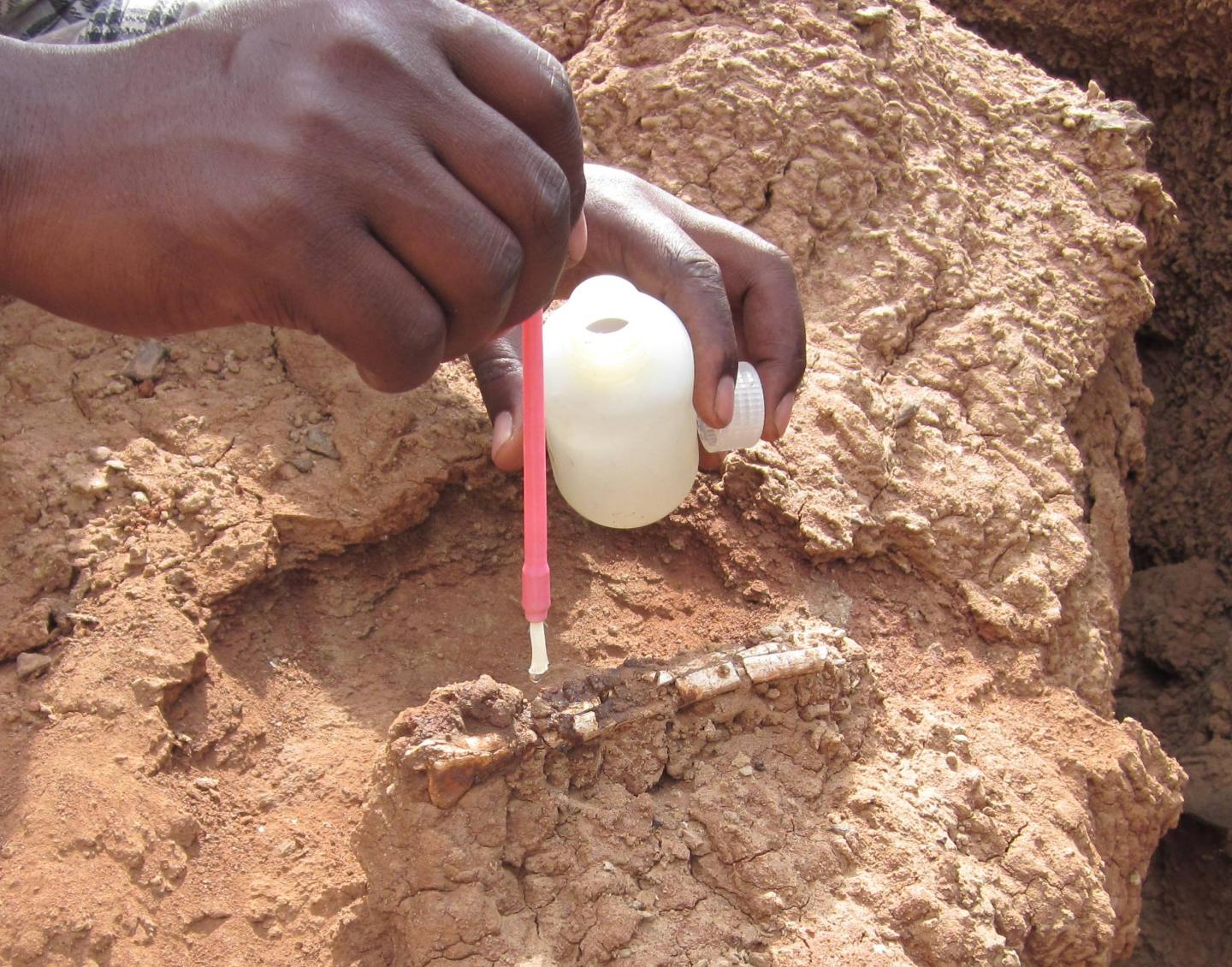
IMAGE

Credit: Terry Spell/UNLV

Researchers have used fossilized teeth found near Lake Turkana in northwest Kenya to identify a new monkey species — a discovery that helps fill a 6-million-year gap in primate evolution.

UNLV geoscientist Terry Spell and former master’s student Dawn Reynoso were part of the international research team that discovered the species that lived 22 million years ago. Understanding the evolution of Old World monkeys is important because, along with the great apes and humans, they belong to the anthropoid group of primates — primates that resemble humans.

According to Spell, the monkey fossil discovery grew out of a more extensive study of a section of sedimentary rocks in Kenya that contain a large number of different types of fossils, including several hundred mammal and reptile jaws, limbs, and teeth.

Previous studies had documented the early evolution of Old World monkeys using fossils dated at 19 million and 25 million years old, leaving a 6-million-year gap in the earliest record. However, the new fossil was determined to be 22 million years in age. Isotopic ages on the rocks were obtained in the Nevada Isotope Geochronology Laboratory on the UNLV campus.

“This adds to our understanding of the earliest evolutionary history of Old World monkeys, including changes in their diet with time to include more leaves,” Spell said. “Monkeys originated at a time in the past when Africa and Arabia were together as an island continent. Plate tectonic motions pushed this land mass into the Eurasian land mass at 20 to 24 million years ago, and an exchange of animals and plants occurred. It is unclear if competition with newly introduced species or changing climate conditions drove changes in diet.”

Scientists named the newly discovered monkey species Alophia (“without lophs”) due to the lack of molar crests on its teeth — a phenomenon that sets them apart from geologically younger monkey fossils.

Old World monkeys are the most successful living superfamily of nonhuman primates with a geographic distribution that is surpassed only by humans. The group occupies a wide spectrum of land to tree habitats and have a diverse range of diets. They evolved to develop a signature dental feature — having two molar crests — which to this day allows them to process a wide range of food types found in the varying environments of Africa and Asia.

###

Others involved in the research were scientists from nine U.S. universities and a foreign national museum.

“Primitive Old World monkey from the earliest Miocene of Kenya and the evolution of cercopithecoid bilophodonty” was published in Proceedings of the National Academy of Sciences.

Media Contact
Keyonna Summers
[email protected]

Original Source

https://www.unlv.edu/news/release/tooth-fossils-fill-6-million-year-old-gap-primate-evolution

Related Journal Article

http://dx.doi.org/10.1073/pnas.1815423116

Tags: Climate ChangeEarth ScienceEvolutionPaleontologyZoology/Veterinary Science
Share16Tweet8Share2ShareShareShare2

Related Posts

Florida Cane Toad: Complex Spread and Selective Evolution

Florida Cane Toad: Complex Spread and Selective Evolution

February 7, 2026
New Study Uncovers Mechanism Behind Burn Pit Particulate Matter–Induced Lung Inflammation

New Study Uncovers Mechanism Behind Burn Pit Particulate Matter–Induced Lung Inflammation

February 6, 2026

DeepBlastoid: Advancing Automated and Efficient Evaluation of Human Blastoids with Deep Learning

February 6, 2026

Navigating the Gut: The Role of Formic Acid in the Microbiome

February 6, 2026
Please login to join discussion

POPULAR NEWS

  • Robotic Ureteral Reconstruction: A Novel Approach

    Robotic Ureteral Reconstruction: A Novel Approach

    82 shares
    Share 33 Tweet 21
  • Digital Privacy: Health Data Control in Incarceration

    63 shares
    Share 25 Tweet 16
  • Study Reveals Lipid Accumulation in ME/CFS Cells

    57 shares
    Share 23 Tweet 14
  • Breakthrough in RNA Research Accelerates Medical Innovations Timeline

    53 shares
    Share 21 Tweet 13

About

We bring you the latest biotechnology news from best research centers and universities around the world. Check our website.

Follow us

Recent News

Personalized Guide to Understanding and Reducing Chemicals

Inflammasome Protein ASC Drives Pancreatic Cancer Metabolism

Phage-Antibiotic Combo Beats Resistant Peritoneal Infection

Subscribe to Blog via Email

Enter your email address to subscribe to this blog and receive notifications of new posts by email.

Join 73 other subscribers
  • Contact Us

Bioengineer.org © Copyright 2023 All Rights Reserved.

Welcome Back!

Login to your account below

Forgotten Password?

Retrieve your password

Please enter your username or email address to reset your password.

Log In
No Result
View All Result
  • Homepages
    • Home Page 1
    • Home Page 2
  • News
  • National
  • Business
  • Health
  • Lifestyle
  • Science

Bioengineer.org © Copyright 2023 All Rights Reserved.