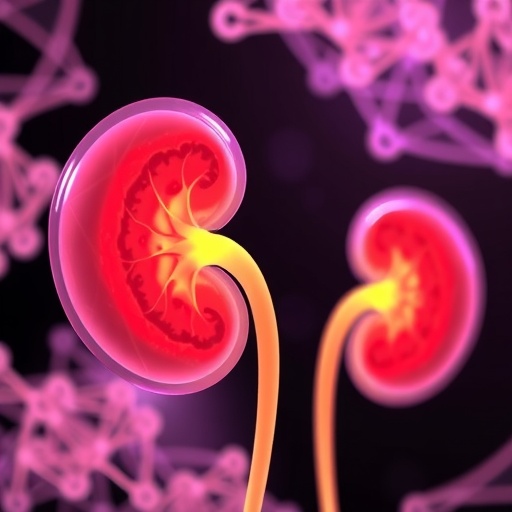
In a groundbreaking advancement that promises to revolutionize both regenerative medicine and kidney disease research, a team led by Dr. Zhongwei Li at USC Stem Cell has developed some of the most sophisticated lab-grown kidney models ever created. These synthetic structures, known as human synthetic kidney organoids (hSKOs) or human kidney progenitor assembloids (hKPAs), emulate the intricate architecture and physiological functions of human kidneys with unprecedented fidelity. Supported by a significant three-year grant from the California Institute for Regenerative Medicine (CIRM), this research illuminates pathways toward novel therapeutic approaches for chronic kidney disease (CKD) and autosomal-dominant polycystic kidney disease (ADPKD), while also providing a potent platform for drug toxicity screening.
The challenge of replicating the kidney’s complex structure and multifunctional capacities in vitro has long confounded researchers, due to the organ’s composition of various specialized cell types arranged in an elaborate spatial configuration. The kidney’s ability to filter blood and produce urine hinges upon the precise organization and connectivity of nephrons—the microscopic filtering units—and the collecting ducts that channel urine to the bladder. Previous kidney organoids, though scientifically valuable, failed to faithfully reproduce these interconnected systems, limiting their applicability for studying renal physiology or pathology.
Dr. Li’s team achieved a paradigm-shifting breakthrough by integrating two distinct populations of kidney progenitor cells, which in embryonic development give rise independently to nephrons and to the urine-collecting duct system. By meticulously mimicking embryonic kidney development processes, the researchers fostered self-organization in vitro, whereby these progenitor cells autonomously aligned and connected correctly under optimized culture conditions. This novel approach yielded hSKOs exhibiting radial nephron formation linked to a central collecting system, successfully recreating the functional hierarchy and connectivity essential for kidney operation.
The team’s decade-long refinement of culture conditions was pivotal. They identified specific growth factor cocktails and nutrient environments that support the maturation and interaction of the progenitor populations. This careful optimization nurtured the differentiation and morphogenesis of the filtering units and collecting ducts, ensuring that organoids developed structural and physiological traits comparable to early-stage human kidneys. Subsequent transplantation of these organoids into murine hosts demonstrated not only enhanced maturation but also functional filtration capabilities, marking a significant leap forward in organoid-based modeling.
One of the most promising applications of hSKOs lies in their potential to elucidate mechanisms underlying kidney diseases, particularly those difficult to study due to limited access to early-stage patient tissues. CKD remains a global health burden, affecting approximately one in seven adults in the United States, with disproportionately adverse outcomes in minority populations. ADPKD, a genetic disorder characterized by large renal cysts impairing kidney function, currently lacks effective early-stage investigative models. The hSKO platform offers a dynamic window into the initial pathophysiological changes, including the onset and progression of cyst formation, with the capacity to evaluate novel therapeutic interventions at time points previously inaccessible.
Moreover, these synthetic kidney organoids open new avenues for personalized medicine and population-specific research. The USC team plans to generate hSKOs from induced pluripotent stem cell (iPSC) lines representing diverse genetic backgrounds, including Caucasian, African American, Hispanic, and Asian individuals of both sexes. This strategy will enable researchers to dissect genetic and environmental contributions to kidney diseases across populations, fostering equitable advances in nephrology.
Beyond disease modeling, hSKOs carry profound implications for pharmaceutical development. Renal toxicity is a leading cause of clinical trial failure, with about 10% of investigational drugs withdrawn due to nephrotoxic effects. The physiological relevance of these organoids promises a predictive in vitro system to screen drug candidates for kidney safety, substantially reducing the high costs and risks associated with late-stage drug attrition. Successful integration of hSKOs into preclinical pipelines could accelerate therapeutic discovery while safeguarding patient health.
Technically, the development of hSKOs capitalizes on the innate self-patterning properties of embryonic kidney progenitor cells, a concept inspired by developmental biology and molecular signaling. This bioengineering approach leverages signaling pathways such as Wnt and FGF, which orchestrate nephron and ureteric bud differentiation and branching, respectively. By employing finely-tuned gradients and timing in culture media composition, the researchers emulate in vivo conditions that dictate nephrogenesis and ductal morphogenesis, culminating in organoids with radial nephrons accurately connected to the central collecting system—a feat unattainable by prior methodologies.
The transplantation experiments conducted by the team further validated the functional integrity of these organoids. Post-implantation, hSKOs displayed gene expression patterns and hormone secretions reminiscent of native kidneys. This success indicates not only morphogenetic fidelity but also physiologic competence, suggesting that with further maturation and scaling, synthetic kidneys could one day serve as viable transplantable grafts for patients suffering renal failure.
These advances reflect a convergence of stem cell biology, bioengineering, and regenerative medicine. The USC group’s collaborative efforts, incorporating expertise across molecular genetics, nephrology, and developmental biology, illustrate the interdisciplinary nature of this research frontier. Their findings underscore the transformative potential of organoid technology to bridge gaps in disease understanding, therapeutic screening, and organ replacement strategies.
As the team progresses with their longitudinal studies, focusing on maturation dynamics and function, they anticipate uncovering critical insights into kidney development and pathology. The incorporation of cutting-edge genetic editing and single-cell transcriptomic approaches will allow unprecedented resolution in tracking disease phenotypes and responses to pharmacologic agents, positioning hSKOs as a versatile and scalable technology with broad applicability.
Looking toward the future, this pioneering work may herald an era where synthetic, patient-specific kidneys are routinely generated for transplantation, alleviating donor shortages and immune rejection issues. Until then, hSKOs are poised to become indispensable tools in the nephrology research and pharmaceutical arenas, reshaping our approach to kidney health and disease.
Subject of Research: Human synthetic kidney organoids (hSKOs/hKPAs) and their application in kidney disease modeling and regenerative medicine.
Article Title: Engineering the Future: Breakthrough Synthetic Kidney Organoids Emulate Complex Human Renal Function
News Publication Date: Not provided
Web References:
Cell Stem Cell Publication
CIRM Grant Details
Science Article on Kidney Models
References: Not explicitly provided beyond web links.
Image Credits: Image by Pedro Medina/Li Lab/USC Stem Cell
Keywords: Human synthetic kidney organoids, kidney progenitor assembloids, nephrogenesis, kidney disease modeling, chronic kidney disease, autosomal-dominant polycystic kidney disease, regenerative medicine, stem cell biology, organoid transplantation, drug toxicity screening, nephron connectivity, developmental biology
Tags: advanced kidney organoid architectureautosomal-dominant polycystic kidney disease therapyCalifornia Institute for Regenerative Medicine grantchronic kidney disease researchhuman kidney progenitor assembloidshuman synthetic kidney organoidsin vitro kidney disease modelskidney disease drug toxicity screeninglab-grown kidney organoidsnephrons and kidney function modelingregenerative medicine for kidney diseaseUSC Stem Cell kidney research