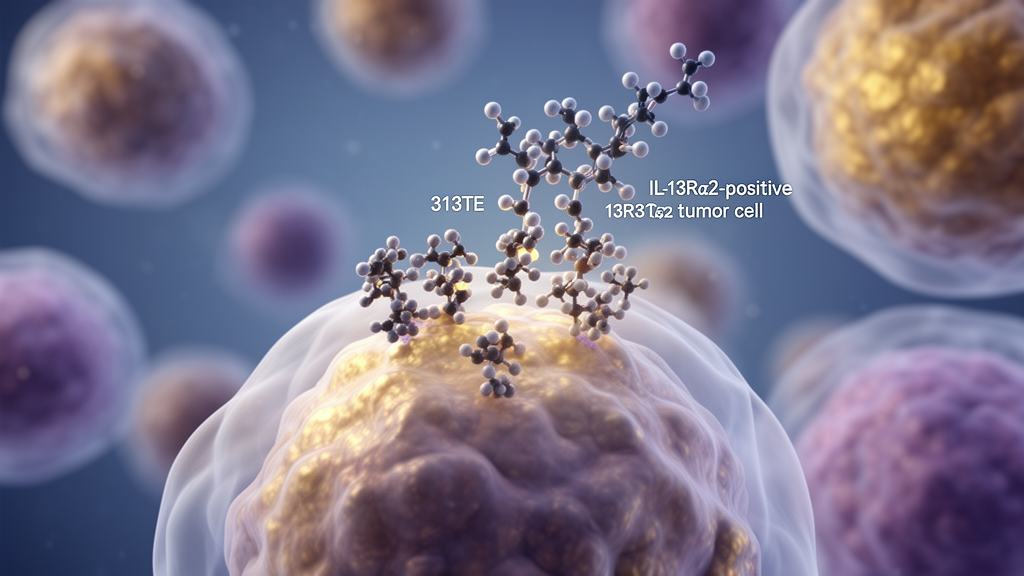
A novel T-cell engager designated 313TE produced anti-tumor activity against IL-13Rα2-positive tumor cells in laboratory experiments and mouse xenografts, according to a research article published in Cancer Immunology, Immunotherapy. The construct was designed around an IL-13E13Y scaffold to bridge cells expressing IL-13Rα2 and T cells through CD3, enabling the two cell types to interact directly.
IL-13Rα2 was reported to be overexpressed in a variety of solid tumors and to have restricted expression in normal tissues. The authors identified this distribution as a reason to investigate the receptor as a target for cancer therapy, while noting that progress in developing IL-13Rα2-directed treatments has been limited. Their study focused on 313TE, a bispecific construct intended to connect the target on tumor cells with CD3 on T cells.
In vitro, 313TE bound strongly to IL-13Rα2-positive cells and T cells. Once the construct had linked these cell types, it promoted T-cell-mediated cytotoxicity against the targeted tumor cells. The killing was IL-13Rα2-dependent, rather than occurring without regard to receptor expression. The engager also elicited immune-stimulatory cytokines, indicating that its activity in the cell assays extended beyond the direct measurement of tumor-cell destruction.
The researchers then tested 313TE in a xenograft tumor model. Treatment significantly delayed tumor growth and reduced tumor weight compared with the study’s control condition. The efficacy was described as strictly dependent on IL-13Rα2 expression, linking the observed anti-tumor effect to the presence of the engager’s intended target. These findings show that 313TE could recruit T cells to IL-13Rα2-positive tumor cells under experimental conditions and suppress tumor growth in the mouse model.
The evidence is preclinical: it comes from cell-based assays and a mouse xenograft model, not from a clinical study in people with cancer. The results therefore support 313TE as an experimental targeted immunotherapy and do not establish clinical benefit in patients. The article presents the construct as a promising strategy for further investigation of IL-13Rα2-positive solid tumors, while the reported work remains limited to laboratory and animal models.
Subject of Research: Preclinical testing of an IL-13Rα2-targeting T-cell engager for solid tumors
Article Title: A novel IL-13E13Y-based T cell engager, 313TE, promotes anti-tumor function against IL-13Rα2-positive tumor
Article References: Tang, L., Ma, A., Zong, L., & Zheng, M. (2026). A novel IL-13E13Y-based T cell engager, 313TE, promotes anti-tumor function against IL-13Rα2-positive tumor. Cancer Immunology, Immunotherapy. https://doi.org/10.1007/s00262-026-04564-z
Image Credits: AI Generated
DOI: 10.1007/s00262-026-04564-z
Keywords: IL-13Rα2, 313TE, T-cell engager, cancer immunotherapy, solid tumors, CD3, cytotoxicity, xenograft model, cancer immunology, novel, IL-13E13Y-based, cell
News Source: Nathaniel Bowman. (October 22, 2026). 313TE targets IL-13Rα2-positive tumors in preclinical testing. Scienmag.