• HOME
  • NEWS
  • EXPLORE
    • CAREER
      • Companies
      • Jobs
    • EVENTS
    • iGEM
      • News
      • Team
    • PHOTOS
    • VIDEO
    • WIKI
  • BLOG
  • COMMUNITY
    • FACEBOOK
    • INSTAGRAM
    • TWITTER
Thursday, October 22, 2026
BIOENGINEER.ORG
No Result
View All Result
  • Login
  • HOME
  • NEWS
  • EXPLORE
    • CAREER
      • Companies
      • Jobs
        • Lecturer
        • PhD Studentship
        • Postdoc
        • Research Assistant
    • EVENTS
    • iGEM
      • News
      • Team
    • PHOTOS
    • VIDEO
    • WIKI
  • BLOG
  • COMMUNITY
    • FACEBOOK
    • INSTAGRAM
    • TWITTER
No Result
View All Result
Bioengineer.org
No Result
View All Result
Home NEWS Science News Cancer

Retrospective study tests time-specific HCC recurrence prediction after ablation

by
October 22, 2026
in Cancer
Reading Time: 2 mins read
0
Retrospective study tests time-specific HCC recurrence prediction after ablation

Retrospective study tests time-specific HCC recurrence prediction after ablation

Share on FacebookShare on TwitterShare on LinkedinShare on RedditShare on Telegram

A machine-learning model integrating glypican-3 expression with clinical features showed promising performance for estimating hepatocellular carcinoma recurrence at different intervals after ablation in a retrospective study of 447 patients. The study included people with treatment-naïve, solitary HCC who underwent ablation at one center. Its Extreme Gradient Boosting model was evaluated for overall recurrence and for recurrence within three post-ablation time windows.

The investigators selected five variables for the final model: tumor size, alpha-fetoprotein level, gender, glypican-3 expression and Barcelona Clinic Liver Cancer stage. Feature selection combined logistic regression, Minimum Redundancy Maximum Relevance and Mutual Information. Multiple models were constructed, and Extreme Gradient Boosting, abbreviated XGB, was selected as the best-performing option. The cohort was divided into training, validation and test sets in a 3:1:1 ratio, allowing performance to be assessed across all three partitions rather than in the training data alone.

For overall recurrence, the XGB model achieved area-under-the-curve values of 0.819 in the training set, 0.813 in the validation set and 0.790 in the test set. In the test set, the corresponding value was 0.809 for recurrence during the first year after ablation, 0.776 for recurrence between one and two years, and 0.781 for recurrence after two years. These results indicate that the model’s measured discrimination remained similar across the three time windows in the internal test cohort. They do not by themselves establish how likely an individual patient is to experience recurrence.

Subgroup analyses showed stable performance across gender, age and tumor-size categories, with interaction p-values above 0.7 for all three subgroup assessments. In Kaplan–Meier analysis, the model also separated patients classified as high risk from those classified as low risk. The findings support further evaluation of the GPC-3-integrated XGB model as a possible approach to individualized, time-specific recurrence-risk assessment after HCC ablation. Its broader clinical value remains unconfirmed because the research was retrospective, limited to a single center and assessed through an internal data split. The authors state that prospective multicenter validation is needed to confirm whether the model generalizes beyond the study population.

Subject of Research: Time-specific recurrence-risk prediction after ablation for hepatocellular carcinoma using glypican-3 and clinical features

Article Title: Machine learning-based prediction of time-dependent recurrence risk after ablation for hepatocellular carcinoma integrating glypican-3 and clinical features: a retrospective study

Article References: Li, H., Li, X., Li, J., Sun, Q., Bian, L., Zhang, Z., Wang, L., & Gao, Y. (2026). Machine learning-based prediction of time-dependent recurrence risk after ablation for hepatocellular carcinoma integrating glypican-3 and clinical features: a retrospective study. BMC Cancer. https://doi.org/10.1186/s12885-026-16804-7

Image Credits: AI Generated

DOI: 10.1186/s12885-026-16804-7

Keywords: hepatocellular carcinoma, recurrence prediction, tumor ablation, glypican-3, machine learning, XGB, clinical features, retrospective study, time-specific risk, Machine, learning-based, prediction

News Source: Nathaniel Bowman. (October 22, 2026). Retrospective study tests time-specific HCC recurrence prediction after ablation. Scienmag.

Tags: clinical featuresglypican-3Hepatocellular Carcinomalearning-basedmachineMachine Learningpredictionrecurrence predictionRetrospective studytime-specific risktumor ablationXGB
Share12Tweet7Share2ShareShareShare1

Related Posts

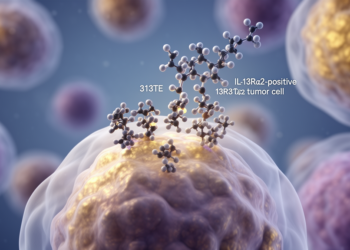
313TE targets IL-13Rα2-positive tumors in preclinical testing

313TE targets IL-13Rα2-positive tumors in preclinical testing

October 22, 2026
Research report: Behavior Change Interventions to Promote Healthy Lifestyles Among Adolescent and Young Adult Childhood Cancer Survivors: A Scoping Review

Research report: Behavior Change Interventions to Promote Healthy Lifestyles Among Adolescent and Young Adult Childhood Cancer Survivors: A Scoping Review

October 22, 2026

First small trial finds minibeam radiotherapy promising for resistant surface cancers

October 22, 2026

Patient-derived CRC-X1 cell line supports colon cancer liver-metastasis research

October 22, 2026

POPULAR NEWS

  • 313TE targets IL-13Rα2-positive tumors in preclinical testing

    313TE targets IL-13Rα2-positive tumors in preclinical testing

    29 shares
    Share 12 Tweet 7
  • DCT and high-boost filtering improve grayscale multi-focus fusion in four-dataset study

    29 shares
    Share 12 Tweet 7
  • Retrospective study tests time-specific HCC recurrence prediction after ablation

    29 shares
    Share 12 Tweet 7
  • Stoma patients describe telehealth benefits for product and skin care

    29 shares
    Share 12 Tweet 7

About

We bring you the latest biotechnology news from best research centers and universities around the world. Check our website.

Follow us

Recent News

313TE targets IL-13Rα2-positive tumors in preclinical testing

DCT and high-boost filtering improve grayscale multi-focus fusion in four-dataset study

Retrospective study tests time-specific HCC recurrence prediction after ablation

Subscribe to Blog via Email

Enter your email address to subscribe to this blog and receive notifications of new posts by email.

Join 85 other subscribers
  • Contact Us

Bioengineer.org © Copyright 2023 All Rights Reserved.

Welcome Back!

Login to your account below

Forgotten Password?

Retrieve your password

Please enter your username or email address to reset your password.

Log In
No Result
View All Result
  • Homepages
    • Home Page 1
    • Home Page 2
  • News
  • National
  • Business
  • Health
  • Lifestyle
  • Science

Bioengineer.org © Copyright 2023 All Rights Reserved.