


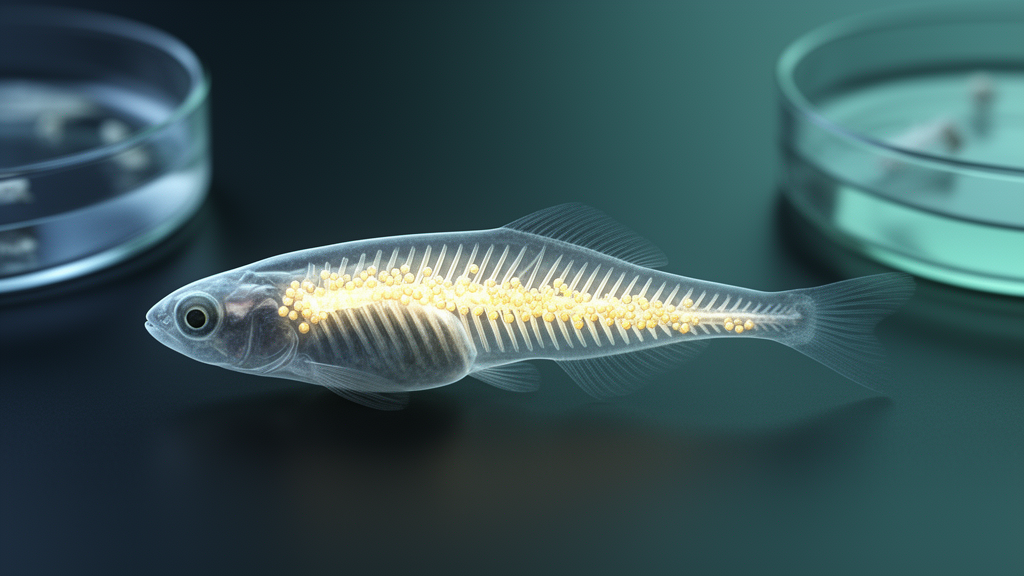
Intermuscular bones are the small, ossified structures that sit within the muscle of many farmed fish, and they are a persistent nuisance for both consumers and processors. A new study in BMC Genomics has used spatial transcriptomics to map gene activity around these structures in adult zebrafish, and it singles out one gene, tnni2a.3, as a candidate associated with their formation.
The researchers built their atlas from six transverse sections of intermuscular bone-associated muscle tissue taken from a single adult zebrafish. Using the Visium platform, they quality-controlled 1,406 spots and grouped them into 11 transcriptionally distinct tissue domains, allowing gene expression to be linked to specific anatomical regions rather than averaged across the whole sample.
Among the three tnni2 homologs examined, tnni2a.3 showed the highest global mean expression. It was preferentially enriched in muscle- and bone-associated regions lying adjacent to intermuscular bone structures, a pattern that drew the team’s attention to this particular homolog.
Correlation analysis then revealed weak positive associations between tnni2a.3 and type I collagen genes, the main structural components of bone matrix. These correlations were domain-specific: positive in the cartilage and bone matrix domain, but negative in two fast-muscle domains, suggesting the gene’s relationships with collagen expression differ depending on the local tissue environment.
Independent validation by quantitative RT-PCR supported the spatial findings. The gene was predominantly expressed in muscle tissue containing intermuscular bones, showed lower expression in vertebral samples, and was barely detectable in other tissues examined.
To probe function, the team used CRISPR/Cas9 to disrupt tnni2a.3 in F0 zebrafish. This disruption was associated with a reduction in intermuscular bone number, which the authors describe as preliminary evidence for the gene’s involvement in bone formation.
Intermuscular bones negatively affect flesh quality and processing efficiency in many aquaculture species, which is why identifying genes involved in their development matters commercially. A candidate gene linked to these structures could, once validated, inform breeding strategies aimed at reducing them.
The authors are careful about the limits of the work. The atlas derives from one adult fish, the functional test is preliminary, and they state that the cellular localization and functional role of tnni2a.3 require further validation before any potential applications in aquaculture breeding can be evaluated. The study, published open access on 29 October 2026, is presented as an early version subject to further edits.
What the study delivers is a spatially resolved expression map and a shortlist of one candidate gene. By showing where tnni2a.3 is active, how its expression correlates with collagen genes across tissue domains, and what happens when the gene is disrupted, the work lays a groundwork that future studies in zebrafish and other fish species can build on as they test whether this candidate holds up as a genuine regulator of intermuscular bone formation.
Subject of Research: Spatial transcriptomics of zebrafish intermuscular bone formation
Article Title: Spatial transcriptomic analysis identifies tnni2a.3 as a candidate associated with intermuscular bone formation in zebrafish
Article References: Xu, Y., Zheng, J., Li, F., Wan, S., Gao, Z., Li, C., Xu, X., & Zhang, H. (2026). Spatial transcriptomic analysis identifies tnni2a.3 as a candidate associated with intermuscular bone formation in zebrafish. BMC Genomics. https://doi.org/10.1186/s12864-026-13512-1
Image Credits: AI Generated
DOI: 10.1186/s12864-026-13512-1
Keywords: zebrafish, spatial transcriptomics, intermuscular bones, tnni2a.3, CRISPR, aquaculture, gene expression, Visium, muscle tissue, bone formation, Spatial, transcriptomic
News Source: Juliet Wilcox. (October 29, 2026). Zebrafish Study Points to tnni2a.3 as a Candidate Gene in Intermuscular Bone Formation. Scienmag.



