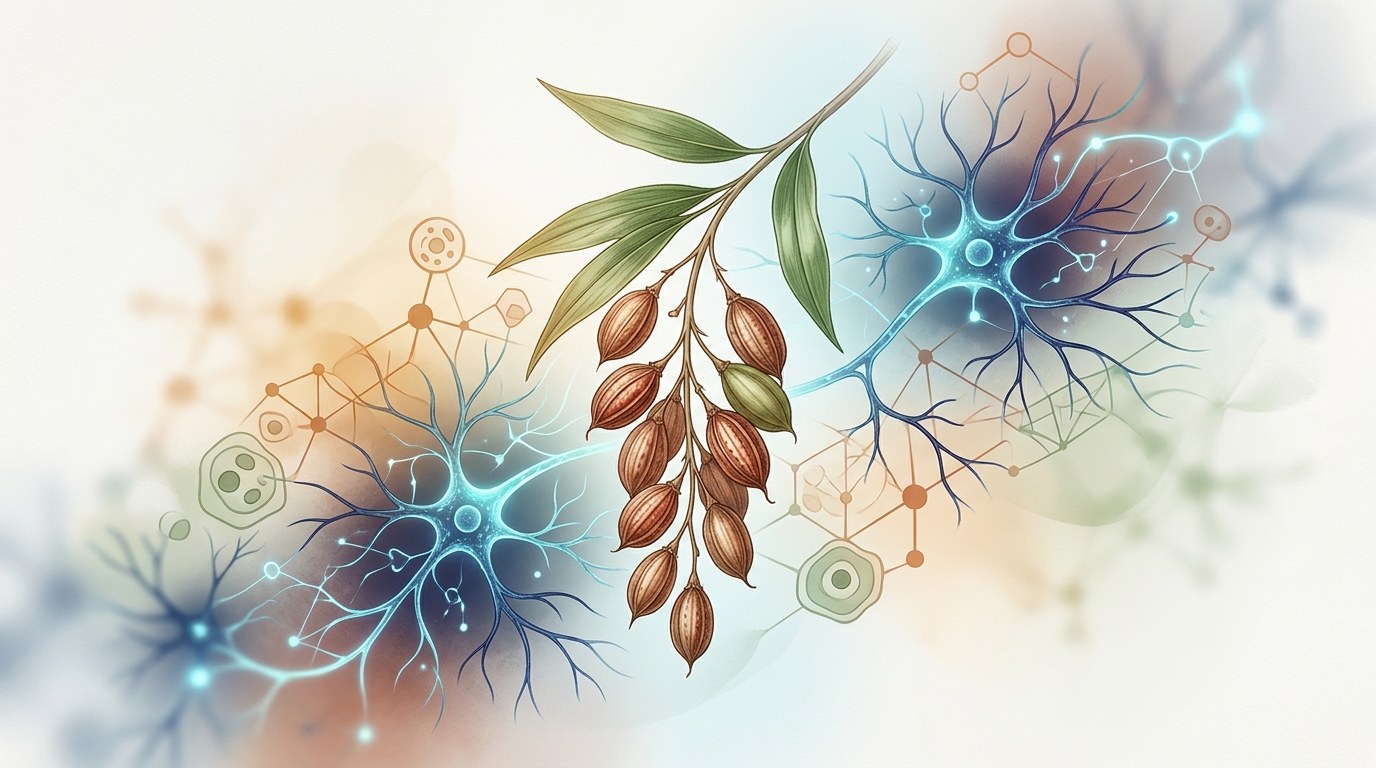
A dried fruit long used in Chinese kitchens and clinics as both a seasoning and a medicine is drawing renewed scientific attention, not for its flavor but for the breadth of biological activity reported in laboratory and animal studies. Alpinia oxyphylla Miq., known in Chinese as Yi Zhi Ren, is the dried mature fruit of a perennial herb in the ginger family, cultivated mainly in Guangdong, Hainan, Fujian, and Yunnan. A new review published in Food Science & Nutrition pulls together the preclinical evidence on its chemical constituents, its reported neuroprotective and metabolic effects, and the substantial obstacles that stand between laboratory promise and any real-world health product. The authors are careful to frame what they describe: the evidence is overwhelmingly preclinical, drawn from cell cultures and rodent models, and human clinical data remain extremely limited.
The fruit occupies a distinctive position in Chinese tradition under the concept of food-medicine homology. It is officially recognized as a food-medicine dual-use substance in China, and traditional culinary applications include preserved fruits, candied snacks, medicinal wines, congee, herbal soups, and teas. The Chinese Pharmacopeia recommends a daily dosage of 3 to 10 grams of the dried mature fruit, and the fruit appears in foundational traditional Chinese medicine texts such as Shennong’s Classic of Materia Medica. That long history of safe culinary use, however, does not by itself establish pharmacological efficacy, and the review’s authors repeatedly distinguish between traditional use and scientifically validated benefit.
Chemically, the fruit is a complex mixture. Modern phytochemical studies have identified diphenylheptanes, terpenoids, flavonoids, polysaccharides, volatile oils, and steroids among its constituents. Researchers have isolated and identified more than 90 structurally diverse sesquiterpenes from the plant, and gas chromatography-mass spectrometry analysis of its volatile oil has identified L-beta-pinene, trans-sabinene hydrate, cyclohexene, and (E)-labba-8(17),12-dien-15,16-dialdehyde as main components. Nootkatone, the principal component of the volatile oil, has attracted particular interest. Among the diphenylheptanoids, yakuchinone A and yakuchinone B are notable for documented anti-inflammatory and antitumor properties. Flavonoids such as kaempferol, quercetin, and naringenin are present, along with the structurally distinctive tectochrysin, and phenolic acids including protocatechuic acid and p-coumaric acid have been quantified in the extract.
The review’s central mechanistic proposal is that the PI3K/Akt signaling pathway may serve as an integrating hub for many of the fruit’s reported neuroprotective effects. This pathway regulates cell survival, proliferation, metabolism, and autophagy in the nervous system, and the authors argue that multiple protective processes—autophagy regulation, inflammation suppression, neurotrophic support, and antioxidant defense—appear to converge on it through cross-talk with RAGE, TLR4, BDNF/TrkB, and Nrf2 signaling. They are explicit, however, that this network model remains a hypothetical working framework. Direct causal evidence from targeted pharmacological inhibition or genetic ablation of PI3K/Akt components exists only for a subset of constituents, such as Oxyphyll A and total flavonoids in Alzheimer’s and Parkinson’s disease models. The convergence of the other pathways onto a single hub is, at present, an extrapolation from pathway cross-talk rather than validated mechanistic integration.
Within individual experimental models, the reported findings are specific and varied. In Alzheimer’s disease models, the fruit extract has been reported to improve learning and memory deficits by modulating amino acid, lipid, and energy metabolism, and untargeted metabolomics analysis found that it normalized the levels of 15 plasma metabolites enriched in sphingolipid, glycerophospholipid, fatty acid, and bile acid pathways. The polysaccharide AOP70 restored serum levels of the pro-inflammatory mediators NO, IL-1β, PGE2, and TNF-α in AD mice and improved cognitive function. Nootkatone ameliorated neurobehavioral performance in AD mice while reducing the oxidative stress marker malondialdehyde and inhibiting acetylcholinesterase activity. Protocatechuic acid suppressed MPP+-induced apoptosis in PC12 cells in Parkinson’s-related models, improved mitochondrial membrane permeability, and, in both AD and cerebral ischemia models, promoted neural stem cell proliferation and enhanced spatial learning and memory consolidation.
Combination studies add another layer. Protocatechuic acid and chrysin showed synergistic neuroprotective effects when co-administered, increasing the survival of 6-hydroxydopamine-treated PC12 cells and attenuating chemically induced dopaminergic neuron damage in both zebrafish and mouse Parkinson’s models, apparently by upregulating Nrf2 transcriptional activity and suppressing NF-κB activation. Herb-pair formulations have also been examined: the AOM-Schisandra chinensis pair ameliorated Aβ-induced cognitive dysfunction in mice through suppression of NF-κB signaling and modulation of the PI3K/Akt/GSK3β/CREB axis, while an AOM-Acorus tatarinowii pair improved behavioral performance in AD model mice and reduced hippocampal neuronal loss. These are preclinical observations in animal models, not clinical results.
On the metabolic side, the reported activities span glucose regulation, renal protection, liver function, and uric acid homeostasis. The extract showed anti-type 2 diabetic properties in animal models, reducing blood glucose in a dose-dependent manner without affecting body weight, apparently through inhibition of reactive oxygen species accumulation, improved insulin sensitivity, and modulation of specific miRNA expressions. In diabetic nephropathy models, the extract ameliorated renal function by regulating oxidative stress and PTEN expression, and nootkatone reduced renal oxidative stress damage, inflammatory cell infiltration, and apoptosis. Nootkatone also improved metabolic-associated fatty liver disease in high-fat diet models, correcting glucose and lipid metabolic disorders and reducing hepatic lipid accumulation, a mechanism the authors associate with AMPK pathway activation. For uric acid, the extract combined with allopurinol normalized serum uric acid levels and inhibited xanthine oxidase activity in serum and liver, while the polysaccharide fraction promoted renal uric acid excretion and inhibited reabsorption.
Gut microbiota emerges as a recurring theme in the metabolic findings. The extract modulated gut microbiota structure in db/db diabetic mice, increasing the relative abundance of Bacteroidetes and Firmicutes in a way the authors link to blood glucose reduction. It also increased bacterial diversity and regulated short-chain fatty acid levels in diabetic nephropathy rats. The polysaccharide fraction promoted uric acid excretion through microbiota modulation. The review’s authors caution, however, that causal microbial mediators, reproducibility across extraction protocols, and human validation all remain insufficiently established, leaving the microbiome-metabolite axis an intriguing but unproven mechanism.
The translational barriers the review identifies are formidable. Bioavailability is a fundamental obstacle: many phytochemicals, particularly flavonoids and terpenoids, have low aqueous solubility, extensive first-pass metabolism, and rapid systemic clearance. Available evidence indicates that AOM extract studies have detected only low or trace plasma levels of parent chemicals after oral administration, and protocatechuic acid shows relatively low systemic exposure with a short elimination half-life in rats. For neuroprotective applications, the blood-brain barrier adds another restriction, and systematic data on brain penetration for AOM constituents are currently lacking. Quality control poses a separate problem: variability in cultivation, harvest time, extraction methods, and processing can substantially alter the phytochemical profile, and chromosome-level genomic and multi-omics analyses have shown that nootkatone and kaempferol serve as quality-associated biomarkers distinguishing geo-authentic from non-authentic growing regions. This supports multi-marker rather than single-marker standardization, but no single validated active principle has been established.
The most critical gap, the authors conclude, is the scarcity of human clinical data. The vast majority of evidence derives from in vitro experiments and rodent models, and the review explicitly states that disease-related effects should not be extrapolated to humans without prospective clinical validation. Safety characterization is also incomplete: systematic acute and repeated-dose toxicity data for AOM extracts remain limited, no human pharmacokinetic data exist for any constituent, herb-drug interaction studies are absent from the peer-reviewed literature, and long-term safety evaluations beyond 90 days have not been conducted. A recent GLP-compliant toxicological evaluation of a synthetic neuroprotective molecule derived from an AOM constituent—not the fruit itself—revealed dose-dependent liver and kidney toxicity at high doses in a 90-day repeated-dose study, establishing a no-observed-adverse-effect level of 10 mg/kg body weight per day. The authors also note a striking pattern of publication bias, with nearly all retrieved publications reporting beneficial outcomes and a conspicuous absence of negative or contradictory results. Until comprehensive toxicological profiling, systematic pharmacokinetic studies, and well-designed human trials are conducted, they argue, all proposals for AOM-based functional foods or nutraceuticals must be interpreted as research hypotheses rather than evidence-based recommendations for consumption.
Subject of Research: Preclinical evidence for neuroprotective and metabolic effects of the medicinal food plant Alpinia oxyphylla Miq.
Article Title: Alpinia oxyphylla Miq.: Chemical Constituents, Neuroprotective and Metabolic Effects, and Translational Challenges—A Review of Preclinical Evidence
Article References: Yang, Z., Yuan, H., Nie, D., Sheng, J., Liu, T., & Xu, H. (2026). Alpinia oxyphylla Miq.: Chemical Constituents, Neuroprotective and Metabolic Effects, and Translational Challenges—A Review of Preclinical Evidence. Food Science & Nutrition, 14(11), Article e72553. https://doi.org/10.1002/fsn3.72553
Image Credits: AI Generated
DOI: 10.1002/fsn3.72553
Keywords: Alpinia oxyphylla, Yi Zhi Ren, neuroprotection, metabolic regulation, PI3K/Akt pathway, nootkatone, protocatechuic acid, gut microbiota, functional foods, preclinical evidence, bioavailability, traditional Chinese medicine
News Source: Alan Morgan. (November 4, 2026). Yi Zhi Ren Fruit Shows Neuroprotective and Metabolic Effects in Preclinical Studies, But Human Evidence Remains Scarce. Scienmag.