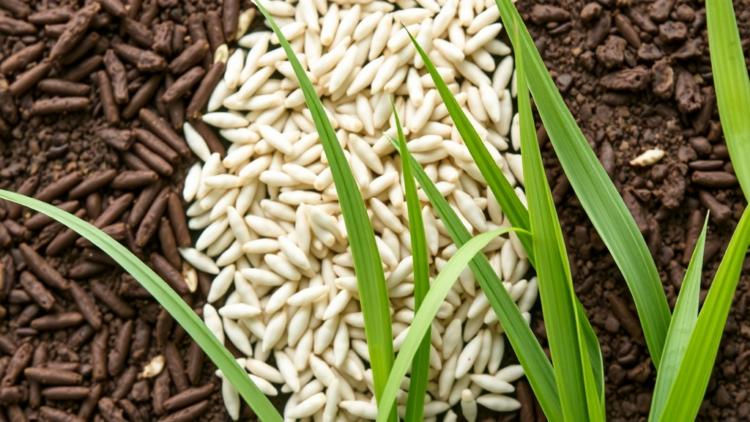
Two of West Africa’s most familiar plants, the medicinal shrub Vernonia amygdalina, widely known as bitter leaf, and the aggressive invasive weed Chromolaena odorata, commonly called Siam weed, may hold unexpected keys to more sustainable rice farming. A new laboratory study from Nigeria has quantified, with unusual precision, how aqueous extracts of their leaves can either stimulate or suppress the germination and early seedling growth of rice, depending on the species involved and, crucially, the concentration applied. The findings, published in the journal Discover Plants, suggest that these ubiquitous botanical resources could be harnessed as natural bio-stimulants or bioherbicides, provided farmers and agronomists respect the narrow thresholds that separate benefit from harm.
Rice is a cornerstone of global food security, feeding more than half of the world’s population and serving as a staple crop across Asia and Africa. Yet the crop’s productivity is consistently undermined by weeds, which compete fiercely for light, water and nutrients during the critical early phase of establishment. The research team, led by Anthony Oluwadamilola Ogungbemi of Olusegun Agagu University of Science and Technology in Okitipupa, Ondo State, approached this problem through the lens of allelopathy, the chemical interaction between plants mediated by secondary metabolites that can either inhibit or promote the growth of neighbouring organisms. Understanding these interactions, the team argued, could point toward weed-management strategies that reduce reliance on synthetic herbicides.
Both study species are chemically rich. Vernonia amygdalina and Chromolaena odorata contain an array of bioactive compounds, including sesquiterpene lactones, flavonoids and phenolics, many of which have documented effects on cell division, hormone signalling and oxidative stress in plants. Previous studies had produced a confusingly mixed picture: C. odorata extracts have been reported to suppress seedling growth in soybean and millet yet to leave rice seedlings untouched in some trials, while V. amygdalina extracts have inhibited growth in rice, cassava and wheat but enhanced growth in maize, lettuce and cucumber. The Nigerian team hypothesised that both extracts would act in a concentration-dependent manner, with C. odorata proving the more consistently inhibitory of the two.
To test this, the researchers collected fresh leaves of both species from the wild near the university’s botanical garden, with specimens verified by the institution’s herbarium and assigned voucher numbers. Three hundred grams of each plant material were washed, sliced, ground in a ceramic mortar and filtered through cheesecloth and Whatman number one filter paper to produce what the team describes as fresh crude aqueous extracts. These full-strength preparations, designated 100 percent weight per volume, were then diluted with distilled water to generate 50 percent and 25 percent treatments, alongside water-only controls. Because allelochemicals can degrade rapidly, the filtrates were freshly prepared every three days throughout the experimental period.
The germination bioassay used Jamila rice, also known as variety FARO 52 or WITA 4, a high-yielding, iron-toxicity-tolerant cultivar obtained from farmers in Kontagora whose seed originally came from the National Cereals Research Institute in Badeggi. Seeds were surface-sterilised with a diluted sodium hypochlorite solution, rinsed thoroughly, and placed five at a time into sterilised Petri dishes lined with filter paper. The experiment followed a completely randomised design with five replicates per treatment, maintained under a 12-hour light-dark cycle at laboratory temperatures of roughly 30 degrees Celsius by day and 26 degrees at night. Radicle and plumule lengths were measured every three days for 21 days, and germination was scored whenever a radicle extended at least one millimetre beyond the seed coat.
The results revealed two strikingly different patterns. Chromolaena odorata produced a strictly linear, concentration-dependent suppression of seedling growth: the more concentrated the extract, the shorter the radicles and plumules, following a clear declining gradient from control through 25, 50 and 100 percent treatments. By 21 days after planting, the full-strength extract had reduced radicle length by 34 percent and plumule length by 12 percent relative to the control, differences that reached statistical significance. The researchers attribute this inhibition to flavonoids, phenolics and sesquiterpene lactones known to occur in the weed’s leaves, compounds capable of disrupting auxin and gibberellin signalling pathways and of inducing oxidative stress that damages cell membranes during root and shoot elongation.
Vernonia amygdalina, by contrast, displayed what ecologists call a biphasic hormetic response, a phenomenon in which a substance is stimulatory at low doses but toxic at high doses. At a dilute 25 percent concentration, the bitter leaf extract actually stimulated rice seedling growth, increasing radicle elongation by 18 percent and plumule growth by 5 percent compared with untreated controls at 21 days after planting. At full strength, however, the same extract proved phytotoxic, inhibiting radicle growth by 31 percent and plumule growth by 12 percent during the earliest days of development. In other words, the very same plant that poisons rice seedlings at one dose nourishes their growth at a gentler one, a duality that mirrors earlier reports of enhancement in maize, lettuce and cucumber at low concentrations.
Perhaps the most intriguing temporal finding is that these allelopathic effects are largely transient. Inhibitory stress from both extracts was most pronounced during early ontogeny, roughly between two and eleven days after planting, when seedlings are most vulnerable to chemical interference. By day 14, and definitively by the end of the 21-day bioassay, the statistical differences among treatments had largely dissolved, with no significant growth differences remaining. This suggests that the allelochemicals either lose potency over time through degradation, or that rice seedlings recover metabolically once past their most sensitive developmental window. For agronomists, this transient window defines precisely when a botanical herbicide would need to act, and when a bio-stimulant would need to be applied to catch the growth-promoting phase.
The study’s authors are careful to acknowledge its limitations. The bioassay was conducted in Petri dishes on filter paper, an environment that cannot reproduce the complexities of field soil, where microbial communities, adsorption to soil particles and leaching all alter the bioavailability of allelochemicals. Moreover, the team used crude aqueous extracts, so the specific compounds responsible for stimulation or inhibition were not isolated or identified. The observation window was also limited to early seedling growth, leaving effects on later vegetative development, grain yield and grain quality unknown. The researchers call for future work to characterise the active molecules chemically, to validate the effects under real field conditions, and to apply repeated-measures analyses that can tease apart treatment and time interactions.
Even with those caveats, the implications are tantalising for sustainable agriculture in rice-growing regions of West Africa and beyond. A low-dose Vernonia amygdalina preparation could plausibly be developed into a bio-stimulant that gives rice seedlings a head start, while concentrated extracts of either species, and of Chromolaena odorata in particular, could serve as natural herbicides that knock down weeds without synthetic chemistry. The critical caveat is dosage: crossing the threshold between stimulation and inhibition risks suppressing the very crop a farmer intends to protect, a phenomenon the authors describe as autotoxic or non-target crop suppression. As the global search intensifies for crop-protection tools that are effective, affordable and environmentally benign, this study suggests that two of the tropics’ most abundant and troublesome plants may be sitting, quite literally, on the fence between problem and solution.
Subject of Research: Allelopathic, concentration-dependent effects of Vernonia amygdalina and Chromolaena odorata leaf extracts on rice germination and early seedling growth
Article Title: Allelochemics impacts of leaf extracts from Vernonia amygdalina and Chromolaena odorata on germination of rice
Article References: Ogungbemi, A. O., Oyebanji, R. O., & Osewole, A. (2026). Allelochemics impacts of leaf extracts from Vernonia amygdalina and Chromolaena odorata on germination of rice. Discover Plants, 3(1), Article 411. https://doi.org/10.1007/s44372-026-00872-x
Image Credits: AI Generated
DOI: 10.1007/s44372-026-00872-x
Keywords: allelopathy, allelochemicals, Vernonia amygdalina, Chromolaena odorata, Oryza sativa, rice germination, hormesis, seedling growth, bioherbicide, bio-stimulant, plant biochemistry, sustainable agriculture
Cite Scienmag News
APA MLA Chicago
Alan Morgan. (September 21, 2026). Weed Leaf Extracts Show Dual Power to Boost or Block Rice Germination. Scienmag. https://scienmag.com/weed-leaf-extracts-show-dual-power-to-boost-or-block-rice-germination/
Alan Morgan. “Weed Leaf Extracts Show Dual Power to Boost or Block Rice Germination.” Scienmag, 21 September 2026, https://scienmag.com/weed-leaf-extracts-show-dual-power-to-boost-or-block-rice-germination/. Accessed 21 September 2026.
Alan Morgan. “Weed Leaf Extracts Show Dual Power to Boost or Block Rice Germination.” Scienmag. September 21, 2026. https://scienmag.com/weed-leaf-extracts-show-dual-power-to-boost-or-block-rice-germination/
Copy citation Download RIS
Tags: allelochemicalsallelopathic effects of Vernonia amygdalinaallelopathyallelopathy and crop productivitybio-stimulantbioherbicidebioherbicides from invasive plantsChromolaena odorataChromolaena odorata in sustainable agriculturehormesisimpact of plant extracts on rice seedling growthnatural alternatives to chemical herbicidesnatural bio-stimulants for riceNigerian research on plant extracts for rice cultivationOryza sativaplant biochemistryplant-based weed control methodsrice germinationrice germination suppressionseedling growthsustainable agricultureuse of medicinal and invasive plants in crop managementVernonia amygdalinaweed leaf extracts