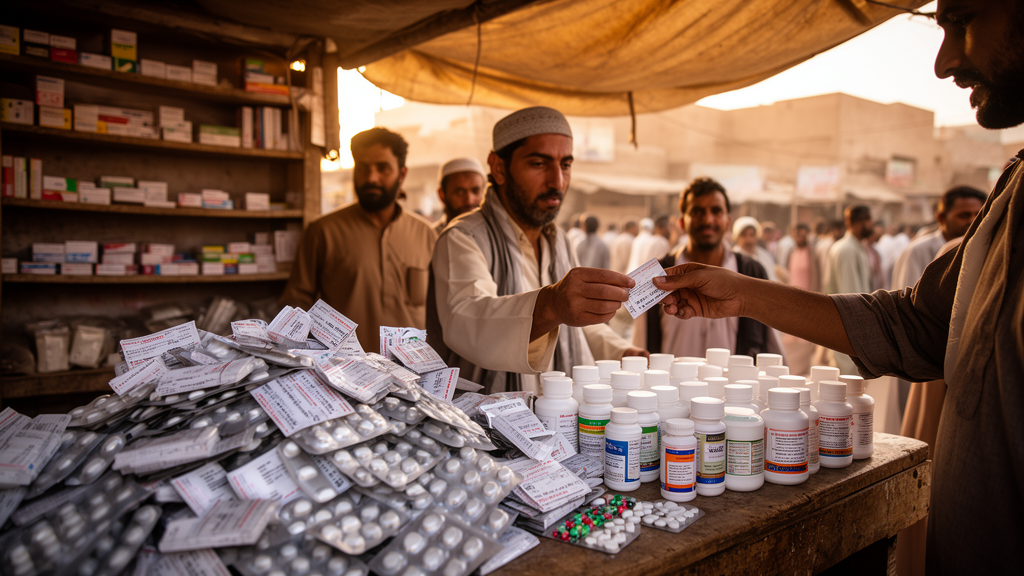
Healthcare providers in a rural district of southern Pakistan say a web of political interference, weak regulation, pharmaceutical industry power and poverty is fuelling the unregulated sale and use of antibiotics, according to a qualitative study set in Khairpur Mirs district in Sindh province. The research, published in BMC Health Services Research, gathered the views of doctors, pharmacists and informal healthcare providers to understand why antibiotics are so often dispensed and consumed without prescription, oversight or diagnostic confirmation. The study used a qualitative exploratory design with purposive sampling, recruiting nearly twenty respondents.
Data were collected through semi-structured interviews and field notes, and analysed thematically. Because the study is qualitative and limited to one district, its findings describe the perspectives and experiences of these providers rather than measuring the scale of antibiotic misuse across Pakistan. Thematic analysis revealed five major themes within the healthcare system that propel antibiotic abuse.
The first concerns administrative and structural vulnerabilities, including political influence over health institutions, weak regulation, and a lack of monitoring and audit. The second theme identifies the unrestricted power of pharmaceutical businesses and drug stores. The third theme reveals critical shortages of competent and skilled health practitioners and of diagnostic services.
The fourth theme documents gaps in healthcare providers' own knowledge, professional attitudes, ethical practices and training related to rational antibiotic use and antimicrobial stewardship. The final theme concerns financial limitations. Poverty hinders diagnostic testing of infections, the study found, and drives patient pressure for quick antibiotic interventions.
Antimicrobial resistance is a serious global health concern, and the study situates Pakistan's high rates of drug-resistant infections within this local context: the unregulated sale of antibiotics combined with socioeconomic challenges compounds the problem. The researchers argue that the perspectives of healthcare providers are shaped by structural, political, regulatory, economic and health-system factors simultaneously, rather than by individual behaviour alone. On that basis, the study advocates a more effective and comprehensive approach to mitigating antimicrobial resistance, one that addresses the structural inequalities underpinning misuse rather than relying solely on education or enforcement aimed at individual prescribers.
The findings offer a grounded account of how regulation, commerce, workforce shortages and poverty interact at the district level to keep unregulated antibiotic use in place. As an exploratory qualitative study of around twenty providers in a single district, the research does not quantify prescribing errors or resistance rates, and its conclusions are specific to the perspectives gathered in Khairpur Mirs. Nevertheless, it provides a detailed map of the system-level pressures that providers themselves identify as driving antibiotic misuse in southern Pakistan.
Subject of Research: Healthcare providers' perspectives on unregulated antibiotic use and antimicrobial resistance in Sindh, Pakistan
Article Title: Healthcare providers’ perspectives regarding unregulated antibiotic use in Southern Pakistan: a qualitative study
Article References: Ahmed, S., Malik, N. I., Anjum, R., Leghari, I. U., Bhatti, R., Saleem, M., Ali, Z., Zia, S., Ahmed, F., & Tang, K. (2026). Healthcare providers’ perspectives regarding unregulated antibiotic use in Southern Pakistan: a qualitative study. BMC Health Services Research. https://doi.org/10.1186/s12913-026-15431-z
Image Credits: AI Generated
DOI: 10.1186/s12913-026-15431-z
Keywords: antimicrobial resistance, antibiotic misuse, Pakistan, qualitative research, healthcare providers, drug regulation, pharmaceutical industry, diagnostic shortages, health systems, antimicrobial stewardship, Sindh, prescription practices
News Source: Ophelia Keating. (October 27, 2026). Weak Regulation and Drug Shortages Drive Uncontrolled Antibiotic Use in Southern Pakistan. Scienmag.