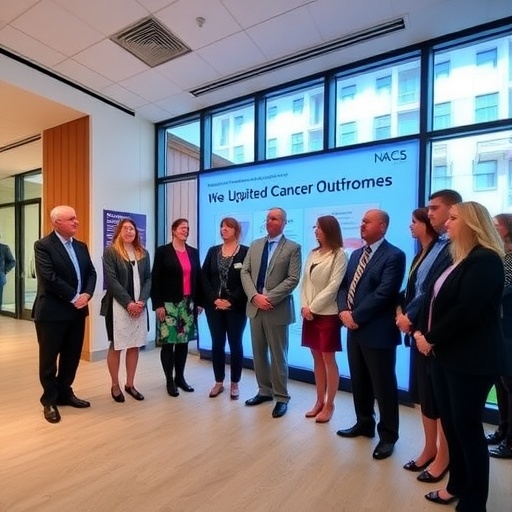
Wayne State University and the Barbara Ann Karmanos Cancer Institute have launched a pioneering initiative to tackle cancer disparities exacerbated by the digital divide in Detroit’s predominantly Black communities. This groundbreaking endeavor, enabled by a $4.07 million grant from the American Cancer Society (ACS), aims to establish the Digital Engagement and Cancer Outcomes (DECO) Center. The center is devoted to understanding how digital inclusion affects cancer outcomes and disparities, particularly among Black patients, survivors, and caregivers, and to developing interventions that integrate hospital services with community resources to improve individual health results.
The DECO Center sits at the intersection of oncology, digital health, and social equity. Its establishment reflects a growing recognition within medical research that social determinants of health—factors like housing, employment, and access to healthcare—are crucial to patient outcomes. However, digital inclusion, especially access to reliable high-speed internet, is now being regarded as a “super determinant” of health. In Detroit, where only 57.6% of residents have broadband access, this digital barrier severely limits patients’ ability to access vital health information, communicate with providers, and utilize digital tools that can assist in managing their cancer care.
Dr. Hayley Thompson, the principal investigator leading the DECO Center and a professor of Oncology at Wayne State’s School of Medicine, emphasizes that digital health technologies hold promise for reducing the challenges faced by cancer patients and survivors. These patients often grapple with complex treatment regimens, financial hardships, and a need for social support, all areas where digital solutions could be transformative. Yet, there is a crucial need to ensure that patients are not merely provided with technology but are also meaningfully able to use these tools to engage with their care, access trustworthy information, and connect with supportive networks.
One of the center’s priorities is to evaluate whether Black cancer patients can effectively use digital portals to access their health records, discover financial assistance programs, and find reliable cancer information online. This research recognizes that technology can either bridge or widen health disparities depending on its accessibility and ease of use. Detroit’s digital ecosystem, with its unique socioeconomic landscape, presents both challenges and opportunities for developing scalable digital health interventions that can empower underserved communities.
The DECO Center’s inaugural research program comprises three complementary projects designed to address different facets of digital engagement in cancer care. The first project, “MI-COST Digital+,” is spearheaded by Dr. Theresa Hastert and seeks to pilot a digital financial navigation intervention tailored for Black cancer survivors in Detroit. This intervention harnesses digital inclusion by collaborating with local digital equity organizations to weave technology access and literacy into financial assistance programs, helping survivors better navigate the economic complexities of cancer treatment.
The second project, led by Dr. Eliza Beal, focuses on embedding a Digital Health Navigator within multidisciplinary oncology teams. This role is designed to offer personalized technical support to Black cancer patients, boosting their ability to utilize online patient portals and digital tools to manage their care. By integrating this navigator position, the team aims to enhance digital literacy in real-time clinical settings, directly addressing technological barriers that impede effective healthcare delivery.
A third critical strand of research, championed by Dr. Lauren Hamel, investigates the interplay between clinician implicit racial bias and the recommendation of digital health tools to Black patients. Emerging evidence has linked implicit bias to shorter medical consultations and less supportive communication with Black patients, which may in turn influence how often and how effectively providers suggest digital health resources. Dr. Hamel’s research will be the first to elucidate how these biases affect digital tool uptake and, potentially, disparities in cancer outcomes.
Crucially, the DECO Center is not working in isolation but engages more than 30 community organizations, patients, and caregivers as collaborative partners. Among these collaborators are Human-I-T, a social enterprise providing affordable devices and internet access, and the Patient Empowerment Network, a national nonprofit focused on cancer technology education and support for patients and caregivers. This partnership model ensures that interventions are community-informed, culturally sensitive, and sustainable beyond the research phase.
The center also integrates existing programs, such as Karmanos’ Technology Assistance for Cancer Patients and Caregivers Program, which is based on resources developed by the Patient Empowerment Network. By leveraging these established foundations, the DECO Center can expedite solutions that directly impact patient experiences and health outcomes. This integration is a hallmark of the center’s holistic approach, which seeks to blend research, clinical care, and community advocacy.
Wayne State University’s commitment to this initiative reflects a broader institutional focus on addressing health and social inequities through rigorous research. Co-investigators on the project encompass experts from diverse disciplines, including gerontology, molecular therapeutics, and social work, highlighting the multidisciplinary nature of tackling cancer disparities through digital inclusion. The inclusion of a cancer survivor and community advocate as a co-investigator further enriches the research by embedding patient-centered perspectives.
The potential impact of the DECO Center’s work extends beyond Detroit. As digital health technologies become ubiquitous in cancer care, understanding and overcoming digital disparities is essential for achieving equitable healthcare nationally. The center’s research and programs will generate critical data and best practices that can inform policy, healthcare delivery, and community engagement across diverse populations, addressing a gap that has been largely overlooked in both health equity and digital inclusion discourse.
Karmanos Cancer Institute’s leadership underscores the transformative nature of this research, emphasizing its potential to redefine how cancer information and support are delivered to marginalized communities. By confronting systemic barriers—whether rooted in technology, healthcare communication, or social determinants—the DECO Center stands poised to make meaningful advances in the pursuit of equitable cancer care and improved survivorship for Black patients in Detroit and beyond.
This initiative exemplifies the convergence of digital innovation, community partnership, and health equity. It pushes forward the frontier of cancer research by acknowledging that battling cancer requires not only medical breakthroughs but also addressing the structural inequities that shape how patients experience their disease and treatment. The work at the DECO Center serves as a visionary model for integrating digital health solutions into comprehensive cancer care frameworks with an unwavering focus on justice and inclusivity.
Subject of Research: Digital inclusion and its influence on cancer health disparities among Black patients, survivors, and caregivers in Detroit, integrating digital health tools within oncology care.
Article Title: Bridging the Digital Divide: Wayne State and Karmanos Launch the DECO Center to Tackle Cancer Disparities in Detroit
News Publication Date: Not specified in the original text.
Web References:
Barbara Ann Karmanos Cancer Institute: https://www.karmanos.org/karmanos/karmanos-home
Wayne State University Research: https://research.wayne.edu
American Cancer Society: http://cancer.org
Keywords: Cancer Health Disparities, Digital Health, Digital Inclusion, Broadband Access, Black Cancer Patients, Oncology, Health Equity, Patient Portals, Implicit Bias, Digital Navigation, Detroit, Community Health
Tags: American Cancer Society grant for cancer disparitiesBarbara Ann Karmanos Cancer Institute initiativebroadband access and cancer treatmentcancer survivorship and digital inclusioncommunity-based cancer care interventionsDetroit Black communities healthdigital divide impact on cancer outcomesDigital Engagement and Cancer Outcomes Centerdigital health equity in cancer careintegrating hospital and community cancer resourcessocial determinants of health and oncologyWayne State University cancer research