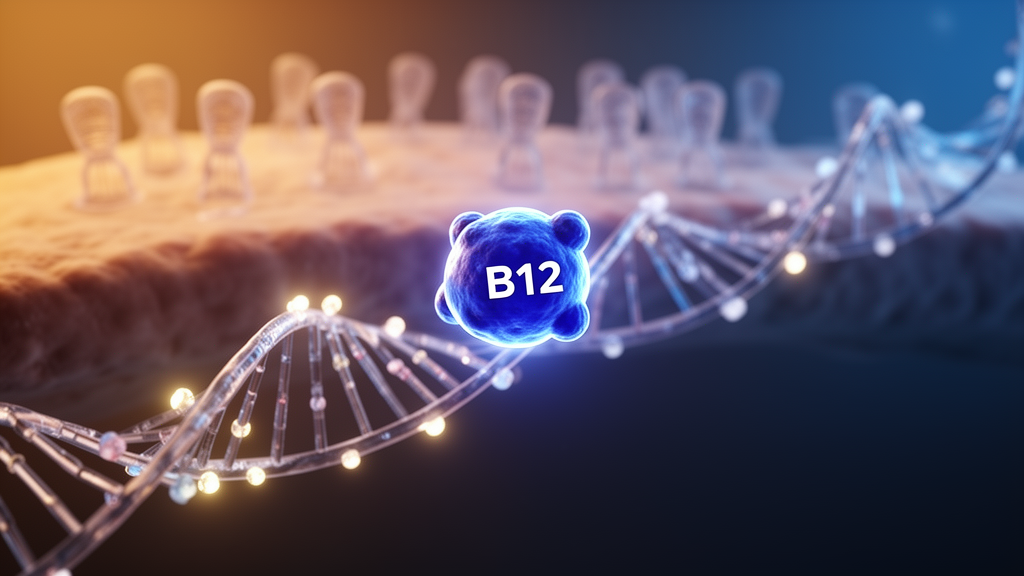
Higher dietary vitamin B12 intake may help lower insulin resistance through measurable epigenetic changes, according to a new epigenome-wide association study published in Genes & Nutrition. The research, led by Chao-Qiang Lai and colleagues including senior author José M. Ordovás, tracked epigenetic changes over six years in 374 participants who were free of type 2 diabetes at baseline, seeking to identify how diet and lifestyle might be written into the genome’s chemical marks and, in turn, influence diabetes risk.
The study identified significant epigenetic changes during the six-year follow-up at seven loci within the genes REPIN1, BMP2, LINC01723, and SEL1L2, all of which were associated with insulin resistance. When the researchers examined which dietary and lifestyle factors were linked to these changes, they found strong associations between three specific differentially methylated sites—cg16400647 in REPIN1, cg12344389, and cg00625573—and dietary vitamin B12 intake. A separate site, cg26719314 on the X chromosome, showed robust correlations with total sugar intake.
Mediation analysis suggested a pathway connecting diet to metabolic outcomes. Higher vitamin B12 intake might reduce insulin resistance through epigenetic modification in REPIN1 and DNAAF9, the authors report. Conversely, higher total sugar intake correlated significantly with elevated diabetes risk, with cg26719314 acting as a mediator. In addition, increased vitamin B12 supplementation was associated with decreased insulin resistance at the six-year follow-up in the entire cohort.
The findings address a long-standing gap in nutrition science. Dietary choices influence both the risk and the development of type 2 diabetes, but the precise mechanisms remain incompletely described. The researchers note that dietary intake and lifestyle behaviors can alter epigenetic states—chemical modifications such as DNA methylation that regulate gene activity without changing the underlying DNA sequence—with subsequent modulations on gene expression that can then change the risk of type 2 diabetes. By identifying specific methylation sites that respond to vitamin B12 intake and are themselves tied to insulin resistance, the study offers a concrete molecular route by which a single nutrient might shape metabolic health.
The authors conclude that vitamin B12 intake may influence insulin resistance through specific epigenetic changes, thus describing the epigenetic links between diet and the development of type 2 diabetes. The work is an observational study of a single cohort followed over six years, so it identifies associations and candidate mediators rather than proving that vitamin B12 supplementation causes reduced insulin resistance in any individual. The article is being shared early as a peer-reviewed, accepted, open-access version that is citable and carries a permanent DOI, subject to further edits before the final Version of Record appears.
The identification of specific sites—such as cg16400647 in REPIN1—linked both to nutrient intake and to insulin resistance provides measurable targets for future research into how dietary patterns shape diabetes risk over time. The researchers also point to the contrasting role of total sugar intake, which correlated with elevated diabetes risk through a different methylation site, underscoring that different dietary components may act through distinct epigenetic pathways.
Subject of Research: Epigenetic links between vitamin B12 intake and insulin resistance in older adults
Article Title: Epigenetic changes reveal that vitamin B12 intake is associated with lower insulin resistance in older adults
Article References: Lai, C.-Q., Parnell, L. D., Lee, Y.-C., Kristal, B. S., Akinlawon, O. J., Winderman, M. P., Reed, T. K., Fouhy, L., Mangano, K. M., Mattei, J., Tucker, K. L., & Ordovás, J. M. (2026). Epigenetic changes reveal that vitamin B12 intake is associated with lower insulin resistance in older adults. Genes & Nutrition. https://doi.org/10.1186/s12263-026-00813-z
Image Credits: AI Generated
DOI: 10.1186/s12263-026-00813-z
Keywords: vitamin B12, epigenetics, DNA methylation, insulin resistance, type 2 diabetes, epigenome-wide association study, REPIN1, diet, older adults, mediation analysis, total sugar intake, Epigenetic
News Source: Daisy Hatcher. (October 29, 2026). Vitamin B12 Intake Linked to Lower Insulin Resistance Through Epigenetic Changes. Scienmag.