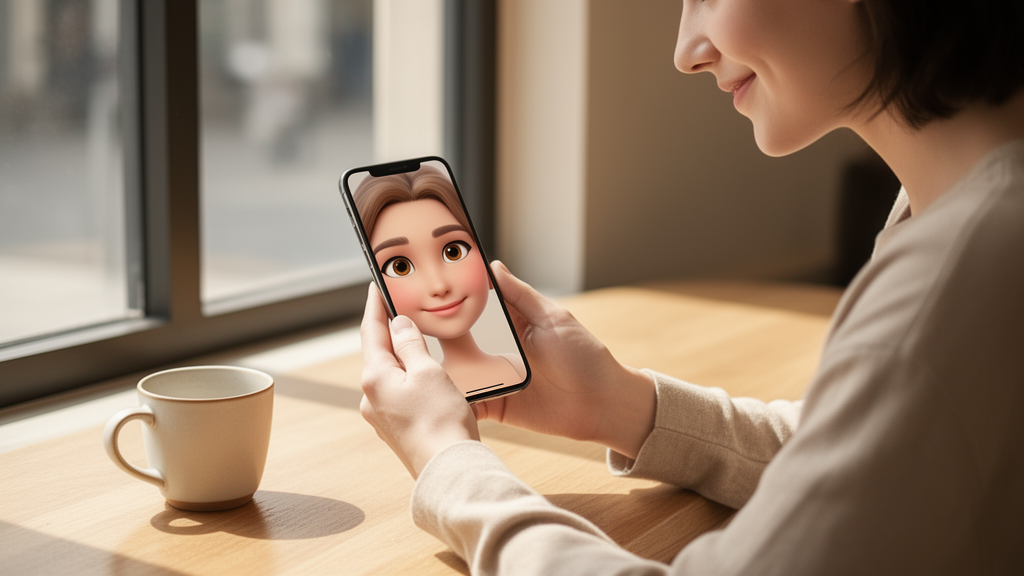
A cross-sectional survey of consumers in Tbilisi, Georgia, found that trust, responsive interaction and anthropomorphic design were positively associated with consumers’ stated intention to use AI-powered chatbot services in digital marketing. Anthropomorphic design had the largest individual modeled association with behavioral intention, while the combined effects of the three characteristics were also significant. The study analyzed consumers with previous experience using organizational chatbots, but its design cannot establish that these qualities cause adoption, purchases or commercial conversion.
The researchers collected data through an online questionnaire distributed between August and September 2025 using Google Forms. Recruitment used electronic mail, WhatsApp, social media and personalized newsletters. Participants rated statements on a five-point Likert scale ranging from “strongly disagree” to “strongly agree.” The survey assessed four constructs: trust in AI chatbots, chatbot interactivity, anthropomorphic design and behavioral intention to use chatbot services. Interactivity represented dynamic, personalized communication and responsiveness, while anthropomorphic design covered human-like language, situational awareness, expressiveness and conversational finesse. Trust reflected perceived reliability, honesty, integrity, dependability and user confidence.
Partial least squares structural equation modeling, or PLS-SEM, was used to assess the measurement model and estimate the proposed relationships. Behavioral intention was modeled as the principal outcome, with trust, interactivity and anthropomorphic design included as explanatory variables. This method tests associations among survey responses within a specified model; it does not observe consumers interacting with chatbots over time. Because the evidence comes from a cross-sectional questionnaire, the results do not show that a chatbot feature caused subsequent use, nor do they establish changes in spending, conversion, loyalty or service performance.
In the structural model, each of the three direct paths to behavioral intention was statistically significant. Trust had a path coefficient of 0.155, a t-value of 2.513 and a p-value of 0.012. Interactivity had a coefficient of 0.216, a t-value of 3.091 and a p-value of 0.002. Anthropomorphic design had the largest individual coefficient, 0.367, with a t-value of 5.645 and a reported p-value below 0.01. These values describe relationships estimated from the survey data. They should not be interpreted as guaranteed increases in adoption rates or as direct measures of purchasing behavior.
The combined model containing trust, interactivity and anthropomorphic design also had a significant relationship with behavioral intention. Its reported path coefficient was 0.738, with a t-value of 5.762 and a p-value below 0.01. An additional indirect path linking trust, anthropomorphic design and interactivity had a coefficient of 0.065, a t-value of 6.431 and a p-value of 0.001. The authors interpreted this result as suggesting that trust can influence how consumers perceive human-like design in relation to interaction. Model-fit results were described as acceptable overall: the standardized root mean square residual was 0.077, just below the cited maximum of 0.08, while the normed fit index was 0.745.
The participant profile defines the scope of the findings. The article’s demographic table describes 307 responses, although the abstract states that 275 valid responses were retained for analysis. In the table, 24.8% of respondents were aged 18–24 and 52.4% were aged 25–34. Bachelor’s degree holders represented 62.3% of the sample and master’s degree holders 27.5%. Men accounted for 54.4%, while 56.7% identified as self-employed. Reported chatbot use was concentrated in university or online education at 31.6%, customer support at 28.7% and online shopping at 27.0%. The findings therefore describe a relatively young, educated and digitally experienced group in one city, limiting straightforward generalization to older, less educated or culturally different populations.
The survey was connected to four Tbilisi institutions whose sectors included banking, electronics retail, groceries and telecommunications. The paper listed estimated chatbot-user populations of 100,000 for TBC Bank, 25,000 for Elit Electronics, 40,000 for the Magniti Supermarket Chain and 70,000 for Geocell by Silknet, producing a stated total of 235,000. The sample was selected purposively from people who said they had directly interacted with AI-driven chatbot systems operated by the target organizations. Because recruitment favored respondents with relevant prior experience, the results are most applicable to chatbot users rather than the entire potential consumer population.
Measurement quality was mixed, adding important caution to the structural results. Behavioral intention had strong internal consistency, with a Cronbach’s alpha of 0.815, composite reliability of 0.891 and average variance extracted of 0.731. Interactivity met the cited reliability and validity thresholds, with corresponding values of 0.739, 0.852 and 0.658. Trust had a Cronbach’s alpha of 0.769 and composite reliability of 0.839, but its average variance extracted was 0.475, below the cited 0.50 criterion. Anthropomorphic design performed less consistently: its alpha was 0.588, composite reliability 0.741 and average variance extracted 0.433. One anthropomorphic-design indicator had a loading of −0.074, suggesting little contribution to the construct as modeled.
These limitations constrain how the findings should be interpreted. The survey reports associations among perceived trust, interactivity, anthropomorphic design and stated intention, rather than experimentally manipulated features or observed changes in behavior. The model therefore provides evidence about the factors that covaried with intention in this sample, not proof that making a chatbot more conversational, responsive or human-like will automatically make consumers adopt it. The authors also identified several potential influences for future investigation, including digital literacy, privacy concerns, culture, personality and prior exposure to artificial intelligence. The findings also remain provisional because the paper contains an internal inconsistency about interactivity.
That inconsistency is visible across the article. The abstract, structural-model table and discussion report a significant positive association between interactivity and behavioral intention, whereas parts of the managerial and concluding sections state that interactivity did not produce a statistically significant difference. The numerical path results support describing interactivity as positively associated with behavioral intention in the analyzed survey data, but the contradictory prose reinforces the need for caution. The most defensible conclusion is that the Tbilisi consumer survey linked intended chatbot use with trust, responsiveness and human-like presentation, particularly when the three qualities operated together. It did not establish that adding those features will automatically cause sales, loyalty or widespread adoption, and it offers a basis for further behavioral and longitudinal research rather than a proven universal business strategy.
Subject of Research: Consumer trust, chatbot interactivity and anthropomorphic design in relation to intention to use AI marketing chatbots
Article Title: The influence of Artificial Intelligence chatbots on consumer behaviour in digital marketing
Article References: Anvari, R., Khergiani, S., Mobarhan, R., & Mohd Yusof, H. (2026). The influence of Artificial Intelligence chatbots on consumer behaviour in digital marketing. Frontiers in Artificial Intelligence, 9, Article 1887433. https://doi.org/10.3389/frai.2026.1887433
Image Credits: AI Generated
DOI: 10.3389/frai.2026.1887433
Keywords: AI chatbots, anthropomorphic design, behavioral intention, chatbot interactivity, consumer behavior, digital marketing, PLS-SEM, technology acceptance, trust, Tbilisi, influence, Artificial
News Source: Denise Maddox. (October 21, 2026). Trust and Human-Like Design Linked to Marketing Chatbot Use Intention. Scienmag.