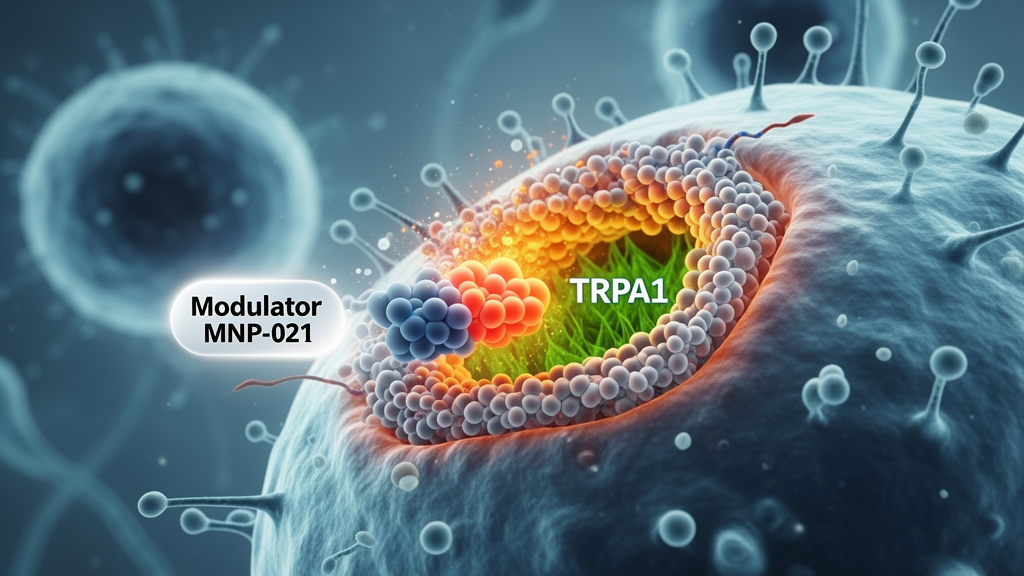
A non-electrophilic transient receptor potential ankyrin 1 (TRPA1) modulator, MNP-021, has been shown to protect neuronal and glial functions from the damaging effects of diabetes-associated glucotoxicity and neuroinflammation in cellular models. Diabetes-associated neurodegeneration is increasingly understood to be amplified by dicarbonyl stress, specifically driven by methylglyoxal (MGO), which links chronic hyperglycemia to neuronal insulin resistance and maladaptive neuroinflammation. This research investigated the neuroprotective capabilities of MNP-021, a non-electrophilic TRPA1 modulator, by testing its effects on neurons and glial cells in vitro. The findings reveal that MNP-021 coordinates a complex array of protective mechanisms, including transcriptomic restraint, restoration of glucose handling, mitochondrial resilience, and activation of pro-survival and pro-resolving signaling pathways.
In the neuronal models, specifically SH-SY5Y cells, MGO exposure induced significant cellular pathology. MGO treatment led to a 49% increase in the nucleus-to-cytoplasm area ratio and severely dysregulated glucose metabolism, evidenced by an approximate 25% increase in 2-(N-(7-Nitrobenz-2-oxa-1,3-diazol-4-yl)Amino)-2-Deoxyglucose (2-NBDG) uptake, coupled with the redistribution of GLUT1 and GLUT4 transporters to the membrane. MNP-021 demonstrated potent protective effects, normalizing cellular morphology, glucose uptake, and transporter localization even at concentrations up to 10 µM, without inducing cytotoxicity. Furthermore, RNA sequencing identified 754 genes whose expression was deregulated by MGO, highlighting involvement in critical metabolic nodes such as glucokinase (GCK), Sestrin-2 (SESN2), phosphoglycerate dehydrogenase (PHGDH), Phosphoserine Aminotransferase 1 (PSAT1), and phosphoenolpyruvate carboxykinase 2 (PCK2). MNP-021 successfully buffered this stress-induced transcriptional dysregulation, while also modulating mitochondrial morphology and redox-associated fluorescence, all while preserving overall respiratory flux and effectively blunting stress-evoked compensatory glycolysis.
Beyond metabolic normalization, MNP-021 restored key pro-survival signaling pathways within the neurons, including phosphorylation of AKT and ERK, as well as nuclear phosphorylation of CREB, which is critical for insulin responsiveness during MGO exposure. Furthermore, in a more complex sustained glucotoxicity paradigm, where differentiated SH-SY5Y cells were exposed to high glucose for seven days, MNP-021 significantly reduced the incidence of cell death associated with prolonged high-glucose exposure, thereby extending its protective effects beyond the acute MGO challenge.
The protective effects of MNP-021 were also observed in glial cells, specifically HMC3 cells, which were tested against various inflammatory triggers, including Lipopolysaccharide (LPS), Tumor Necrosis Factor-α (TNF-α), and Amyloid-beta peptide (Aβ(25–35)). MNP-021 successfully mitigated the inflammatory response in these glial cells. It significantly reduced the release of pro-inflammatory cytokines, such as Interleukine-6 (IL-6) and TNF-α. Crucially, MNP-021 promoted a shift in the glial phenotype toward a pro-resolving state by increasing the levels of anti-inflammatory markers Interleukine-10 (IL-10) and Arginase 1 (ARG1) by approximately 1.9-fold compared to the LPS/TNF-α challenged cells. This modulation also led to a reduction in cytokine release evoked by Aβ(25–35) peptide, indicating potential relevance to amyloid-related neuroinflammation. It is important to note that Glucagon-Like Peptide-1 (GLP-1) levels remained low in this specific cellular system and were not significantly increased.
In conclusion, MNP-021 demonstrates a powerful, multi-faceted mechanism of action in addressing the metabolic and inflammatory stresses characteristic of diabetes-related neurodegeneration. By coordinating transcriptomic restraint, optimizing glucose handling at the transporter level, enhancing mitochondrial resilience, and activating pro-survival and pro-resolving signaling cascades in both neurons and microglia, MNP-021 shows significant promise. These findings provide strong pharmacological evidence consistent with a TRPA1-linked component of its activity and support the need for further preclinical evaluation of MNP-021 in models of dicarbonyl-linked neuro-metabolic stress, although the current scope of the research is limited to in vitro cell models.
Subject of Research: The neuroprotective effects of the TRPA1 modulator MNP-021 against diabetes-related metabolic and inflammatory stress in neuronal and glial cell models.
Article Title: Non-electrophilic TRPA1 modulator MNP-021 protects neuronal and glial function from diabetes-associated glucotoxicity and neuroinflammation
Article References: De Carli, A., Filipponi, C., Polini, B., Sancho-Bornez, V., Basso, E., Filippini, F., Dardano, A., Sardelli, F., Daniele, S., Contestabile, M., Folli, F., Finzi, G., De Martin, S., Grieco, G. E., Dotta, F., Sebastiani, G., Chiellini, G., Pineschi, M., Lai, M., & Daniele, G. (2026). Non-electrophilic TRPA1 modulator MNP-021 protects neuronal and glial function from diabetes-associated glucotoxicity and neuroinflammation. Journal of Translational Medicine. https://doi.org/10.1186/s12967-026-09028-7
Image Credits: AI Generated
DOI: 10.1186/s12967-026-09028-7
Keywords: TRPA1, MNP-021, Glucotoxicity, Neuroprotection, Diabetes, Glial Cells, Neuronal Function, Mitochondrial Health, Inflammation, Non-electrophilic, modulator, protects
News Source: Ophelia Keating. (October 27, 2026). TRPA1 Modulator MNP-021 Protect Neurons and Glia from Diabetes Stress. Scienmag.