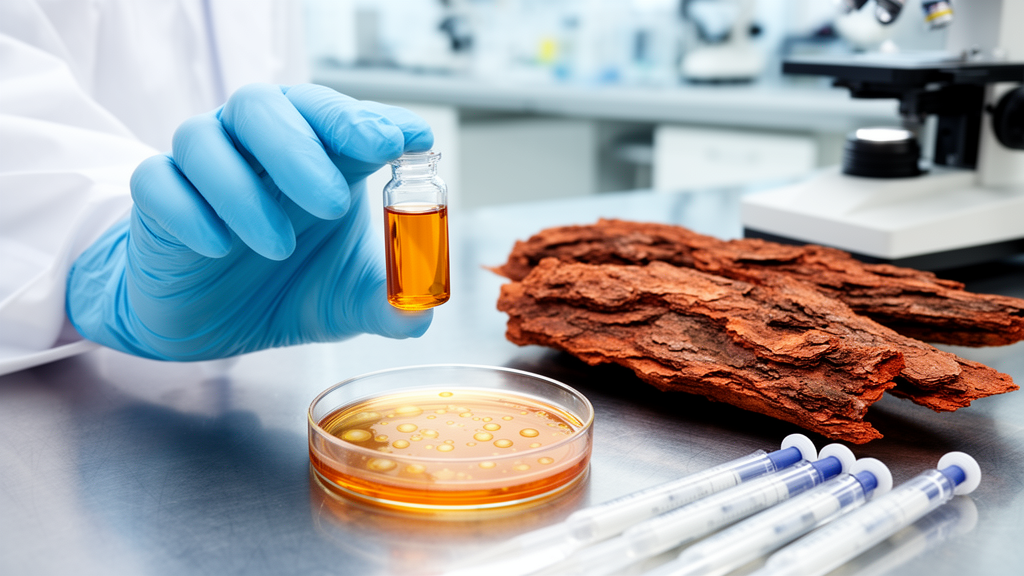
Aqueous extract of fresh bark from the tropical tree Spondias mombin completely suppressed the growth of bacteria isolated from the human mouth at its highest tested concentration, according to a preliminary biochemical and computational study published in the journal Discover Molecules. The work, which combined laboratory culture experiments with molecular docking, density functional theory calculations and 100-nanosecond molecular dynamics simulations, suggests that phytocompounds found in the tree’s bark may interact with virulence proteins of Staphylococcus aureus, one of the organisms identified in the oral samples. The authors emphasise that the findings are preliminary and require extensive validation before any therapeutic claims can be made.
The motivation behind the study lies in a growing clinical problem. Bacteria that accumulate in dental plaque and tartar contribute to gum disease, abscessed teeth and tooth decay, and these microbes increasingly exhibit multidrug resistance, a major challenge for antimicrobial therapy. Plants have long served as sources of antimicrobial chemistry, and nearly every part of the Spondias mombin tree, including roots, bark, leaves and fruits, has been used traditionally as an herbal remedy. Previous reports describe antibacterial, antiviral, antihelminthic and molluscicidal activity in extracts of these plant parts, along with phytocompounds such as tannins, saponins, flavonoids, sterols and quinine.
In the laboratory portion of the study, the researchers collected oral swabs from consenting students at a Nigerian university who presented with suspected oral infections or other oral conditions. Verbal informed consent was obtained, and the swabs were streaked onto nutrient agar plates containing aqueous stem bark extract of Spondias mombin at concentrations of 50, 100 and 150 grams per litre, alongside extract-free control plates. After incubation at 37 degrees Celsius for 48 hours, the team assessed bacterial growth by comparing colony-forming units and growth density between treated and control plates. Cultural and biochemical characterisation, including Gram staining and catalase testing, identified the isolates as Staphylococcus aureus, Pseudomonas aeruginosa and Streptococcus species, although the authors stress these are presumptive identifications.
The extract showed a clear concentration-dependent inhibitory effect. At 150 grams per litre, inhibition reached 100 percent compared with the control, while the 100 grams per litre treatment measured 96.33 percent inhibition. The lowest concentration, 50 grams per litre, produced only 42.79 percent inhibition. Control plates showed no inhibitory potential. The authors attribute the bioactivity hypothetically to the plant’s chemical constituents, noting that similar studies have reported tannins, saponins and anthraquinone glycosides in Spondias mombin with significant antimicrobial activity, and that these compounds may react with microbial proteins and disrupt cell membranes.
To explore possible molecular mechanisms, the team turned to computational methods focused on S. aureus, chosen because of its abundance in the oral isolate. They targeted fibronectin-binding proteins A and B, cell wall-anchored adhesins encoded by closely related genes that act as molecular bridges between bacterial cells and host integrins through fibronectin. These proteins enable internalisation of S. aureus into non-phagocytic host cells such as epithelial and endothelial cells, where the bacteria can persist intracellularly, evade immune defences and form biofilms resistant to antibiotics with limited intracellular penetration. This intracellular survival is thought to contribute to chronic and relapsing infections and to treatment failures even when isolates appear susceptible in vitro.
Using the AutoDock Vina engine implemented in PyRx, the researchers docked 18 phytocompounds retrieved from the PubChem database, plus the fluoroquinolone antibiotic levofloxacin as a standard control, into the binding pockets of both proteins. Against fibronectin-binding protein A, oleanolic acid scored best at minus 9.9 kilocalories per mole, followed by ellagic acid at minus 9.8, rutin at minus 9.5, catechin at minus 8.3, berberine and quercetin at minus 8.2, and myricetin at minus 8.1, all exceeding levofloxacin’s minus 8.0. Against protein B, myricetin scored minus 6.0, rutin minus 5.9, quercetin minus 5.8, and catechin and ellagic acid minus 5.6, compared with minus 5.1 for levofloxacin. Docking scores of this kind indicate predicted binding strength, not confirmed inhibition.
Density functional theory calculations performed with ORCA 5.0 using the PBE functional characterised the electronic structure of the top compounds. Catechin, ellagic acid, myricetin, quercetin and rutin showed moderate HOMO-LUMO gaps ranging from 0.11 to 1.75 electronvolts and comparatively low ionisation potentials between 4.56 and 5.57 electronvolts, properties the authors interpret as an ability to donate electrons or hydrogen atoms relevant to antimicrobial mechanisms involving oxidative imbalance in bacterial cells. Myricetin displayed the lowest ionisation potential. By contrast, levofloxacin exhibited a larger gap of 2.70 electronvolts and higher chemical hardness of 1.35 electronvolts, consistent with a rigid, electronically stable structure. These descriptors describe calculated molecular properties, not measured biological effects.
The 100-nanosecond molecular dynamics simulations, run with the Desmond module of the Schrödinger suite using the OPLS3e force field, revealed sharply different stability profiles for the two target proteins. Complexes with protein A were generally stable: oleanolic acid showed the lowest average ligand RMSD of 2.0 angstroms, rutin averaged 2.5 angstroms, and all evaluated compounds, including levofloxacin, showed acceptable stability. Protein B complexes were far more variable. Rutin’s ligand RMSD averaged an exceptional 30 angstroms, suggesting likely dissociation from the binding site, quercetin averaged 6.4 angstroms, and even levofloxacin reached approximately 30 angstroms, although the protein backbone itself remained stable at around 1.8 angstroms in all systems. Interaction analyses highlighted persistent hydrogen bonds and water-mediated contacts for oleanolic acid, rutin, catechin and ellagic acid with protein A, and radius-of-gyration analysis identified the ellagic acid complex as the most compact.
The authors are explicit about the study’s limitations. Bacterial identification relied on conventional cultural and biochemical characteristics and therefore does not provide definitive species-level identification; future work should incorporate 16S rRNA gene sequencing, MALDI-TOF mass spectrometry or validated biochemical systems. The antimicrobial assay, designed to mimic the extract’s traditional use as an oral rinse by incorporating it directly into the growth medium, does not provide standardised susceptibility parameters, and no positive antibiotic control was included in the biological assays. Standardised methods such as agar diffusion, broth microdilution and determination of minimum inhibitory and bactericidal concentrations are needed. The aqueous extract was also not chemically characterised, so the specific bioactive constituents responsible for the observed inhibition remain unconfirmed.
The computational findings add a further caveat: because the analyses targeted S. aureus virulence proteins exclusively, they should not be interpreted as explaining the observed inhibitory effects against Pseudomonas aeruginosa or Streptococcus species. Within those boundaries, the study offers a hypothetical foundation rather than direct evidence linking the docked compounds to the antibacterial activity observed in the plates. The authors conclude that Spondias mombin phytocompounds warrant further in-vitro and in-vivo experimentation, including chromatographic and spectrometric profiling of the extract, to determine whether these computationally favoured molecules can be developed into validated candidates for managing oral disease.
Subject of Research: A preliminary biochemical and computational study of Spondias mombin bark phytocompounds against human oral bacteria
Article Title: Preliminary biochemical and in-silico study of Spondias mombin phytocompounds as druggable candidate for managing human oral bacteria
Article References: Izu, C. S., Mounadi, N., Ibeh, R. C., Akadiri, O. O., Okorie, B., Ibisanmi, T. A., Umar, H. I., Chtita, S., Akinware, A., Obayomi, O. V., Akinnibosun, H. A., & Olowosoke, C. B. (2026). Preliminary biochemical and in-silico study of Spondias mombin phytocompounds as druggable candidate for managing human oral bacteria. Discover Molecules, 3(1), Article 38. https://doi.org/10.1007/s44345-026-00076-6
Image Credits: AI Generated
DOI: 10.1007/s44345-026-00076-6
Keywords: Spondias mombin, oral bacteria, antimicrobial, molecular docking, Staphylococcus aureus, fibronectin-binding proteins, molecular dynamics, DFT, phytochemicals, antibiotic resistance, dental plaque, natural products
News Source: Bethany Barker. (October 27, 2026). Tropical Tree Bark Compounds Show Promise Against Oral Bacteria in Early Study. Scienmag.