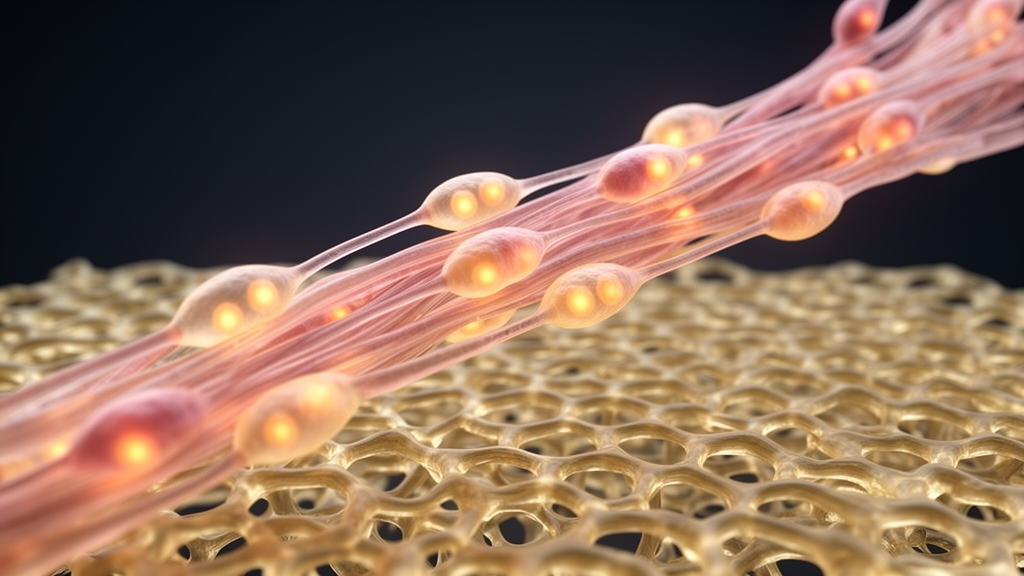
A new laboratory study now suggests it may also act directly on muscle-forming cells. Researchers report that treating mouse myoblasts with silk fibroin during differentiation produced thicker, more abundant myotubes and activated the mTOR signaling pathway, a central controller of muscle growth and protein synthesis. The work, published in Applied Biological Chemistry, was conducted entirely in cell culture using the widely studied C2C12 mouse myoblast line, so the findings describe cellular behavior rather than effects in living animals or people.
The research team, led by Gyeong Min Kim and Hyun Young Kim, set out to test whether silk fibroin could influence myogenic differentiation, the process by which myoblasts fuse into multinucleated myotubes that eventually form muscle fibers. This process is of particular interest in sarcopenia research, because the age-related loss of skeletal muscle mass and strength is thought to be driven in part by impaired myoblast differentiation and fusion. The authors note that strategies aimed at supporting myogenic differentiation are considered important for maintaining muscle function as organisms age, although their own experiments addressed only the cell-level mechanisms.
Before any biological testing, the team prepared silk fibroin through degumming and acid hydrolysis. Silk was boiled in sodium carbonate solution for 30 minutes to remove sericin, the glue-like protein that makes up roughly 20 to 25 percent of cocoon weight, leaving fibroin, which accounts for about 70 to 75 percent. The degummed fibers were dissolved in hydrochloric acid at 70 degrees Celsius, neutralized with sodium hydroxide, dialyzed against distilled water for 24 hours to remove residual salts, and freeze-dried into a powder. This hydrolysis step matters biologically as well as practically: native silk fibroin has a highly ordered crystalline structure that resists enzymatic breakdown, and hydrolysis reduces molecular weight and alters solubility and biological activity.
Chemical analysis of the prepared material revealed a free amino acid profile dominated by glycine, alanine, and serine, which together accounted for more than 90 percent of the total free amino acid content of 46.31 milligrams per 100 grams. The powder also contained measurable branched-chain amino acids: valine, leucine, and isoleucine. Branched-chain amino acids are known regulators of skeletal muscle metabolism that activate mTOR signaling in muscle cells, promoting protein synthesis while suppressing protein degradation, and low blood levels of these amino acids have been reported in individuals with sarcopenia. The authors suggest, without claiming proof, that this amino acid composition may have contributed to the effects they observed, and they note that the individual contribution of each amino acid remains to be determined.
The first functional test was a safety screen. C2C12 cells were exposed to silk fibroin concentrations ranging from 50 to 1,000 micrograms per milliliter for 24 hours, and viability was assessed with an MTT assay. Concentrations of 50 and 100 micrograms per milliliter left viability unchanged, but 250, 500, and 1,000 micrograms per milliliter reduced viability to 77, 55, and 26 percent of control levels respectively, a clear dose-dependent cytotoxic effect. Because the study did not directly examine cellular stress or cell death pathways, the mechanism behind this toxicity at high doses remains unclear, and the authors call for further work on the safety of silk fibroin as a nutritional biomaterial. Based on these results, the low concentrations of 25 and 50 micrograms per milliliter were selected for all subsequent differentiation experiments.
With non-cytotoxic doses established, the team induced differentiation by switching confluent C2C12 cells into a low-serum medium containing 2 percent horse serum, adding silk fibroin at the start of differentiation and replenishing it after 48 hours. Three days later, microscopic examination showed that treated cultures had formed more multinucleated myotubes than controls, with myotubes appearing both thicker and longer. Quantification confirmed the visual impression: the average myotube diameter was 9.90 micrometers in untreated controls, rising to 10.82 micrometers at 25 micrograms per milliliter and 12.47 micrometers at 50 micrograms per milliliter, the latter increase reaching statistical significance. Myoblast differentiation and fusion into myotubes are critical steps in skeletal muscle development, and the authors interpret the enlarged myotubes as evidence that silk fibroin enhances myogenic differentiation in this cell model.
To probe the mechanism, the researchers measured messenger RNA levels of genes in the mTOR and AMPK signaling pathways by quantitative real-time PCR after three days of treatment. At 50 micrograms per milliliter, silk fibroin increased Mtor expression 101-fold compared with controls, while Rptor and Irs2 rose 5.8-fold and 14.3-fold respectively. Expression of Rictor, which marks the second mTOR complex, and of Prkaa1 and Prkaa2, which encode the catalytic alpha subunits of the energy-sensing AMPK complex, was unchanged. Because mTOR complex 1 is defined by the presence of Rptor and mTOR complex 2 by Rictor, this pattern suggests the treatment preferentially engages mTORC1-associated signaling rather than mTORC2. The strong Irs2 response also points to possible involvement of IGF-2/IRS2-mediated signaling, which feeds into the PI3K/Akt/mTOR cascade during myogenic differentiation, while the unchanged AMPK genes indicate the effect was not mediated through that pathway.
Protein-level analysis by western blotting supported the gene expression data. The ratio of phosphorylated mTOR to total mTOR, a readout of mTOR pathway activation, rose to 2.16-fold of control at 25 micrograms per milliliter and 2.96-fold at 50 micrograms per milliliter. Myogenin, a transcription factor governing terminal differentiation and myotube maturation, increased 1.94-fold at the higher concentration. MyoD, which acts earlier in the differentiation program, showed only a slight increase at 25 micrograms per milliliter and a lower level at 50 micrograms per milliliter. The authors note that myogenic regulatory factor expression is known to vary with differentiation stage and timing of analysis, so the myogenin-dominant response is consistent with silk fibroin supporting late-stage myotube maturation rather than the earliest steps of commitment.
The study situates itself within a growing literature on silk-derived materials and muscle. Previous reports have shown that silk-derived peptides promote muscle mass and regeneration in muscle atrophy models, that human skeletal muscle myoblasts adhere to and spread on silk fibroin scaffolds, and that Bombyx mori fibroin scaffolds support the formation of long, well-aligned myotubes. Electroactive silk fibroin scaffolds have also promoted myogenic differentiation in C2C12 cells. What distinguishes the new work, according to the authors, is its focus on the direct effects of soluble silk fibroin on myoblast differentiation and its signaling pathways, rather than on silk fibroin used as a scaffold or substrate. They add that processing conditions may influence molecular characteristics, solubility, bioavailability, and biological activity, which could shape the observed myogenic effects.
The authors are explicit about the limits of what these results show. All findings come from an in vitro C2C12 model, which cannot fully recapitulate the complex physiological processes of sarcopenia in a living organism. They write that further studies using appropriate animal models of aging or muscle atrophy are required to confirm any efficacy in vivo. Within those boundaries, the study delivers a coherent cellular picture: acid-hydrolyzed silk fibroin from silkworm cocoons, at non-cytotoxic concentrations, enlarged differentiating myotubes, shifted gene expression toward mTORC1-associated signaling, increased mTOR phosphorylation, and raised myogenin protein levels. The team suggests that silk fibroin may hold potential as a functional ingredient or biomaterial for supporting skeletal muscle health, a possibility that now awaits testing in whole organisms before any implications for human muscle health can be drawn.
Subject of Research: Effects of silk fibroin on myogenic differentiation and mTOR signaling in C2C12 mouse myoblasts
Article Title: Effects of silk fibroin on myoblasts differentiation in C2C12 cells
Article References: Kim, G. M., Baek, K.-W., Lee, A. Y., Ko, T., Lee, M., Kim, J. H., & Kim, H. Y. (2026). Effects of silk fibroin on myoblasts differentiation in C2C12 cells. Applied Biological Chemistry, 69(1), Article 79. https://doi.org/10.1186/s13765-026-01150-w
Image Credits: AI Generated
DOI: 10.1186/s13765-026-01150-w
Keywords: silk fibroin, C2C12 myoblasts, myogenic differentiation, mTOR signaling, myotube formation, sarcopenia, Bombyx mori, cell culture, myogenin, branched-chain amino acids, functional biomaterial, Effects
News Source: Drew Townsend. (October 27, 2026). Silk Fibroin Boosts Muscle Cell Differentiation in Lab-Grown Mouse Myoblasts. Scienmag.