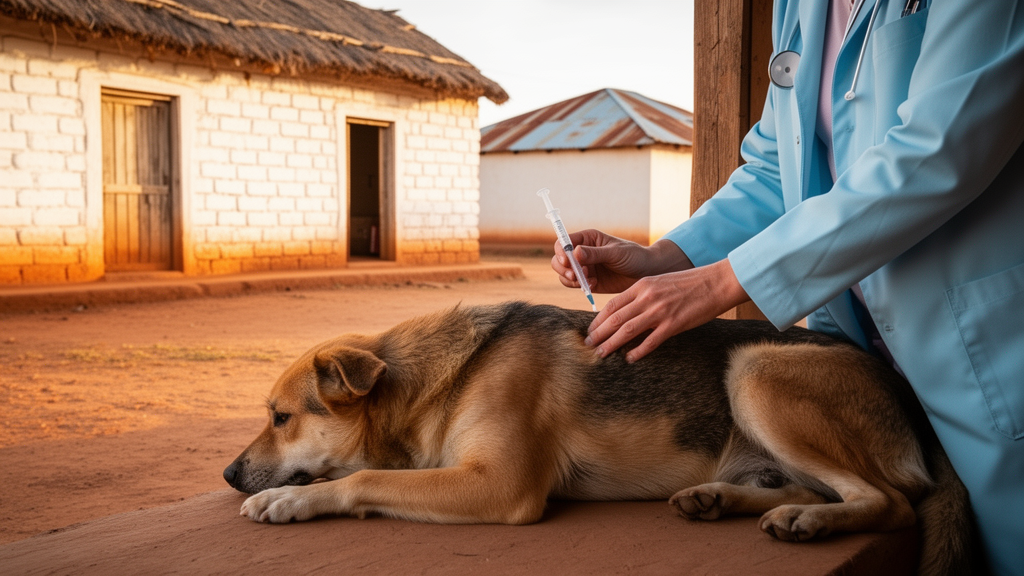
Treating dogs with a single oral dose of the acaricide fluralaner significantly reduced house infestation and the abundance of Triatoma infestans, the main vector of Chagas disease in the Gran Chaco, according to a cluster-randomized trial conducted in Juan Jose Castelli, Chaco, Argentina. The study, published open access in Parasites & Vectors, tested the concept of xenointoxication: killing blood-feeding insects through the drug they ingest when they feed on a treated host. The approach attracted wide interest because insecticide resistance challenges vector control efforts worldwide, and the trial region has predominantly high pyrethroid resistance.
The trial enrolled 10 treated and 10 control clusters, totaling 203 households. Dogs in the treated clusters received an oral dose of fluralaner, while no treatment was offered to dogs in control clusters. In all, 314 dogs were treated, corresponding to 72% treatment coverage of all dogs registered in the treated arm. House infestation and triatomine abundance were assessed at baseline and at 10 months post-treatment by timed-manual searches using a flushing-out aerosol. Because COVID-19-related lockdown restrictions in 2020 prevented field visits at intermediate time points, infestation at 2 and 8 months post-treatment was instead assessed through householder reports collected by telephone.
In a cluster-level analysis adjusted for baseline infestation, fluralaner treatment significantly reduced timed-manual-search-based estimates of house infestation by 47% at 10 months post-treatment relative to control clusters. Triatomine relative abundance fell significantly by 70%, as shown by a random-effects negative binomial model with cluster identity as the random factor. Householder-based surveillance likewise showed a negative trend in the odds of house infestation over the 0 to 8 month period in treated clusters. A striking secondary signal was that dead triatomines were reported tenfold more frequently in baseline-infested houses of treated clusters than in their control counterparts, consistent with insects dying after feeding on treated dogs. Dog owners reported no fluralaner-related adverse effects.
Because the moderate reduction achieved by dog treatment alone was not sufficient on its own, the researchers added an out-of-trial rescue treatment at 10 months post-treatment, targeting control clusters and infested houses. House infestation was then re-assessed through timed-manual searches at 14 and 22 months post-treatment. At houses receiving the rescue treatment, infestation and triatomine abundance plummeted over the 14 to 22 month window, while infestation strongly increased among untreated dwellings. The authors conclude that fluralaner administered to dogs significantly reduced house infestation and triatomine relative abundance by moderate amounts relative to control dwellings, and they recommend that future studies evaluate the cost-effectiveness of multi-host treatment with fluralaner within an integrated vector control strategy bolstered by community engagement. The article was shared early as a citable, peer-reviewed accepted version carrying a permanent DOI, subject to further edits before the final Version of Record.
Subject of Research: A cluster-randomized trial of fluralaner-treated dogs to reduce Triatoma infestans house infestation in the Argentine Chaco
Article Title: Fluralaner administered to dogs reduced house infestation and abundance of Triatoma infestans in the Argentine Chaco: a cluster-randomized trial
Article References: Gaspe, M. S., Cardinal, M. V., Enriquez, G. F., Macchiaverna, N. P., Alvedro, A., Laiño, M. A., Alvarado-Otegui, J. A., Cecere, M. C., Sánchez, D., & Gürtler, R. E. (2026). Fluralaner administered to dogs reduced house infestation and abundance of Triatoma infestans in the Argentine Chaco: a cluster-randomized trial. Parasites & Vectors. https://doi.org/10.1186/s13071-026-07762-x
Image Credits: AI Generated
DOI: 10.1186/s13071-026-07762-x
Keywords: fluralaner, Triatoma infestans, Chagas disease, xenointoxication, cluster-randomized trial, Argentina, vector control, pyrethroid resistance, dogs, Parasites & Vectors, administered, reduced
News Source: William Thompson. (October 27, 2026). Dog Doses of Fluralaner Cut Kissing Bug Infestations in Argentine Villages. Scienmag.