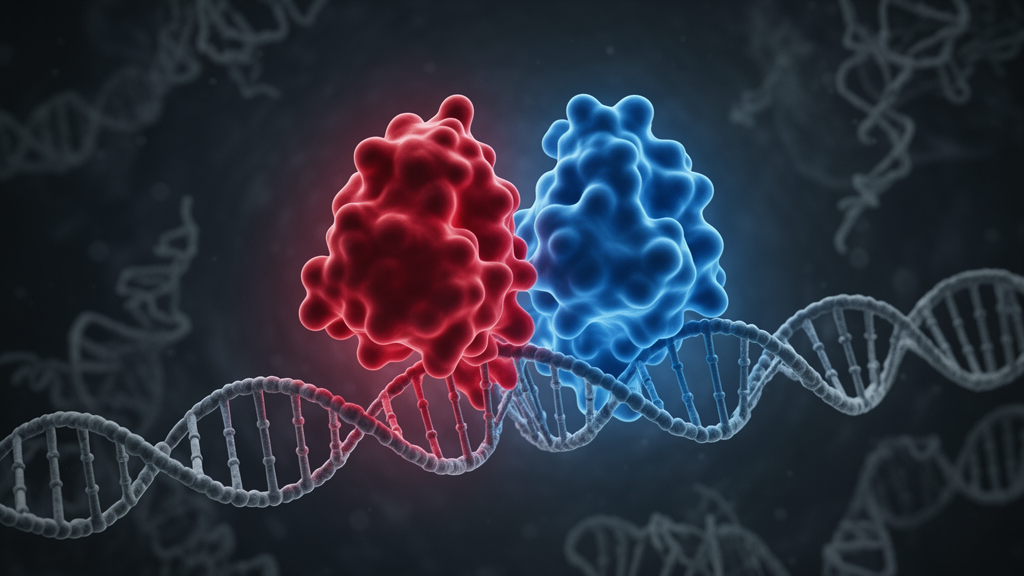
A single defective copy of the STAT3 gene is enough to cause the autosomal dominant form of hyper-IgE syndrome, a rare inherited immunodeficiency, and new research explains why. According to a study published in Science Signaling, a mutant STAT3 protein does not simply fail to work on its own; it actively interferes with the protein produced by the healthy copy of the gene, dragging it into a nonfunctional complex that never reaches the cell’s nucleus.
STAT3 is a transcription factor central to immunity. When immune cells are stimulated by cytokines, the signaling molecules that coordinate how immune cells behave, STAT3 is activated and pairs up with other STAT3 molecules to form dimers. These dimers move into the nucleus, where they switch on the expression of target genes needed for a proper immune response. In autosomal dominant hyper-IgE syndrome, patients carry one disease-causing variant of STAT3 alongside one normal copy, yet the variant’s effects persist despite the presence of the intact gene.
Joseph Mackie and colleagues identified a patient carrying a previously undocumented STAT3 variant, called STAT3R31Q, in which a change disrupts the protein’s N-terminal domain. When the researchers stimulated immune cells carrying the mutant protein with cytokines, STAT3R31Q was less able to drive the expression of target genes compared with the normal form of the protein. The mutation therefore weakens the transcriptional response that healthy STAT3 would normally deliver after cytokine signaling.
The more striking finding concerns what the mutant protein does to its normal counterpart. Rather than pairing preferentially with other mutant molecules, STAT3R31Q preferentially formed dimers with normal STAT3. These mixed STAT3:STAT3R31Q heterodimers remained trapped in the cytoplasm instead of moving into the nucleus. Because gene regulation happens in the nucleus, heterodimers stranded in the cytoplasm cannot perform their transcriptional duties, effectively removing functional STAT3 from circulation inside the cell.
This combination of two defects, impaired regulation of gene expression and the sequestration of normal STAT3 in the cytoplasm, explains why a single copy of the STAT3R31Q allele is sufficient to cause hyper-IgE syndrome. The mutant protein acts in a dominant-negative fashion: its harmful effect arises precisely because it interacts with the product of the healthy gene copy, neutralizing protein that would otherwise support immunity. The study’s title describes the mechanism directly: disruption of the N-terminal domain in this STAT3 hyper-IgE syndrome variant causes disease by sequestering STAT3 in the cytoplasm.
The work offers what the authors describe as vital insight into a signaling pathway essential in human biology. By showing at the molecular level how one faulty allele can undermine a functioning one, the study clarifies the mechanism behind the autosomal dominant inheritance pattern seen in this form of hyper-IgE syndrome, in which immunodeficiency develops even though patients retain one normal copy of the STAT3 gene. The findings were published in Science Signaling on 27 October 2026 under the DOI 10.1126/scisignal.aeg5302.
Subject of Research: Mechanism by which a mutant STAT3 variant causes autosomal dominant hyper-IgE syndrome by sequestering normal STAT3 in the cytoplasm
Article Title: A mutant form of STAT3 traps the normal form to drive an inherited immune disorder
Article References: A mutant form of STAT3 traps the normal form to drive an inherited immune disorder. Original publication (Bibliographic details unavailable.)
Image Credits: AI Generated
DOI: Not provided
Keywords: STAT3, hyper-IgE syndrome, immunodeficiency, transcription factor, cytokine signaling, autosomal dominant, heterodimers, cytoplasm, gene expression, Science Signaling, genetics, N-terminal domain
News Source: Juliet Wilcox. (October 27, 2026). Mutant STAT3 protein traps its normal counterpart to drive inherited immunodeficiency. Scienmag.